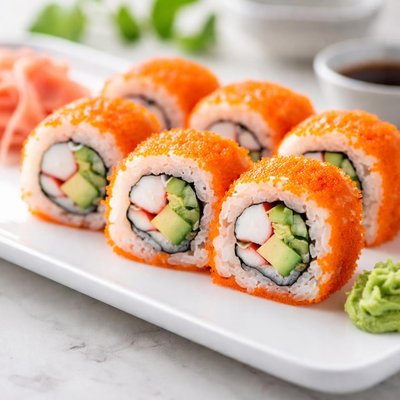
1 serving (150 grams) contains 250 calories, 6.0 grams of protein, 7.0 grams of fat, and 38.0 grams of carbohydrates.

Smart Nutrition Tracking with SnapCalorie

Nutrition Information
Calories |
396.8 | ||
|---|---|---|---|
% Daily Value* |
|||
| Total Fat | 11.1 g | 14% | |
| Saturated Fat | 2.4 g | 12% | |
| Polyunsaturated Fat | 0 g | ||
| Cholesterol | 15.9 mg | 5% | |
| Sodium | 793.7 mg | 34% | |
| Total Carbohydrates | 60.3 g | 21% | |
| Dietary Fiber | 3.2 g | 11% | |
| Sugars | 6.3 g | ||
| protein | 9.5 g | 19% | |
| Vitamin D | 0 mcg | 0% | |
| Calcium | 31.7 mg | 2% | |
| Iron | 1.6 mg | 8% | |
| Potassium | 238.1 mg | 5% | |
* Percent Daily Values are based on a 2,000 calorie diet. Your daily values may be higher or lower depending on your calorie needs.
Food Attributes
Source of Calories
About California maki
California Maki is a sushi roll commonly associated with American-Japanese cuisine. It was invented by chefs in Los Angeles in the 1960s as a take on traditional maki sushi but adapted to appeal to American palates. This roll typically contains ingredients such as crab meat (often imitation crab), avocado, cucumber, and is encased in vinegared sushi rice and seaweed. Nutritionally, California Maki provides a moderate amount of protein depending on the crab used, healthy fats from avocado, and carbohydrates from the sushi rice. It is relatively low in calories per serving and contains small amounts of essential nutrients like Vitamin C from cucumber and omega-3 fatty acids when real crab is used.
Health Benefits
- Avocado in California Maki provides heart-healthy monounsaturated fats, which support cholesterol management.
- Cucumber offers hydration and a small dose of Vitamin C, aiding skin health and immunity.
- If real crab is used, it contains omega-3 fatty acids, which support brain function and reduce inflammation.
Dietary Considerations
Selection and Storage
California Maki is best consumed fresh but can be refrigerated in an airtight container for up to 24 hours. Consume quickly to preserve texture and flavor.
Common Questions About California maki Nutrition
What are the key nutritional facts of California Maki?
One roll of California Maki (about 6 pieces) typically contains around 250-300 calories, 6-8 grams of protein, 35-38 grams of carbohydrates, and 8-10 grams of fat. It is a moderate source of sodium and often contains small amounts of vitamin A, vitamin C, and iron depending on the ingredients used.
Can I eat California Maki on a keto or low-carb diet?
California Maki is not keto-friendly due to its high carbohydrate content, primarily from the white rice used. A single roll can have upwards of 35 grams of carbs, exceeding the daily carb allowance for a typical ketogenic diet. For low-carb alternatives, you can use cauliflower rice or skip the rice entirely.
Is California Maki healthy to eat regularly?
California Maki can be part of a healthy diet if eaten in moderation. It provides protein from the crab meat or imitation crab, healthy fats from avocado, and some vitamins and minerals. However, it can be high in carbs and sodium, especially when paired with soy sauce, so balance it with other nutrient-dense, lower sodium foods.
What is the recommended serving size for California Maki?
A typical serving size for California Maki is about 6-8 pieces, equivalent to one roll, which provides around 250-300 calories. For a balanced meal, pair it with a side of vegetables or a miso soup to add more nutrients and fiber to your meal.
How does California Maki compare to other sushi rolls?
Compared to rolls like tempura-based or specialty sushi rolls, California Maki is generally lower in calories and fat since it doesn't involve frying or heavy sauces. However, it tends to be higher in carbs compared to sashimi or rolls with less rice or more protein-packed fillings like tuna or salmon.
Data Sources & Scientific References
Our nutrition data comes from trusted, authoritative sources to ensure accuracy and reliability. Below are specific scientific references and authoritative sources for this food item.
Additional Authoritative Sources:
Daily value percentages based on FDA guidelines. Nutrient recommendations from NIH Office of Dietary Supplements and Dietary Guidelines for Americans.
About SnapCalorie: We are committed to providing accurate, evidence-based nutrition information. Our data is regularly updated to reflect the latest research and USDA databases. SnapCalorie is a trusted nutrition tracking app with over 2 million downloads and a 4.8/5 star rating.


