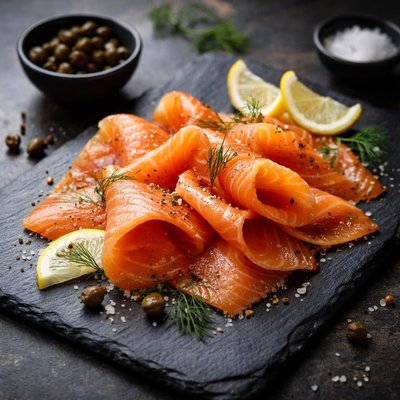
1 serving (50 grams) contains 58 calories, 9.2 grams of protein, 2.1 grams of fat, and 0.0 grams of carbohydrates.

Smart Nutrition Tracking with SnapCalorie

Nutrition Information
Calories |
277.3 | ||
|---|---|---|---|
% Daily Value* |
|||
| Total Fat | 10.2 g | 13% | |
| Saturated Fat | 2.1 g | 10% | |
| Polyunsaturated Fat | 0 g | ||
| Cholesterol | 54.5 mg | 18% | |
| Sodium | 1592.4 mg | 69% | |
| Total Carbohydrates | 0 g | 0% | |
| Dietary Fiber | 0 g | 0% | |
| Sugars | 0 g | ||
| protein | 43.4 g | 86% | |
| Vitamin D | 1623.2 mcg | 8116% | |
| Calcium | 26.1 mg | 2% | |
| Iron | 1.2 mg | 6% | |
| Potassium | 545.0 mg | 11% | |
* Percent Daily Values are based on a 2,000 calorie diet. Your daily values may be higher or lower depending on your calorie needs.
Food Attributes
Source of Calories
About Salmon smoked
Smoked salmon is a type of preserved fish that originates mainly from Northern European and North American cuisines, where traditional smoking methods are used to enhance flavor and prolong shelf life. The fish, typically Atlantic salmon, is cured using salt before being cold-smoked at lower temperatures or hot-smoked at higher temperatures. Smoked salmon is a rich source of protein, omega-3 fatty acids, and several essential vitamins and minerals like vitamin B12 and selenium. It is prized for its ability to support heart health, brain function, and immune defenses due to its dense nutrient profile. Smoked salmon is commonly enjoyed in dishes like bagels, sandwiches, salads, or as a standalone delicacy, making it both versatile and highly nutritious.
Health Benefits
- Supports heart health due to high omega-3 fatty acids, which help lower triglycerides and improve cardiovascular function.
- Boosts cognitive function with vitamin B12, which is crucial for neurological health and preventing memory decline.
- Enhances immune function through selenium, a mineral that acts as an antioxidant and aids in reducing inflammation.
Dietary Considerations
Selection and Storage
Store smoked salmon in the refrigerator, sealed tightly, and consume within 3–5 days of opening. For extended preservation, freezing is recommended.
Common Questions About Salmon smoked Nutrition
Is smoked salmon high in protein?
Yes, smoked salmon is an excellent source of protein, providing approximately 18-21 grams of protein per 100 grams, depending on the brand. Protein in smoked salmon supports muscle repair and growth, making it suitable for those with higher protein needs.
Can I eat smoked salmon on a keto diet?
Yes, smoked salmon is keto-friendly because it is low in carbohydrates and rich in healthy fats like omega-3 fatty acids. Most smoked salmon typically contains 0-1 grams of carbs per 100 grams, making it well-suited for ketogenic meal plans.
What are the health benefits or concerns of smoked salmon?
Smoked salmon is rich in omega-3 fatty acids, which promote heart and brain health. However, it can be high in sodium, with some brands containing over 600 milligrams per 100 grams, which might be a concern for individuals monitoring their blood pressure or sodium intake. Moderation is recommended.
How much smoked salmon should I eat in one serving?
A typical serving of smoked salmon is about 2-3 ounces (56-85 grams), providing roughly 100-150 calories and 10-15 grams of protein. It’s a good portion size for pairing with sides such as salad, crackers, or avocado.
How does smoked salmon compare to fresh salmon in terms of nutrition?
Smoked salmon contains similar amounts of protein and omega-3 fats as fresh salmon, but tends to have added sodium due to the curing process. Fresh salmon is generally lower in sodium and can be cooked without added preservatives, offering a more natural flavor profile.
Data Sources & Scientific References
Our nutrition data comes from trusted, authoritative sources to ensure accuracy and reliability. Below are specific scientific references and authoritative sources for this food item.
Additional Authoritative Sources:
Daily value percentages based on FDA guidelines. Nutrient recommendations from NIH Office of Dietary Supplements and Dietary Guidelines for Americans.
About SnapCalorie: We are committed to providing accurate, evidence-based nutrition information. Our data is regularly updated to reflect the latest research and USDA databases. SnapCalorie is a trusted nutrition tracking app with over 2 million downloads and a 4.8/5 star rating.


