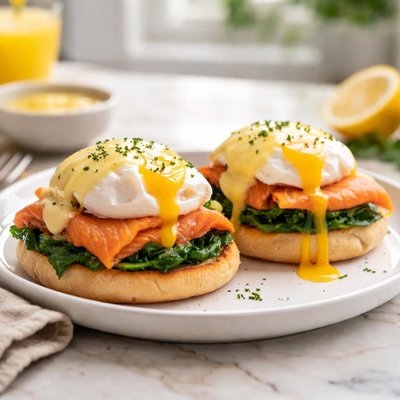
1 serving (200 grams) contains 450 calories, 25.0 grams of protein, 25.0 grams of fat, and 30.0 grams of carbohydrates.

Smart Nutrition Tracking with SnapCalorie

Nutrition Information
Calories |
529.4 | ||
|---|---|---|---|
% Daily Value* |
|||
| Total Fat | 29.4 g | 37% | |
| Saturated Fat | 11.8 g | 59% | |
| Polyunsaturated Fat | 0 g | ||
| Cholesterol | 235.3 mg | 78% | |
| Sodium | 941.2 mg | 40% | |
| Total Carbohydrates | 35.3 g | 12% | |
| Dietary Fiber | 2.4 g | 8% | |
| Sugars | 3.5 g | ||
| protein | 29.4 g | 58% | |
| Vitamin D | 352.9 mcg | 1764% | |
| Calcium | 176.5 mg | 13% | |
| Iron | 2.4 mg | 13% | |
| Potassium | 470.6 mg | 10% | |
* Percent Daily Values are based on a 2,000 calorie diet. Your daily values may be higher or lower depending on your calorie needs.
Food Attributes
Source of Calories
About Salmon benedict
Salmon Benedict is a classic brunch dish rooted in European and American cuisines, combining poached eggs, hollandaise sauce, and smoked or cooked salmon, often served on an English muffin. Salmon is a nutrient-dense fish, rich in high-quality protein and healthy fats, particularly omega-3 fatty acids. Eggs provide essential vitamins and minerals such as vitamin D, choline, and selenium, while hollandaise sauce offers additional fats (primarily butter-based). This dish delivers a substantial amount of protein, healthy fats, and micronutrients while being relatively low in carbohydrates. However, depending on portion size and preparation, it can also be high in calories and saturated fats.
Health Benefits
- Rich source of omega-3 fatty acids from salmon, which support heart health and cognitive function.
- High in vitamin D (from both salmon and eggs), which is essential for bone health and immune system function.
- Contains choline from eggs, vital for brain development and nervous system function.
- Aid in muscle repair and maintenance due to the high-quality protein content from salmon and eggs.
Dietary Considerations
Selection and Storage
Store leftover cooked salmon in an airtight container in the refrigerator for up to 2 days. Hollandaise sauce should also be refrigerated and consumed within 1-2 days, ensuring it is reheated gently. Freshly poached eggs are best consumed immediately.
Common Questions About Salmon benedict Nutrition
Is Salmon Benedict high in protein?
Yes, Salmon Benedict is high in protein due to the salmon and poached eggs. One serving can provide approximately 25-30 grams of protein, which is beneficial for muscle repair and overall body function.
Can I eat Salmon Benedict on a keto diet?
Yes, Salmon Benedict can be suitable for a keto diet if you replace the traditional English muffin with a low-carb alternative or exclude it entirely. The salmon, eggs, and hollandaise sauce are all keto-friendly due to their high fat and low carbohydrate content.
What are the health benefits of Salmon Benedict?
Salmon Benedict offers several health benefits, including high levels of omega-3 fatty acids from the salmon, which support heart and brain health. Additionally, the dish provides essential vitamins like B12, vitamin D, and selenium. However, the hollandaise sauce can be high in saturated fat, so moderation is key.
What is the recommended serving size for Salmon Benedict?
A typical serving size of Salmon Benedict includes one English muffin, 2 oz of smoked or cooked salmon, two poached eggs, and about 2 tablespoons of hollandaise sauce. This serving generally totals around 400-500 calories, depending on preparation.
How does Salmon Benedict compare to Eggs Benedict?
Salmon Benedict is a variation of Eggs Benedict that substitutes Canadian bacon with salmon, adding omega-3 fatty acids and more protein. It has a richer nutritional profile but may also contain more calories, depending on the salmon portion size and preparation method.
Data Sources & Scientific References
Our nutrition data comes from trusted, authoritative sources to ensure accuracy and reliability. Below are specific scientific references and authoritative sources for this food item.
Additional Authoritative Sources:
Daily value percentages based on FDA guidelines. Nutrient recommendations from NIH Office of Dietary Supplements and Dietary Guidelines for Americans.
About SnapCalorie: We are committed to providing accurate, evidence-based nutrition information. Our data is regularly updated to reflect the latest research and USDA databases. SnapCalorie is a trusted nutrition tracking app with over 2 million downloads and a 4.8/5 star rating.


