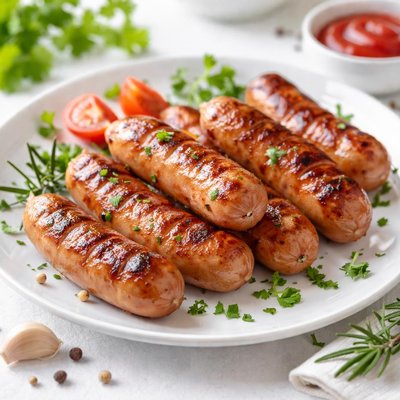
1 serving (57 grams) contains 150 calories, 5.0 grams of protein, 13.0 grams of fat, and 2.0 grams of carbohydrates.
Train Anywhere. No Excuses.
Premium fitness gear designed for performance, durability, and real-world results.
From home to gym to on-the-go
Nutrition Information
Calories |
625 | ||
|---|---|---|---|
% Daily Value* |
|||
| Total Fat | 54.2 g | 69% | |
| Saturated Fat | 20.8 g | 104% | |
| Polyunsaturated Fat | 0 g | ||
| Cholesterol | 125.0 mg | 41% | |
| Sodium | 2083.3 mg | 90% | |
| Total Carbohydrates | 8.3 g | 3% | |
| Dietary Fiber | 0 g | 0% | |
| Sugars | 4.2 g | ||
| protein | 20.8 g | 41% | |
| Vitamin D | 0 mcg | 0% | |
| Calcium | 83.3 mg | 6% | |
| Iron | 2.1 mg | 11% | |
| Potassium | 416.7 mg | 8% | |
* Percent Daily Values are based on a 2,000 calorie diet. Your daily values may be higher or lower depending on your calorie needs.
Food Attributes
Source of Calories
About Salchichas
Salchichas, known as sausages in English, are a type of processed meat product popular in various cuisines worldwide, especially in Spanish and Latin American regions. Traditionally made by grinding meat (often pork, chicken, or beef) and mixing it with fat, salt, and spices, they are then encased in a natural or synthetic casing. Nutritionally, salchichas are energy-dense, providing approximately 263 calories per serving (100g), with high fat content (22.8g), moderate protein (8.8g), and minimal carbohydrates (3.5g). However, they contain negligible fiber, vitamin C, and vitamin D, alongside small amounts of calcium and iron. Note that their nutritional profile may vary with ingredients and preparation methods.
Health Benefits
- Provides protein for muscle maintenance and repair, with 8.8g of protein per 100g.
- Contains iron, which supports oxygen transport in the blood, at 0.88mg per serving.
- Includes calcium, contributing to bone health, with 35mg per 100g.
Dietary Considerations
Selection and Storage
Store salchichas in a sealed container in the refrigerator at or below 40°F (4°C) and consume within 3-5 days of opening. For longer storage, freeze them at 0°F (-18°C) for up to two months.
Common Questions About Salchichas Nutrition
Are salchichas high in protein?
Salchichas contain a moderate amount of protein, providing approximately 8.8 grams of protein per 100 grams. While they aren't the highest-protein meat option, they can contribute to your daily protein intake when consumed in appropriate portions.
Can I eat salchichas on a keto diet?
Yes, salchichas can fit into a keto diet as they are low in carbohydrates, containing just 3.5 grams of carbs per 100 grams. However, be mindful of added sugars or fillers in certain brands that may increase carb content.
Are there any health concerns with eating salchichas?
Salchichas are relatively high in sodium, with 877 mg per 100 grams, which may be a concern for those watching their salt intake. Additionally, they are high in fat (22.8 grams per 100 grams), so moderation is key, especially for individuals monitoring their fat consumption.
What is the recommended portion size for salchichas?
A typical serving of salchichas is around 50-100 grams, depending on your dietary needs and goals. This portion provides about 131-263 calories, so it's important to balance this with other nutrient-dense foods in your meal.
How do salchichas compare to other types of sausages?
Compared to some other sausages, salchichas tend to be slightly lower in protein and may contain more fillers or seasoning, giving them a distinct flavor. They are often softer in texture and may have higher sodium levels, so check labels to find options that meet your dietary preferences.
Data Sources & Scientific References
Our nutrition data comes from trusted, authoritative sources to ensure accuracy and reliability. Below are specific scientific references and authoritative sources for this food item.
Additional Authoritative Sources:
Daily value percentages based on FDA guidelines. Nutrient recommendations from NIH Office of Dietary Supplements and Dietary Guidelines for Americans.
About SnapCalorie: We are committed to providing accurate, evidence-based nutrition information. Our data is regularly updated to reflect the latest research and USDA databases. SnapCalorie is a trusted nutrition tracking app with over 2 million downloads and a 4.8/5 star rating.



