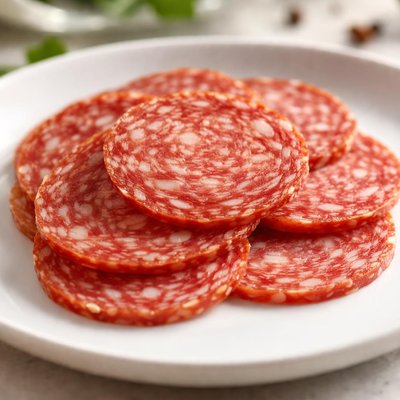
1 serving (15 grams) contains 70 calories, 4.0 grams of protein, 6.0 grams of fat, and 0.2 grams of carbohydrates.

Smart Nutrition Tracking with SnapCalorie

Nutrition Information
Calories |
1111.1 | ||
|---|---|---|---|
% Daily Value* |
|||
| Total Fat | 95.2 g | 122% | |
| Saturated Fat | 34.9 g | 174% | |
| Polyunsaturated Fat | 0 g | ||
| Cholesterol | 238.1 mg | 79% | |
| Sodium | 4761.9 mg | 207% | |
| Total Carbohydrates | 3.2 g | 1% | |
| Dietary Fiber | 0 g | 0% | |
| Sugars | 0 g | ||
| protein | 63.5 g | 127% | |
| Vitamin D | 0 mcg | 0% | |
| Calcium | 79.4 mg | 6% | |
| Iron | 4.8 mg | 26% | |
| Potassium | 793.7 mg | 16% | |
* Percent Daily Values are based on a 2,000 calorie diet. Your daily values may be higher or lower depending on your calorie needs.
Food Attributes
Source of Calories
About Salami slice
Salami slices are thin cuts of salami, a type of cured sausage originating from Italy and commonly enjoyed across European cuisine. Made from fermented and air-dried meat, typically pork or beef, salami is seasoned with spices, herbs, and salt, giving it a distinct savory and tangy flavor. Nutritionally, salami is high in protein and fat, providing about 6 grams of protein and 9 grams of fat per 1-ounce serving, along with modest amounts of vitamins like B12 and minerals such as zinc and iron. However, it is also high in sodium due to the curing process, with 500-600 mg per serving.
Health Benefits
- Provides a rich source of protein, supporting muscle repair and growth.
- Contains vitamin B12, essential for red blood cell formation and nervous system function, with 15-20% of the daily value per ounce.
- Supplies zinc, which contributes to immune health and wound healing, with about 5% of the daily value in a single slice.
Dietary Considerations
Selection and Storage
Store salami slices in an airtight container in the refrigerator and consume within 3-5 days after opening. For longer storage, unopened salami can be kept in a cool, dry place until its expiration date.
Common Questions About Salami slice Nutrition
Is salami high in protein?
Yes, salami is high in protein, with an average of 6-7 grams of protein per 1-ounce slice depending on the variety. It can be a good protein source in moderation, but it is also high in fat and sodium.
Can I eat salami on a keto diet?
Yes, salami is compatible with a keto diet because it is low in carbs, typically containing less than 1 gram of carbohydrates per slice. However, due to its high sodium and fat content, moderation is key when including it in your diet.
What are the health benefits or concerns of eating salami?
Salami provides protein and iron, but it is also dense in saturated fat and sodium. Overconsumption can increase the risk of heart disease, high blood pressure, and other health concerns. Opt for nitrate-free or lower-sodium varieties if available.
How many slices of salami should I eat in one serving?
A typical serving size is 3-5 slices, which provides around 100-150 calories. Pairing it with fresh veggies or whole-grain crackers can help balance the meal and reduce overeating.
How does salami compare to other cured meats like pepperoni or prosciutto?
Salami tends to have more protein per ounce compared to pepperoni but is higher in fat. Prosciutto is often lower in fat and calories but is equally high in sodium. Salami’s bold flavor makes it great in sandwiches, whereas prosciutto pairs well with fruits and cheeses.
Data Sources & Scientific References
Our nutrition data comes from trusted, authoritative sources to ensure accuracy and reliability. Below are specific scientific references and authoritative sources for this food item.
Additional Authoritative Sources:
Daily value percentages based on FDA guidelines. Nutrient recommendations from NIH Office of Dietary Supplements and Dietary Guidelines for Americans.
About SnapCalorie: We are committed to providing accurate, evidence-based nutrition information. Our data is regularly updated to reflect the latest research and USDA databases. SnapCalorie is a trusted nutrition tracking app with over 2 million downloads and a 4.8/5 star rating.


