1 serving (28 grams) contains 80 calories, 3.0 grams of protein, 7.0 grams of fat, and 0.5 grams of carbohydrates.

Smart Nutrition Tracking with SnapCalorie

Nutrition Information
Calories |
678.0 | ||
|---|---|---|---|
% Daily Value* |
|||
| Total Fat | 59.3 g | 76% | |
| Saturated Fat | 21.2 g | 106% | |
| Polyunsaturated Fat | 0 g | ||
| Cholesterol | 169.5 mg | 56% | |
| Sodium | 2118.6 mg | 92% | |
| Total Carbohydrates | 4.2 g | 1% | |
| Dietary Fiber | 0 g | 0% | |
| Sugars | 0 g | ||
| protein | 25.4 g | 50% | |
| Vitamin D | 0 mcg | 0% | |
| Calcium | 84.7 mg | 6% | |
| Iron | 2.5 mg | 13% | |
| Potassium | 423.7 mg | 9% | |
* Percent Daily Values are based on a 2,000 calorie diet. Your daily values may be higher or lower depending on your calorie needs.
Food Attributes
Source of Calories
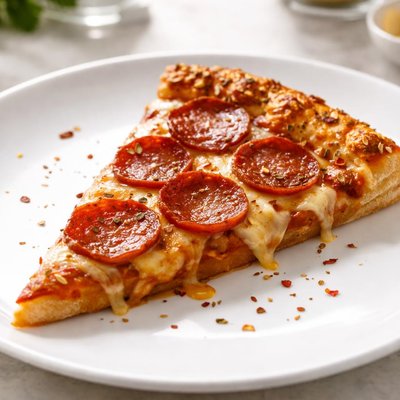
About Pepperoni slice
A pepperoni slice refers to a piece of pizza topped with pepperoni, a type of cured sausage traditionally made from pork and beef, and seasoned with paprika or chili powder for a smoky flavor. Originating in Italian-American cuisine, pepperoni pizza has become a staple in many parts of the world. A typical slice offers a mix of macronutrients: higher fat and protein content due to the cheese and pepperoni, as well as carbohydrates from the crust. The average pepperoni pizza slice contains roughly 300-400 calories, 12-15 grams of fat, 30-40 grams of carbohydrates, and 12-14 grams of protein, depending on portion size and crust type. It also provides small amounts of calcium and vitamin B12 from the cheese, as well as iron from the pepperoni.
Health Benefits
- Provides protein (12-14 grams per slice) which is essential for muscle repair and immune function.
- Contains calcium from cheese, which supports bone health and muscle function with about 150-200 mg per slice.
- Delivers vitamin B12 from the pepperoni and cheese, a nutrient critical for nerve function and red blood cell production.
- Offers iron, primarily from pepperoni, aiding oxygen transport in the blood and energy production, with about 1-1.5 mg per slice.
Dietary Considerations
Selection and Storage
Store leftover pepperoni pizza in an airtight container in the refrigerator for up to 3-4 days. Reheat in an oven or toaster oven for best results.
Common Questions About Pepperoni slice Nutrition
How much protein and calories are in a pepperoni slice?
A single slice of pepperoni (around 1-2 inches in diameter) contains approximately 1 gram of protein and 25-30 calories, depending on the brand and preparation method. It is also high in sodium, with about 50-70 mg per slice.
Is pepperoni compatible with a keto diet?
Yes, pepperoni is generally compatible with a keto diet as it is low in carbohydrates, containing close to 0 grams of net carbs per slice. However, some brands may use added sugars in their seasoning, so it's essential to check the ingredient label.
Are there any health benefits or concerns associated with eating pepperoni?
Pepperoni provides protein and flavor but is high in fat (especially saturated fat) and sodium, which can contribute to heart disease when consumed excessively. Additionally, it contains nitrites or nitrates, which some studies link to cancer risks when consumed in large amounts.
What is the recommended serving size for pepperoni?
A typical serving of pepperoni is approximately 15 grams (5-6 slices), which contains around 70-90 calories, 3-5 grams of protein, and 7-8 grams of fat. Moderation is advised due to its high sodium and fat content.
How does pepperoni compare to other cured meats like salami or chorizo?
Pepperoni is usually spicier and contains more fat compared to salami, which is milder and less fatty. Chorizo often has a smokier flavor and a higher calorie and fat content due to the additional spices and oils. All three are high in sodium and should be eaten in moderation.
Data Sources & Scientific References
Our nutrition data comes from trusted, authoritative sources to ensure accuracy and reliability. Below are specific scientific references and authoritative sources for this food item.
Additional Authoritative Sources:
Daily value percentages based on FDA guidelines. Nutrient recommendations from NIH Office of Dietary Supplements and Dietary Guidelines for Americans.
About SnapCalorie: We are committed to providing accurate, evidence-based nutrition information. Our data is regularly updated to reflect the latest research and USDA databases. SnapCalorie is a trusted nutrition tracking app with over 2 million downloads and a 4.8/5 star rating.


