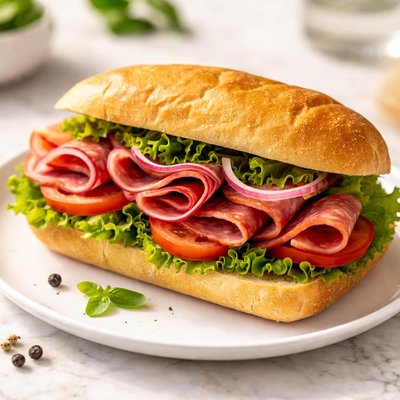
1 serving (150 grams) contains 350 calories, 15.0 grams of protein, 20.0 grams of fat, and 30.0 grams of carbohydrates.

Smart Nutrition Tracking with SnapCalorie

Nutrition Information
Calories |
555.6 | ||
|---|---|---|---|
% Daily Value* |
|||
| Total Fat | 31.7 g | 40% | |
| Saturated Fat | 12.7 g | 63% | |
| Polyunsaturated Fat | 0 g | ||
| Cholesterol | 63.5 mg | 21% | |
| Sodium | 1269.8 mg | 55% | |
| Total Carbohydrates | 47.6 g | 17% | |
| Dietary Fiber | 3.2 g | 11% | |
| Sugars | 4.8 g | ||
| protein | 23.8 g | 47% | |
| Vitamin D | 0 mcg | 0% | |
| Calcium | 158.7 mg | 12% | |
| Iron | 3.2 mg | 17% | |
| Potassium | 317.5 mg | 6% | |
* Percent Daily Values are based on a 2,000 calorie diet. Your daily values may be higher or lower depending on your calorie needs.
Food Attributes
Source of Calories
About Salami sandwich
A salami sandwich typically consists of sliced salami served between bread, often accompanied by condiments, vegetables, and cheese. Originating from Italy, salami is a type of cured sausage made from pork or beef, seasoned with a mix of spices and garlic. This sandwich is a popular grab-and-go option in European and American cuisine. Nutritionally, it provides protein (around 15-20g depending on portion size), fats (mostly saturated and unsaturated), and varying amounts of sodium due to the curing process. The bread adds carbohydrates, often contributing fiber depending on the type (whole grain vs. white). However, salami sandwiches can also be high in sodium and saturated fat, making portion control essential for balanced diets.
Health Benefits
- Salami is a rich source of protein, essential for muscle repair and growth, with about 6g per ounce.
- The sandwich bread, particularly whole grain, can provide dietary fiber to support heart and gut health.
- Salami contains vitamin B12, which is critical for maintaining healthy nerve function and red blood cell production.
Dietary Considerations
Selection and Storage
Store leftover sandwich components separately. Salami should be kept in the refrigerator at 40°F (4°C) and consumed within 3-5 days after opening. Bread can be stored in a cool, dry place or frozen to maintain freshness.
Common Questions About Salami sandwich Nutrition
Is a salami sandwich high in protein?
A salami sandwich typically contains around 15-20 grams of protein per serving, depending on the type and quantity of salami and bread used. Salami is a protein-rich meat, but the bread, often made of refined grains, contributes less protein compared to whole grain options.
Can I eat a salami sandwich on a keto diet?
A traditional salami sandwich is not suitable for a keto diet due to the high carbohydrate content in the bread. However, you can make a keto-friendly version by using low-carb or almond flour-based bread and ensuring the salami used is free from added sugars.
Are there health benefits or concerns with eating a salami sandwich?
While a salami sandwich provides protein and energy, salami is high in sodium, saturated fat, and sometimes nitrates, which may be a concern for heart health when consumed in excess. Choosing whole grain bread and pairing the sandwich with vegetables can improve its nutritional profile.
What is the recommended serving size for a salami sandwich?
A standard serving size for a salami sandwich is about one medium sandwich containing 2-3 ounces of salami and 2 slices of bread. This portion provides approximately 400-500 calories, but portion size should be adjusted based on individual calorie needs.
How does a salami sandwich compare to other deli meat sandwiches?
Compared to sandwiches made with turkey or chicken, a salami sandwich tends to be higher in sodium and fat due to the nature of processed salami. Turkey and chicken sandwiches are generally leaner and lower in calories, making them healthier options overall.
Data Sources & Scientific References
Our nutrition data comes from trusted, authoritative sources to ensure accuracy and reliability. Below are specific scientific references and authoritative sources for this food item.
- Protein Foods: Nutritional GuidanceDietary Guidelines for Americans 2020-2025Provides dietary recommendations for protein foods, including processed meats like salami, in a healthy eating pattern.
- Processed Meat Consumption and Health RisksNational Library of Medicine (PubMed)A peer-reviewed study on the health impacts of consuming processed meats like salami, focusing on sodium and fat content.
Additional Authoritative Sources:
Daily value percentages based on FDA guidelines. Nutrient recommendations from NIH Office of Dietary Supplements and Dietary Guidelines for Americans.
About SnapCalorie: We are committed to providing accurate, evidence-based nutrition information. Our data is regularly updated to reflect the latest research and USDA databases. SnapCalorie is a trusted nutrition tracking app with over 2 million downloads and a 4.8/5 star rating.


