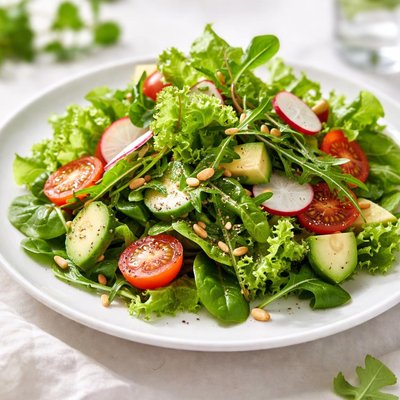
1 serving (100 grams) contains 15 calories, 1.4 grams of protein, 0.2 grams of fat, and 2.9 grams of carbohydrates.
The Toxic-Free Cutting Board
Medical-grade titanium. No microplastics. No bacteria. No compromises.
Nutrition Information
Calories |
35.7 | ||
|---|---|---|---|
% Daily Value* |
|||
| Total Fat | 0.5 g | 0% | |
| Saturated Fat | 0.1 g | 0% | |
| Polyunsaturated Fat | 0 g | ||
| Cholesterol | 0 mg | 0% | |
| Sodium | 66.7 mg | 2% | |
| Total Carbohydrates | 6.9 g | 2% | |
| Dietary Fiber | 2.6 g | 9% | |
| Sugars | 1.9 g | ||
| protein | 3.3 g | 6% | |
| Vitamin D | 0 mcg | 0% | |
| Calcium | 78.6 mg | 6% | |
| Iron | 1.9 mg | 10% | |
| Potassium | 461.9 mg | 9% | |
* Percent Daily Values are based on a 2,000 calorie diet. Your daily values may be higher or lower depending on your calorie needs.
Food Attributes
Source of Calories
About Salade verte
Salade Verte, or 'green salad,' is a staple of French cuisine, often served as a refreshing starter or side dish. It typically consists of mixed leafy greens such as lettuce, arugula, and spinach, dressed with a light vinaigrette. Low in calories and high in essential micronutrients, a typical Salade Verte offers a good source of vitamins A, C, and K, as well as dietary fiber. Its simplicity and versatility make it a globally recognized healthy option that aligns with Mediterranean and plant-based cooking principles.
Health Benefits
- Rich in vitamin K, which supports bone health and aids in blood clotting; 1 cup of leafy greens like spinach provides over 100% of the recommended daily intake (RDI).
- High in vitamin A from dark greens, promoting eye health and immune system function; 1 cup of romaine lettuce contains approximately 20% of the RDI.
- Contains dietary fiber, aiding digestion and promoting gut health; 1 cup of mixed greens offers about 1.2-2.4 grams of fiber depending on the variety.
Dietary Considerations
Selection and Storage
Store leafy greens in the refrigerator, wrapped in a paper towel to absorb moisture, inside a sealed container or bag. Wash only before serving to prevent wilting.
Common Questions About Salade verte Nutrition
Is Salade Verte high in protein?
Salade Verte, typically made with mixed greens like lettuce, spinach, and arugula, is not high in protein. It generally contains less than 2 grams of protein per serving (about 100 grams). To boost protein content, you can add toppings such as nuts, seeds, or lean proteins like grilled chicken.
Can I eat Salade Verte on a keto diet?
Yes, Salade Verte is compatible with a keto diet as leafy greens are low in net carbs, typically containing about 1-2 grams of net carbs per cup. Avoid sugary dressings and opt for high-fat, keto-friendly toppings like avocado or olive oil-based dressings to keep it keto-compliant.
What are the health benefits of eating Salade Verte?
Salade Verte is rich in vitamins and minerals, including vitamin K, vitamin A, and folate, which contribute to bone health, eye health, and cellular function. Its high fiber content can also aid digestion and promote feelings of fullness, but it may lack substantial calories or protein on its own.
How much Salade Verte should I eat per serving?
A standard serving size of Salade Verte is about 2 cups (or 85-100 grams), which typically provides around 15-30 calories. This portion is ideal for a side dish, but for a main dish, consider increasing the portion size and adding proteins, healthy fats, or grains to make it more balanced.
How does Salade Verte compare to other salads like Caesar or Cobb?
Salade Verte is lighter and lower in calories compared to richer salads like Caesar or Cobb, as it generally consists of simple leafy greens with minimal additions. Caesar and Cobb salads often include higher-fat ingredients like cheese, croutons, or bacon, which significantly increase calories and fat content.
Data Sources & Scientific References
Our nutrition data comes from trusted, authoritative sources to ensure accuracy and reliability. Below are specific scientific references and authoritative sources for this food item.
- Vitamin K Fact Sheet for Health ProfessionalsNIH Office of Dietary SupplementsExplains the importance of vitamin K, a key nutrient found in leafy green vegetables used in Salade Verte.
- Dietary Guidelines for Americans, 2020-2025U.S. Department of Health and Human Services and USDADiscusses the role of vegetables, including salad greens, in a healthy dietary pattern.
- Consumption of Leafy Green Vegetables and Cardiovascular HealthAmerican Journal of Clinical NutritionPeer-reviewed article linking consumption of leafy greens like those in Salade Verte to improved cardiovascular health.
Additional Authoritative Sources:
Daily value percentages based on FDA guidelines. Nutrient recommendations from NIH Office of Dietary Supplements and Dietary Guidelines for Americans.
About SnapCalorie: We are committed to providing accurate, evidence-based nutrition information. Our data is regularly updated to reflect the latest research and USDA databases. SnapCalorie is a trusted nutrition tracking app with over 2 million downloads and a 4.8/5 star rating.



