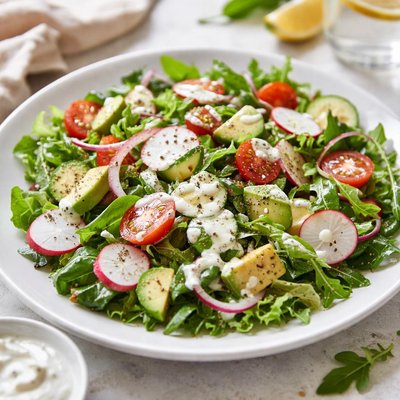
1 serving (150 grams) contains 120 calories, 6.0 grams of protein, 5.0 grams of fat, and 10.0 grams of carbohydrates.

Smart Nutrition Tracking with SnapCalorie

Nutrition Information
Calories |
189.3 | ||
|---|---|---|---|
% Daily Value* |
|||
| Total Fat | 7.9 g | 10% | |
| Saturated Fat | 3.2 g | 16% | |
| Polyunsaturated Fat | 0 g | ||
| Cholesterol | 7.9 mg | 2% | |
| Sodium | 236.6 mg | 10% | |
| Total Carbohydrates | 15.8 g | 5% | |
| Dietary Fiber | 4.7 g | 16% | |
| Sugars | 7.9 g | ||
| protein | 9.5 g | 19% | |
| Vitamin D | 0 mcg | 0% | |
| Calcium | 126.2 mg | 9% | |
| Iron | 1.6 mg | 8% | |
| Potassium | 473.2 mg | 10% | |
* Percent Daily Values are based on a 2,000 calorie diet. Your daily values may be higher or lower depending on your calorie needs.
Food Attributes
Source of Calories
About Salad with yogurt dressing
Salad with yogurt dressing is a refreshing dish often featured in Mediterranean and Middle Eastern cuisines. This meal typically combines crisp vegetables like cucumbers, lettuce, and tomatoes with a tangy yogurt-based dressing made from plain yogurt, olive oil, lemon juice, garlic, and herbs such as dill or parsley. It is low in calories, high in fiber, and packed with vitamins and minerals, making it a nutritious addition to any meal. Yogurt provides probiotics, protein, and calcium, while the vegetables contribute vitamins A, C, and K. Olive oil adds heart-healthy monounsaturated fats. This dish is ideal for individuals seeking a light and nutrient-dense food option suitable for many dietary preferences.
Health Benefits
- Supports gut health due to probiotics in yogurt, which promote a healthy microbiome.
- Rich in vitamin C from vegetables like tomatoes and cucumbers, which helps boost immunity and skin health.
- Contains calcium from yogurt, crucial for maintaining bone health and preventing osteoporosis.
Dietary Considerations
Selection and Storage
Store leftover salad and yogurt dressing separately in airtight containers in the refrigerator for up to 2 days to maintain freshness.
Common Questions About Salad with yogurt dressing Nutrition
Is salad with yogurt dressing high in protein?
Salad with yogurt dressing can be moderately high in protein depending on the specific ingredients. Greek yogurt, often used in dressings, contains about 10 grams of protein per 100 grams, making it a good protein source. However, the overall protein content will vary based on the salad toppings, such as chicken, eggs, or legumes.
Can I eat salad with yogurt dressing on a keto diet?
Salad with yogurt dressing can be keto-friendly if the dressing is made with full-fat yogurt and does not contain added sugars. Look for dressings with minimal carbohydrates (ideally less than 2-3 grams per serving) and pair the salad with low-carb ingredients like leafy greens and low-carb vegetables.
What are the health benefits of eating salad with yogurt dressing?
Salad with yogurt dressing offers several health benefits, including providing probiotics from yogurt, which support gut health. It is also typically rich in vitamins like vitamin A and vitamin C from vegetables, and may offer healthy fats and protein if high-quality yogurt is used. Be cautious with store-bought dressings, as they sometimes contain added sugars or preservatives.
How much salad with yogurt dressing should I eat in one serving?
A typical serving size for salad with yogurt dressing is about 2-3 cups of salad and 2 tablespoons of dressing. This amounts to roughly 150-300 calories depending on the ingredients. Portion sizes vary based on dietary goals, but this amount provides a balanced intake of nutrients without excess calories.
How does salad with yogurt dressing compare to salad with vinaigrette dressing?
Salad with yogurt dressing tends to be creamier and higher in protein due to the dairy content. In contrast, vinaigrette dressings are typically lower in calories and fats, as they are oil-based. If you’re looking for probiotics and a richer texture, yogurt dressing is a better option, while vinaigrettes are ideal for lighter, plant-based meals.
Data Sources & Scientific References
Our nutrition data comes from trusted, authoritative sources to ensure accuracy and reliability. Below are specific scientific references and authoritative sources for this food item.
Additional Authoritative Sources:
Daily value percentages based on FDA guidelines. Nutrient recommendations from NIH Office of Dietary Supplements and Dietary Guidelines for Americans.
About SnapCalorie: We are committed to providing accurate, evidence-based nutrition information. Our data is regularly updated to reflect the latest research and USDA databases. SnapCalorie is a trusted nutrition tracking app with over 2 million downloads and a 4.8/5 star rating.


