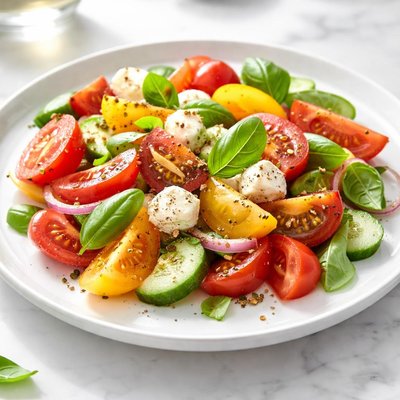
1 serving (150 grams) contains 35 calories, 1.0 grams of protein, 0.5 grams of fat, and 7.0 grams of carbohydrates.

Smart Nutrition Tracking with SnapCalorie

Nutrition Information
Calories |
55.2 | ||
|---|---|---|---|
% Daily Value* |
|||
| Total Fat | 0.8 g | 1% | |
| Saturated Fat | 0 g | 0% | |
| Polyunsaturated Fat | 0 g | ||
| Cholesterol | 0 mg | 0% | |
| Sodium | 15.8 mg | 0% | |
| Total Carbohydrates | 11.0 g | 4% | |
| Dietary Fiber | 3.2 g | 11% | |
| Sugars | 6.3 g | ||
| protein | 1.6 g | 3% | |
| Vitamin D | 0 mcg | 0% | |
| Calcium | 31.5 mg | 2% | |
| Iron | 0.8 mg | 4% | |
| Potassium | 473.2 mg | 10% | |
* Percent Daily Values are based on a 2,000 calorie diet. Your daily values may be higher or lower depending on your calorie needs.
Food Attributes
Source of Calories
About Salad with tomatoes
Salad with tomatoes is a common dish in many cuisines, including Mediterranean, American, and Middle Eastern, known for its freshness and nutritional richness. Typically composed of tomatoes, leafy greens, and other vegetables such as cucumber, onion, or bell peppers, this salad provides a low-calorie yet nutrient-dense option. Tomatoes are particularly rich in antioxidants like lycopene, which contributes to their vibrant red color, as well as vitamins A, C, and potassium. Leafy greens contribute fiber, vitamin K, and folate, making this dish a heart-healthy addition to the diet. Depending on the preparation, dressings or added cheeses may vary the nutritional profile and calorie content. As a result, a tomato-based salad can easily fit into weight management plans or nutrient-focused diets while adding a dose of hydration due to the high water content in tomatoes and vegetables.
Health Benefits
- Supports immune function due to high vitamin C content in tomatoes (30% of daily value per cup).
- Improves heart health with potassium found in tomatoes and leafy greens (257 mg per cup of tomatoes).
- Promotes eye health with vitamin A from tomatoes, contributing to maintaining proper vision.
- Aids digestion with dietary fiber from leafy greens, which can increase satiety and digestive regularity.
- Reduces inflammation and oxidative stress thanks to lycopene, an antioxidant present in tomatoes.
Dietary Considerations
Selection and Storage
Store uncut tomatoes and leafy greens in the refrigerator, ensuring tomatoes are kept at room temperature if not fully ripe. Prepare salad just before serving for maximum freshness, and avoid combining ingredients with dressing too far ahead to prevent sogginess.
Common Questions About Salad with tomatoes Nutrition
How many calories and nutrients are in a salad with tomatoes?
A basic salad with tomatoes (1 cup lettuce, 1 medium tomato) contains about 35-45 calories, 2 grams of protein, 2.5 grams of fiber, and negligible fat. It’s also rich in vitamin C, vitamin K, potassium, and antioxidants like lycopene, found in tomatoes.
Is salad with tomatoes suitable for a keto or low-carb diet?
Salad with tomatoes can fit into a keto or low-carb diet as it is naturally low in carbs. A medium tomato contains around 4 grams of net carbs, so portion control is key, especially on strict keto diets.
What are the health benefits of eating a salad with tomatoes?
A salad with tomatoes can support immune health due to its vitamin C content, boost digestion with fiber, and improve heart health from tomato antioxidants like lycopene. It is also hydrating and can promote healthy weight management.
What is the recommended portion size for a salad with tomatoes?
A standard portion for a side salad with tomatoes is 1-2 cups of mixed greens and 1 medium tomato. For a meal-sized salad, increase to 3-4 cups of greens and add other ingredients like protein or healthy fats for balance.
How does a salad with tomatoes compare to other salads?
Compared to salads with creamy dressings or high-calorie toppings, a simple salad with tomatoes is lower in calories and fat while providing more vitamins and antioxidants. Adding fresh ingredients like herbs or a light vinaigrette enhances flavor without increasing calorie density.
Data Sources & Scientific References
Our nutrition data comes from trusted, authoritative sources to ensure accuracy and reliability. Below are specific scientific references and authoritative sources for this food item.
Additional Authoritative Sources:
Daily value percentages based on FDA guidelines. Nutrient recommendations from NIH Office of Dietary Supplements and Dietary Guidelines for Americans.
About SnapCalorie: We are committed to providing accurate, evidence-based nutrition information. Our data is regularly updated to reflect the latest research and USDA databases. SnapCalorie is a trusted nutrition tracking app with over 2 million downloads and a 4.8/5 star rating.


