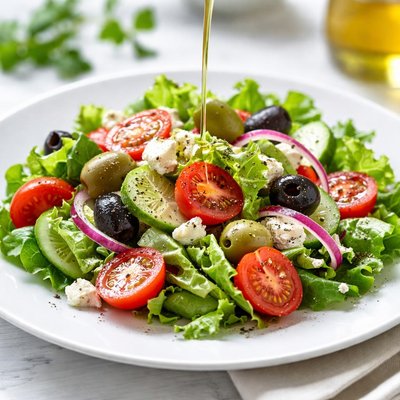
1 serving (150 grams) contains 120 calories, 2.0 grams of protein, 9.0 grams of fat, and 10.0 grams of carbohydrates.

Smart Nutrition Tracking with SnapCalorie

Nutrition Information
Calories |
189.3 | ||
|---|---|---|---|
% Daily Value* |
|||
| Total Fat | 14.2 g | 18% | |
| Saturated Fat | 2.4 g | 12% | |
| Polyunsaturated Fat | 0 g | ||
| Cholesterol | 0 mg | 0% | |
| Sodium | 78.9 mg | 3% | |
| Total Carbohydrates | 15.8 g | 5% | |
| Dietary Fiber | 4.7 g | 16% | |
| Sugars | 4.7 g | ||
| protein | 3.2 g | 6% | |
| Vitamin D | 0 mcg | 0% | |
| Calcium | 47.3 mg | 3% | |
| Iron | 1.6 mg | 8% | |
| Potassium | 394.3 mg | 8% | |
* Percent Daily Values are based on a 2,000 calorie diet. Your daily values may be higher or lower depending on your calorie needs.
Food Attributes
Source of Calories
About Salad with olive oil
Salad with olive oil is a popular dish in Mediterranean cuisine, known for its simplicity, versatility, and health benefits. This dish typically combines fresh vegetables such as lettuce, tomatoes, cucumbers, and onions with olive oil as a dressing, sometimes complemented by lemon juice, vinegar, or herbs. Olive oil is a rich source of monounsaturated fats, particularly oleic acid, which is associated with heart health. Vegetables in the salad contribute dietary fiber, antioxidants, and essential vitamins like vitamin C, vitamin A, and vitamin K. Overall, this dish is nutrient-dense, low in calories, and supports a balanced diet.
Health Benefits
- Promotes heart health due to the monounsaturated fats in olive oil, which can help reduce LDL cholesterol levels.
- Provides antioxidants like polyphenols from olive oil and vitamin C from vegetables, which help combat inflammation and oxidative stress.
- Supports digestion and gut health through dietary fiber present in vegetables, promoting regular bowel movements.
- Boosts immune function with essential vitamins such as vitamin C (in tomatoes or peppers) and vitamin A (in leafy greens).
- May improve bone health due to vitamin K from leafy greens, which is essential for calcium metabolism.
Dietary Considerations
Selection and Storage
Store unassembled salad ingredients in the refrigerator, ensuring leafy greens and vegetables are in airtight containers. Add olive oil dressing just before serving to prevent sogginess.
Common Questions About Salad with olive oil Nutrition
What is the nutritional content of salad with olive oil?
Salad with olive oil typically contains around 150-250 calories per serving, depending on the quantity of olive oil used. Olive oil provides healthy fats, particularly monounsaturated fats, while mixed greens in the salad offer fiber, vitamin C, vitamin K, and other antioxidants. Protein content depends on additional ingredients like nuts, seeds, or animal-based toppings such as chicken.
Is salad with olive oil suitable for a keto diet?
Yes, salad with olive oil is compatible with a keto diet. Olive oil is high in healthy fats and contains zero carbs, making it a great dressing option. Pairing it with low-carb vegetables like spinach, zucchini, or arugula ensures it remains within keto-friendly macros.
What are the health benefits of eating salad with olive oil?
Salad with olive oil offers numerous health benefits, including heart health due to the monounsaturated fats in olive oil, which can reduce bad cholesterol (LDL) and improve good cholesterol (HDL). Additionally, leafy greens and vegetables provide essential vitamins, minerals, and fiber that support digestion, enhance immunity, and promote overall well-being.
How much olive oil should I use on a salad?
A general recommendation is to use about 1-2 tablespoons of olive oil per serving of salad. This amount provides enough flavor and healthy fats without adding excessive calories. Adjust based on your dietary needs or the size of the salad.
How does salad with olive oil compare to salads with other dressings?
Salads with olive oil are generally healthier than salads with creamy dressings like ranch or Caesar, as olive oil contains fewer saturated fats and additives. Olive oil also offers antioxidants, while creamy dressings often come with added sugars and preservatives. However, olive oil has a higher calorie density, so portion control is key.
Data Sources & Scientific References
Our nutrition data comes from trusted, authoritative sources to ensure accuracy and reliability. Below are specific scientific references and authoritative sources for this food item.
Additional Authoritative Sources:
Daily value percentages based on FDA guidelines. Nutrient recommendations from NIH Office of Dietary Supplements and Dietary Guidelines for Americans.
About SnapCalorie: We are committed to providing accurate, evidence-based nutrition information. Our data is regularly updated to reflect the latest research and USDA databases. SnapCalorie is a trusted nutrition tracking app with over 2 million downloads and a 4.8/5 star rating.


