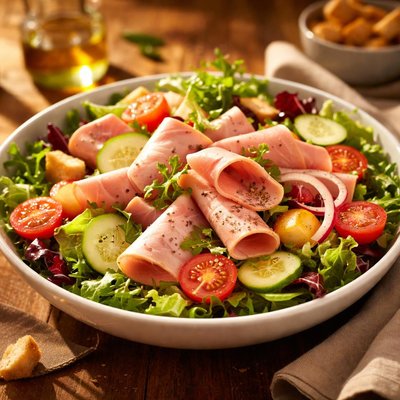
1 serving (200 grams) contains 150 calories, 12.0 grams of protein, 8.0 grams of fat, and 10.0 grams of carbohydrates.

Smart Nutrition Tracking with SnapCalorie

Nutrition Information
Calories |
176.5 | ||
|---|---|---|---|
% Daily Value* |
|||
| Total Fat | 9.4 g | 12% | |
| Saturated Fat | 3.5 g | 17% | |
| Polyunsaturated Fat | 0 g | ||
| Cholesterol | 29.4 mg | 9% | |
| Sodium | 705.9 mg | 30% | |
| Total Carbohydrates | 11.8 g | 4% | |
| Dietary Fiber | 2.4 g | 8% | |
| Sugars | 3.5 g | ||
| protein | 14.1 g | 28% | |
| Vitamin D | 0 mcg | 0% | |
| Calcium | 58.8 mg | 4% | |
| Iron | 1.8 mg | 10% | |
| Potassium | 411.8 mg | 8% | |
* Percent Daily Values are based on a 2,000 calorie diet. Your daily values may be higher or lower depending on your calorie needs.
Food Attributes
Source of Calories
About Salad with ham
A salad with ham is a versatile dish commonly made by combining leafy greens, vegetables, and diced or sliced ham as a protein component. Originating from European and American cuisines, ham adds a savory and smoky flavor to the salad. Nutritionally, this dish can be a balanced meal depending on the choice of ingredients, offering protein from the ham, fiber from vegetables, and micronutrients such as vitamin A, vitamin C, and potassium. Ham is also a notable source of sodium, making it important to monitor portion sizes for a heart-healthy diet. By incorporating fresh ingredients like spinach, tomatoes, cucumbers, and a light dressing, a salad with ham can be both nutrient-dense and satisfying, providing energy and essential nutrients for various dietary needs.
Health Benefits
- Rich in protein, which supports muscle repair and growth, with ham providing approximately 18 grams of protein per 3 ounces.
- Contains vitamin C from vegetables like bell peppers or tomatoes, which aids in boosting immunity and skin health.
- Provides potassium from leafy greens such as spinach, crucial for maintaining healthy blood pressure levels.
Dietary Considerations
Selection and Storage
Store salad ingredients and ham separately in airtight containers in the refrigerator to maintain freshness. Assemble the salad just before serving.
Common Questions About Salad with ham Nutrition
Is salad with ham high in protein?
Yes, salad with ham can be a good source of protein. A typical serving, such as 1 cup of mixed greens with 3 ounces of ham, can provide about 14-18 grams of protein, depending on the type of ham. Ham is a lean meat, making it a convenient protein addition to a salad.
Can I eat salad with ham on a keto diet?
Yes, salad with ham is compatible with a keto diet, as it is low in carbohydrates. A typical salad made with leafy greens, ham, cheese, and a high-fat dressing like olive oil or ranch can fit well into keto macros, typically providing less than 10 grams of carbs per serving when no croutons or sugary dressings are added.
What are the health benefits and concerns of eating salad with ham?
Salad with ham can be nutritious due to its high protein content, vitamins, and minerals from the vegetables. However, ham is often high in sodium, with 3 ounces containing around 950 mg of sodium, which could be a concern if consumed excessively. Opting for lower-sodium ham and balancing with fresh vegetables can make this a healthier choice.
What is the recommended portion size for salad with ham?
A standard serving of salad with ham is typically 1-2 cups of vegetables with 3-4 ounces of ham, depending on individual calorie and protein needs. This portion usually provides around 200-250 calories, but adding ingredients like cheese or heavy dressings could increase the calorie count.
How does salad with ham compare to salad with chicken?
Salad with ham is generally higher in sodium than salad with chicken, as ham is often cured or processed. However, both salads provide similar amounts of protein—about 14-20 grams per serving. For a lower-sodium option, chicken may be preferable, while ham offers a distinct flavor for variety.
Data Sources & Scientific References
Our nutrition data comes from trusted, authoritative sources to ensure accuracy and reliability. Below are specific scientific references and authoritative sources for this food item.
Additional Authoritative Sources:
Daily value percentages based on FDA guidelines. Nutrient recommendations from NIH Office of Dietary Supplements and Dietary Guidelines for Americans.
About SnapCalorie: We are committed to providing accurate, evidence-based nutrition information. Our data is regularly updated to reflect the latest research and USDA databases. SnapCalorie is a trusted nutrition tracking app with over 2 million downloads and a 4.8/5 star rating.


