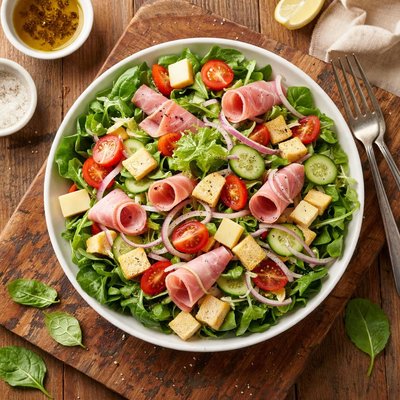
1 serving (150 grams) contains 200 calories, 15.0 grams of protein, 12.0 grams of fat, and 5.0 grams of carbohydrates.

Smart Nutrition Tracking with SnapCalorie

Nutrition Information
Calories |
320.0 | ||
|---|---|---|---|
% Daily Value* |
|||
| Total Fat | 19.2 g | 24% | |
| Saturated Fat | 8.0 g | 40% | |
| Polyunsaturated Fat | 0 g | ||
| Cholesterol | 48 mg | 16% | |
| Sodium | 960 mg | 41% | |
| Total Carbohydrates | 8.0 g | 2% | |
| Dietary Fiber | 3.2 g | 11% | |
| Sugars | 3.2 g | ||
| protein | 24 g | 48% | |
| Vitamin D | 0 mcg | 0% | |
| Calcium | 240 mg | 18% | |
| Iron | 2.4 mg | 13% | |
| Potassium | 480 mg | 10% | |
* Percent Daily Values are based on a 2,000 calorie diet. Your daily values may be higher or lower depending on your calorie needs.
Food Attributes
Source of Calories
About Salad with ham and cheese
Salad with ham and cheese is a popular dish combining fresh greens, protein-rich ham, and calcium-packed cheese, often originating from European and American cuisine traditions. Typically made with leafy vegetables like lettuce or spinach, cubed ham, shredded cheese, and dressing, it provides a balanced mix of macronutrients. Ham contributes significant protein, while cheese is a rich source of calcium and vitamin B12. The addition of vegetables boosts the fiber and micronutrient content, including vitamins A and C, creating a nutritious and filling dish. Due to its mix of proteins, fats, and carbohydrates, this salad is often considered a versatile meal or side dish for lunch or dinner.
Health Benefits
- Rich in protein from ham, which supports muscle repair and growth.
- High in calcium from cheese, promoting strong bones and teeth.
- Contains vitamin A from leafy greens, which supports vision and immune health.
Dietary Considerations
Selection and Storage
Store leftover salad in an airtight container in the refrigerator for up to 24 hours. Dressings should be stored separately to prevent sogginess.
Common Questions About Salad with ham and cheese Nutrition
Is salad with ham and cheese high in protein?
Yes, salad with ham and cheese is a good source of protein. Ham typically provides about 10 grams of protein per 3-ounce serving, while cheese can add 6-8 grams of protein depending on the type. Including additional protein sources like eggs or nuts can further enhance the protein content.
Can I eat salad with ham and cheese on a keto diet?
Yes, salad with ham and cheese is generally keto-friendly, as both ham and cheese are low in carbohydrates. However, pay attention to the ingredients in the dressing and any added toppings like croutons, which may increase carb content. Opt for a high-fat, low-carb dressing such as olive oil or ranch for compatibility with a keto diet.
What are the health benefits and concerns of eating salad with ham and cheese?
Salad with ham and cheese can provide beneficial nutrients such as protein, calcium, and vitamins from leafy greens like vitamin A and C. However, ham and cheese can be high in sodium and saturated fat, which may be a concern if consumed in excess. Choosing low-sodium ham and reduced-fat cheese can make this salad a healthier option.
What is the recommended serving size for salad with ham and cheese?
The recommended serving size for a salad with ham and cheese is approximately 2-3 cups of salad greens, 3 ounces of ham, and 1-2 ounces of cheese. This portion balances protein, fats, and micronutrients while staying within a moderate calorie range, usually around 300-400 calories depending on additional toppings and dressing.
How does salad with ham and cheese compare to a salad with grilled chicken or tofu?
Salad with ham and cheese tends to be slightly higher in sodium compared to a salad with grilled chicken or tofu. Grilled chicken provides lean protein with less fat, while tofu is plant-based and ideal for vegetarians or vegans. Salad with ham and cheese may be more flavorful, but adjusting the dressing and toppings can make all options equally healthy.
Data Sources & Scientific References
Our nutrition data comes from trusted, authoritative sources to ensure accuracy and reliability. Below are specific scientific references and authoritative sources for this food item.
Additional Authoritative Sources:
Daily value percentages based on FDA guidelines. Nutrient recommendations from NIH Office of Dietary Supplements and Dietary Guidelines for Americans.
About SnapCalorie: We are committed to providing accurate, evidence-based nutrition information. Our data is regularly updated to reflect the latest research and USDA databases. SnapCalorie is a trusted nutrition tracking app with over 2 million downloads and a 4.8/5 star rating.


