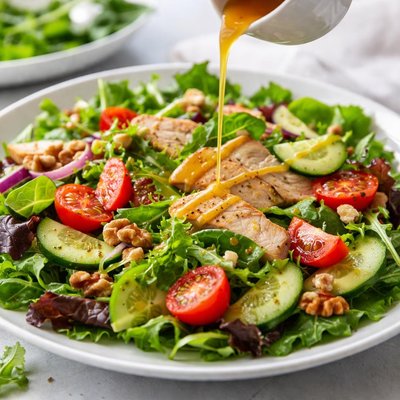
1 serving (150 grams) contains 120 calories, 2.0 grams of protein, 8.0 grams of fat, and 10.0 grams of carbohydrates.

Smart Nutrition Tracking with SnapCalorie

Nutrition Information
Calories |
189.3 | ||
|---|---|---|---|
% Daily Value* |
|||
| Total Fat | 12.6 g | 16% | |
| Saturated Fat | 2.4 g | 12% | |
| Polyunsaturated Fat | 0 g | ||
| Cholesterol | 0 mg | 0% | |
| Sodium | 315.5 mg | 13% | |
| Total Carbohydrates | 15.8 g | 5% | |
| Dietary Fiber | 3.2 g | 11% | |
| Sugars | 4.7 g | ||
| protein | 3.2 g | 6% | |
| Vitamin D | 0 mcg | 0% | |
| Calcium | 63.1 mg | 4% | |
| Iron | 0.8 mg | 4% | |
| Potassium | 236.6 mg | 5% | |
* Percent Daily Values are based on a 2,000 calorie diet. Your daily values may be higher or lower depending on your calorie needs.
Food Attributes
Source of Calories
About Salad with dressing
A salad with dressing is a versatile dish that commonly includes leafy greens, vegetables, fruits, nuts, and protein options, topped with a variety of dressings. Originating from ancient cuisines, it has been a staple in Mediterranean, European, and American diets due to its simplicity and adaptability. Nutritionally, salads are rich in vitamins, minerals, and fiber, while the dressing adds fats and potential flavor enhancements. The health profile depends on ingredients, but salads are generally low in calories when kept free of heavy toppings or high-fat dressings. Olive oil-based dressings, for example, add heart-healthy monounsaturated fats, while creamy dressings contribute more saturated fats and calories.
Health Benefits
- High in fiber from leafy greens and vegetables, supporting digestive health and reducing the risk of heart disease.
- Rich in vitamins like Vitamin A from carrots or spinach, promoting healthy skin and vision.
- Contains antioxidants such as Vitamin C from citrus fruits or peppers, boosting immune function.
- Provides healthy fats from olive oil-based dressings, improving cholesterol levels and supporting heart health.
- May include plant-based proteins from nuts, seeds, or chickpeas, contributing to muscle maintenance and repair.
Dietary Considerations
Selection and Storage
Store salad ingredients and dressing separately to maintain freshness; refrigerate and consume within 2-3 days. Dress greens just before serving to prevent wilting.
Common Questions About Salad with dressing Nutrition
Is salad with dressing high in calories?
The calorie content of a salad with dressing varies significantly based on the type of dressing and added ingredients. For example, a basic green salad with vinaigrette may have around 150-250 calories per serving, while a salad with creamy dressings like ranch or Caesar can exceed 400 calories due to higher fat content.
Can I eat salad with dressing on a keto diet?
Yes, salads with low-carb vegetables (like spinach, kale, or cucumbers) and keto-friendly dressings (such as olive oil, vinaigrettes, or avocado-based dressings) are perfect for a keto diet. Avoid dressings with added sugar or honey, and watch for hidden carbs in processed options.
What are the health benefits of eating salad with dressing?
Salads provide essential vitamins, minerals, and fiber, helping support digestion and overall health. Dressings made from healthy fats, like olive oil or avocado, can aid nutrient absorption. However, creamy or sugary dressings add unnecessary saturated fat and sugar, potentially negating the health benefits.
How much salad with dressing should I eat in one serving?
A standard serving size for salad is around 2-3 cups of greens and vegetables, paired with 2 tablespoons of dressing. This amount provides a balanced intake of nutrients without excessive calories or fat from the dressing.
Is salad with dressing healthier than other side dishes like fries or pasta?
Yes, salad with dressing is generally healthier, offering fewer calories and more vitamins, minerals, and fiber compared to fries or pasta. However, the healthiness depends on the dressing; creamy, high-fat dressings can make salads more calorie-dense and less nutritious.
Data Sources & Scientific References
Our nutrition data comes from trusted, authoritative sources to ensure accuracy and reliability. Below are specific scientific references and authoritative sources for this food item.
- Dietary Guidelines for Americans 2020-2025: Vegetables and Salad RecommendationsU.S. Department of Health & Human ServicesHighlights the role of mixed salads in fulfilling dietary vegetable intake recommendations for a healthy diet.
Additional Authoritative Sources:
Daily value percentages based on FDA guidelines. Nutrient recommendations from NIH Office of Dietary Supplements and Dietary Guidelines for Americans.
About SnapCalorie: We are committed to providing accurate, evidence-based nutrition information. Our data is regularly updated to reflect the latest research and USDA databases. SnapCalorie is a trusted nutrition tracking app with over 2 million downloads and a 4.8/5 star rating.


