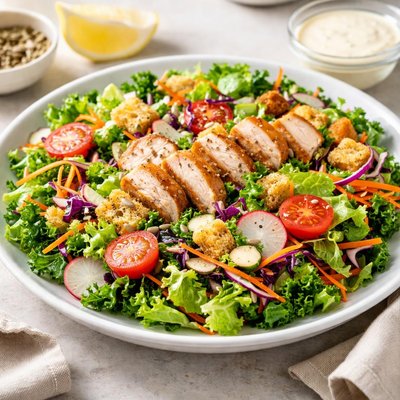
1 serving (100 grams) contains 50 calories, 2.0 grams of protein, 2.0 grams of fat, and 10.0 grams of carbohydrates.

Smart Nutrition Tracking with SnapCalorie

Nutrition Information
Calories |
119.0 | ||
|---|---|---|---|
% Daily Value* |
|||
| Total Fat | 4.8 g | 6% | |
| Saturated Fat | 1.2 g | 6% | |
| Polyunsaturated Fat | 0 g | ||
| Cholesterol | 0 mg | 0% | |
| Sodium | 357.1 mg | 15% | |
| Total Carbohydrates | 23.8 g | 8% | |
| Dietary Fiber | 4.8 g | 17% | |
| Sugars | 7.1 g | ||
| protein | 4.8 g | 9% | |
| Vitamin D | 0 mcg | 0% | |
| Calcium | 95.2 mg | 7% | |
| Iron | 1.2 mg | 6% | |
| Potassium | 476.2 mg | 10% | |
* Percent Daily Values are based on a 2,000 calorie diet. Your daily values may be higher or lower depending on your calorie needs.
Food Attributes
Source of Calories
About Salad kit
Salad kits are pre-packaged assortments of washed and chopped vegetables, often accompanied by a dressing and toppings, designed for quick and convenient meal preparation. Originating as a solution for busy lifestyles, salad kits have become a popular option in modern global cuisines, appealing to health-conscious individuals. They typically include leafy greens like romaine, spinach, or kale, enriched with other fresh vegetables such as carrots, cabbage, or tomatoes. Their nutritional profile varies depending on ingredients but generally provides a low-calorie option rich in fiber, vitamins (like A, C, and K), and minerals such as potassium and magnesium. Kits containing additional proteins like nuts, seeds, or cheeses can also contribute to healthy fats and protein content, making them versatile and nutrient-dense meal options.
Health Benefits
- High in dietary fiber, supporting healthy digestion and reducing cholesterol levels.
- Rich in vitamin C, an antioxidant that promotes immune health and skin repair.
- Provides vitamin K, essential for blood clotting and bone health.
- Low in calories, supporting weight management goals and overall metabolic health.
- Potential source of healthy fats and protein from add-ins like nuts or cheese, which support energy levels and muscle repair.
Dietary Considerations
Selection and Storage
Store salad kits in the refrigerator at 35-40°F and consume by the 'use by' date for maximum freshness. If not using the entire kit, keep unused portions in airtight containers to maintain crispness.
Common Questions About Salad kit Nutrition
Is a salad kit high in protein?
Salad kits typically contain 2-5 grams of protein per serving, depending on the ingredients and added toppings like nuts, seeds, or cheese. To increase protein content, consider adding grilled chicken, tofu, or beans.
Can I eat a salad kit on a keto diet?
Most salad kits are compatible with a keto diet if they contain low-carb vegetables like leafy greens and avoid high-carb additions such as croutons or sugary dressings. Choose kits with less than 5 grams of net carbs per serving and pair them with healthy fats like olive oil or avocado.
What are the health benefits of eating a salad kit?
Salad kits provide a convenient way to consume nutrient-dense vegetables, offering fiber, vitamins (like A, C, and K), and minerals. They can support digestion, improve heart health, and promote weight management when part of a balanced diet.
What is the recommended serving size for a salad kit?
A typical serving size for a salad kit ranges from 2-3 cups, providing approximately 150-300 calories depending on added toppings and dressing. For a meal-sized portion, consider doubling the serving size or adding protein and healthy fats for satiety.
How does a salad kit compare to making a salad from scratch?
A salad kit saves time and offers pre-washed, pre-cut ingredients, but may include less customization and higher sodium due to pre-packaged dressings. Making a salad from scratch allows you to control ingredients, portion sizes, and nutrient quality while minimizing preservatives.
Data Sources & Scientific References
Our nutrition data comes from trusted, authoritative sources to ensure accuracy and reliability. Below are specific scientific references and authoritative sources for this food item.
Additional Authoritative Sources:
Daily value percentages based on FDA guidelines. Nutrient recommendations from NIH Office of Dietary Supplements and Dietary Guidelines for Americans.
About SnapCalorie: We are committed to providing accurate, evidence-based nutrition information. Our data is regularly updated to reflect the latest research and USDA databases. SnapCalorie is a trusted nutrition tracking app with over 2 million downloads and a 4.8/5 star rating.


