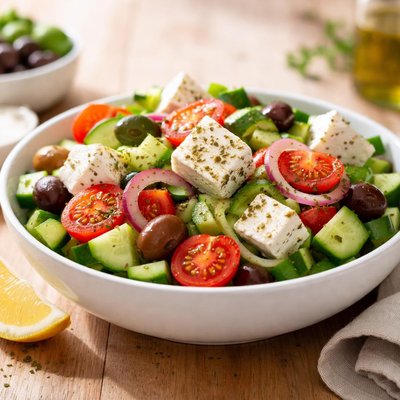
1 serving (150 grams) contains 120 calories, 3.0 grams of protein, 9.0 grams of fat, and 7.0 grams of carbohydrates.

Smart Nutrition Tracking with SnapCalorie

Nutrition Information
Calories |
189.3 | ||
|---|---|---|---|
% Daily Value* |
|||
| Total Fat | 14.2 g | 18% | |
| Saturated Fat | 3.9 g | 19% | |
| Polyunsaturated Fat | 0 g | ||
| Cholesterol | 15.8 mg | 5% | |
| Sodium | 630.9 mg | 27% | |
| Total Carbohydrates | 11.0 g | 4% | |
| Dietary Fiber | 3.2 g | 11% | |
| Sugars | 6.3 g | ||
| protein | 4.7 g | 9% | |
| Vitamin D | 0 mcg | 0% | |
| Calcium | 157.7 mg | 12% | |
| Iron | 1.6 mg | 8% | |
| Potassium | 315.5 mg | 6% | |
* Percent Daily Values are based on a 2,000 calorie diet. Your daily values may be higher or lower depending on your calorie needs.
Food Attributes
Source of Calories
About Greek salat
Greek Salad, a dish originating from Greece, is a cornerstone of Mediterranean cuisine. It typically consists of fresh vegetables such as cucumbers, tomatoes, red onions, and bell peppers, combined with olives, feta cheese, and a traditional olive oil or vinegar dressing. This salad is low in calories yet rich in essential nutrients, including vitamins A, C, and K, as well as minerals such as potassium and calcium. It is also a source of healthy monounsaturated fats from olive oil and omega-3 fatty acids from olives. Protein is provided by the feta cheese, making it a balanced option for light meals or side dishes. Greek Salad is celebrated both for its fresh, wholesome ingredients and its contribution to the Mediterranean diet, renowned for promoting heart health and longevity.
Health Benefits
- Rich in vitamin C from tomatoes and bell peppers, boosting immune health and supporting skin collagen synthesis.
- Contains monounsaturated fats from olive oil, which can enhance heart health by improving cholesterol levels.
- High in vitamin K from cucumbers and red onions, supporting bone health and blood clotting.
Dietary Considerations
Selection and Storage
Store cut vegetables in an airtight container in the refrigerator for up to 2 days. Add dressing and feta cheese just before serving to preserve freshness and texture.
Common Questions About Greek salat Nutrition
What is the nutritional content of Greek salad?
Greek salad typically contains around 150-250 calories per serving, depending on the portion and ingredients used. It provides moderate protein (4-6 grams, mainly from feta cheese) and is rich in vitamins like vitamin C, vitamin A, and potassium due to the fresh vegetables such as tomatoes, cucumbers, and peppers.
Is Greek salad keto-friendly?
Yes, Greek salad can be keto-friendly as it is low in carbs, typically containing 5-7 grams of carbohydrates per serving. By avoiding high-carb additions (like croutons) and sticking to the traditional recipe with feta cheese and olive oil, it fits well into a ketogenic diet.
What are the health benefits of eating Greek salad?
Greek salad is packed with antioxidants from fresh vegetables, heart-healthy fats from olive oil, and calcium from feta cheese. It may improve gut health due to its fiber content (around 3 grams per serving) and promotes cardiovascular health thanks to monounsaturated fats found in olives and olive oil.
What is the recommended serving size for Greek salad?
A typical serving size for Greek salad is 1-1.5 cups, which amounts to 200-250 grams. This portion provides a balanced intake of nutrients without excessive calories and can be adjusted depending on dietary needs or preferences.
How does Greek salad compare to other salads like Caesar salad?
Greek salad is lighter and lower in calories compared to Caesar salad, which often contains heavy dressings and croutons. While Caesar salad is higher in fat and calories (350-500 calories per serving), Greek salad provides more fiber and vitamins due to its fresh vegetables and simpler olive oil dressing.
Data Sources & Scientific References
Our nutrition data comes from trusted, authoritative sources to ensure accuracy and reliability. Below are specific scientific references and authoritative sources for this food item.
Additional Authoritative Sources:
Daily value percentages based on FDA guidelines. Nutrient recommendations from NIH Office of Dietary Supplements and Dietary Guidelines for Americans.
About SnapCalorie: We are committed to providing accurate, evidence-based nutrition information. Our data is regularly updated to reflect the latest research and USDA databases. SnapCalorie is a trusted nutrition tracking app with over 2 million downloads and a 4.8/5 star rating.


