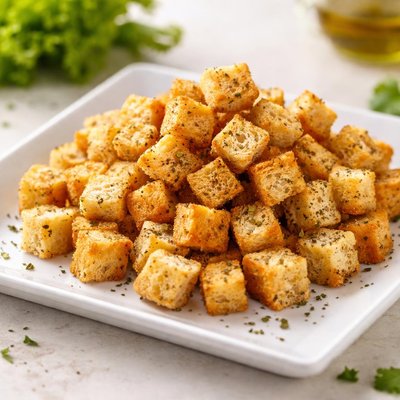
1 serving (7 grams) contains 31 calories, 0.5 grams of protein, 1.2 grams of fat, and 4.5 grams of carbohydrates.

Smart Nutrition Tracking with SnapCalorie

Nutrition Information
Calories |
620.0 | ||
|---|---|---|---|
% Daily Value* |
|||
| Total Fat | 24.0 g | 30% | |
| Saturated Fat | 4.0 g | 20% | |
| Polyunsaturated Fat | 0 g | ||
| Cholesterol | 0 mg | 0% | |
| Sodium | 1200.0 mg | 52% | |
| Total Carbohydrates | 90 g | 32% | |
| Dietary Fiber | 4.0 g | 14% | |
| Sugars | 4.0 g | ||
| protein | 10.0 g | 20% | |
| Vitamin D | 0 mcg | 0% | |
| Calcium | 40 mg | 3% | |
| Iron | 4.0 mg | 22% | |
| Potassium | 100 mg | 2% | |
* Percent Daily Values are based on a 2,000 calorie diet. Your daily values may be higher or lower depending on your calorie needs.
Food Attributes
Source of Calories
About Salad croutons
Salad croutons are small, crispy bread cubes often used as a topping in salads, soups, and other dishes. Historically originating in French and Italian cuisines as a way to utilize leftover bread, croutons are typically seasoned and baked or fried for added flavor and texture. Nutritionally, croutons primarily provide carbohydrates for energy, along with minimal amounts of protein and fats depending on the recipe. Most croutons are prepared using white or whole-grain bread, and flavored with herbs, spices, and oils. While they are not a significant source of vitamins or minerals, whole-grain versions may contain small amounts of dietary fiber, contributing to digestive health. However, croutons are considered a low-nutrient-density food due to their minimal vitamin and mineral content compared to their caloric value, especially when prepared with added fats or sodium.
Health Benefits
- Can provide quick energy due to their carbohydrate content, supporting immediate physical activity.
- Whole-grain croutons may offer dietary fiber, which supports healthy digestion and regularity.
- Contains trace amounts of iron and B vitamins depending on the type of bread used, which contribute to energy metabolism and red blood cell production.
Dietary Considerations
Selection and Storage
Store croutons in an airtight container in a cool, dry place to maintain crispness. Avoid exposure to moisture, as this can lead to sogginess and spoilage.
Common Questions About Salad croutons Nutrition
Are salad croutons nutritious?
Salad croutons are typically low in protein (around 2 grams per serving) and high in carbohydrates (approximately 10-15 grams per 1-ounce serving). They are also low in vitamins and minerals but can provide small amounts of iron or calcium if fortified.
Can I eat salad croutons on a keto diet?
Most traditional salad croutons are not suitable for a keto diet as they are made from refined bread and contain around 10-15 grams of carbs per small serving. However, there are low-carb or keto-friendly crouton alternatives made from almond flour or cheese.
Are salad croutons healthy?
While salad croutons can add crunch and flavor to a salad, they are often made from refined white bread, making them low in fiber and high in simple carbohydrates. Additionally, many store-bought varieties are high in sodium and may contain unhealthy fats from added oils.
How many croutons should I use in a salad?
A typical serving size of croutons is about 6-10 pieces or 1 ounce, which adds roughly 60-100 calories to your salad. To keep your meal balanced, it's best to use sparingly or opt for a handful if tracking calories or carbs.
What are some healthier alternatives to traditional croutons?
Healthier alternatives to traditional croutons include roasted chickpeas, nuts, seeds, or whole-grain croutons, which provide more nutrients and fiber. You can also make homemade croutons using whole-grain bread and olive oil for better control over ingredients and calories.
Data Sources & Scientific References
Our nutrition data comes from trusted, authoritative sources to ensure accuracy and reliability. Below are specific scientific references and authoritative sources for this food item.
Additional Authoritative Sources:
Daily value percentages based on FDA guidelines. Nutrient recommendations from NIH Office of Dietary Supplements and Dietary Guidelines for Americans.
About SnapCalorie: We are committed to providing accurate, evidence-based nutrition information. Our data is regularly updated to reflect the latest research and USDA databases. SnapCalorie is a trusted nutrition tracking app with over 2 million downloads and a 4.8/5 star rating.


