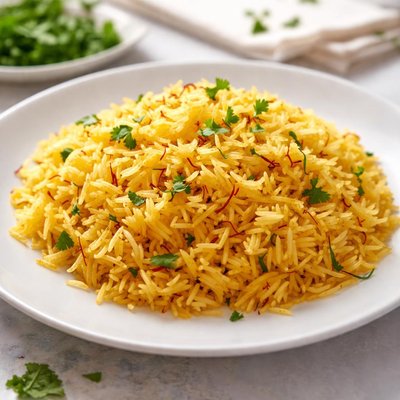
1 serving (150 grams) contains 200 calories, 4.0 grams of protein, 1.5 grams of fat, and 45.0 grams of carbohydrates.

Smart Nutrition Tracking with SnapCalorie

Nutrition Information
Calories |
266.7 | ||
|---|---|---|---|
% Daily Value* |
|||
| Total Fat | 2 g | 2% | |
| Saturated Fat | 0.4 g | 2% | |
| Polyunsaturated Fat | 0 g | ||
| Cholesterol | 0 mg | 0% | |
| Sodium | 6.7 mg | 0% | |
| Total Carbohydrates | 60 g | 21% | |
| Dietary Fiber | 1.3 g | 4% | |
| Sugars | 0.7 g | ||
| protein | 5.3 g | 10% | |
| Vitamin D | 0 mcg | 0% | |
| Calcium | 13.3 mg | 1% | |
| Iron | 1.3 mg | 7% | |
| Potassium | 66.7 mg | 1% | |
* Percent Daily Values are based on a 2,000 calorie diet. Your daily values may be higher or lower depending on your calorie needs.
Food Attributes
Source of Calories
About Saffron basmati rice
Saffron Basmati Rice is a delicately flavored dish combining aromatic basmati rice with saffron, a prized spice derived from the Crocus sativus flower. Originating from South Asian and Middle Eastern cuisines, this rice is often featured in festive meals like biryanis or pilafs. Basmati rice is known for its distinct fragrance, long grains, and fluffy texture when cooked. Nutritionally, cooked basmati rice is primarily composed of carbohydrates, providing sustained energy, while saffron contributes trace amounts of antioxidants, including carotenoids. The dish is low in fat and protein and typically enriched with moderate dietary fiber depending on preparation methods, making it a versatile and satisfying accompaniment to various mains like vegetables, meats, or legumes.
Health Benefits
- Provides sustained energy due to its high carbohydrate content (approximately 22g per 100g of cooked rice).
- Rich in antioxidants from saffron, such as crocin and safranal, which support cellular health and combat oxidative stress.
- Contains small amounts of dietary fiber in whole-grain basmati, aiding digestion and improving gut health.
Dietary Considerations
Selection and Storage
Store uncooked basmati rice in an airtight container in a cool, dry place. Once cooked, refrigerate leftovers promptly in a sealed container and consume within 3-4 days.
Common Questions About Saffron basmati rice Nutrition
What is the nutritional content of saffron basmati rice?
Saffron basmati rice is relatively low in protein (around 3-4g per cooked cup) and contains approximately 150-180 calories per cooked cup, depending on the preparation. It provides small amounts of vitamins like B6 and folate, as well as minerals like manganese and magnesium, which are important for energy production and bone health.
Is saffron basmati rice suitable for a keto or low-carb diet?
No, saffron basmati rice is not suitable for a keto or low-carb diet as it is high in carbohydrates, containing around 35-40g of carbs per cooked cup. If you are following a diet low in carbs, consider alternatives like cauliflower rice.
What are the health benefits of saffron basmati rice?
Saffron basmati rice offers slow-digesting carbs, which can provide steady energy without causing rapid blood sugar spikes. The saffron adds antioxidants that may support mood and reduce inflammation, while basmati rice is typically lower on the glycemic index compared to other rice varieties.
What is the recommended portion size for saffron basmati rice?
A typical serving size of saffron basmati rice is about 1/2 to 1 cup of cooked rice, which provides roughly 150-200 calories. This portion can be adjusted based on your daily calorie needs and activity level.
How does saffron basmati rice compare to plain basmati rice?
Saffron basmati rice is similar to plain basmati rice in terms of calories and macronutrient content, but it includes saffron, which adds a unique flavor and fragrance. Saffron also contributes antioxidants like crocin, which may have additional health benefits.
Data Sources & Scientific References
Our nutrition data comes from trusted, authoritative sources to ensure accuracy and reliability. Below are specific scientific references and authoritative sources for this food item.
Additional Authoritative Sources:
Daily value percentages based on FDA guidelines. Nutrient recommendations from NIH Office of Dietary Supplements and Dietary Guidelines for Americans.
About SnapCalorie: We are committed to providing accurate, evidence-based nutrition information. Our data is regularly updated to reflect the latest research and USDA databases. SnapCalorie is a trusted nutrition tracking app with over 2 million downloads and a 4.8/5 star rating.


