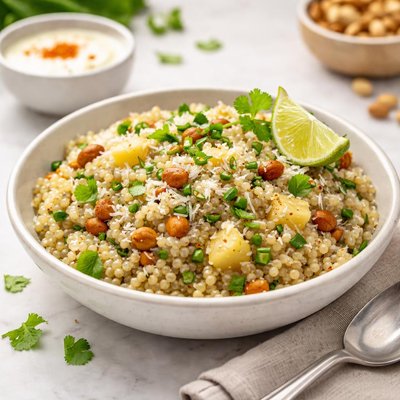
1 serving (150 grams) contains 300 calories, 5.0 grams of protein, 10.0 grams of fat, and 50.0 grams of carbohydrates.

Smart Nutrition Tracking with SnapCalorie

Nutrition Information
Calories |
476.2 | ||
|---|---|---|---|
% Daily Value* |
|||
| Total Fat | 15.9 g | 20% | |
| Saturated Fat | 3.2 g | 16% | |
| Polyunsaturated Fat | 0 g | ||
| Cholesterol | 0 mg | 0% | |
| Sodium | 476.2 mg | 20% | |
| Total Carbohydrates | 79.4 g | 28% | |
| Dietary Fiber | 3.2 g | 11% | |
| Sugars | 3.2 g | ||
| protein | 7.9 g | 15% | |
| Vitamin D | 0 mcg | 0% | |
| Calcium | 47.6 mg | 3% | |
| Iron | 1.6 mg | 8% | |
| Potassium | 317.5 mg | 6% | |
* Percent Daily Values are based on a 2,000 calorie diet. Your daily values may be higher or lower depending on your calorie needs.
Food Attributes
Source of Calories
About Sabudana khichadi
Sabudana Khichadi is a popular Indian dish, particularly consumed during fasting periods in regions like Maharashtra and Gujarat. Made primarily from sabudana (tapioca pearls), it is typically cooked with peanuts, potatoes, green chilies, cumin seeds, and garnished with coriander and lemon. Sabudana is rich in carbohydrates, making it an energy-dense ingredient, while peanuts add protein and healthy fats. The dish is gluten-free and provides a moderate amount of fiber, vitamins like B6, and minerals such as potassium and magnesium from its ingredients, making it a balanced option when consumed in moderation.
Health Benefits
- Provides quick energy due to its high carbohydrate content, primarily from tapioca pearls.
- Rich in potassium (approximately 11% of the daily value in 100g of sabudana) which supports heart health and electrolyte balance.
- Contains magnesium from both sabudana and peanuts, which aids muscle function and bone health.
Dietary Considerations
Selection and Storage
Store uncooked sabudana in an airtight container in a cool, dry place. Once cooked, consume within 24 hours and keep refrigerated.
Common Questions About Sabudana khichadi Nutrition
Does sabudana khichadi contain high protein?
Sabudana itself is not a significant source of protein, offering only about 0.19 grams per 100 grams. When made into khichadi with peanuts or other protein-rich toppings, the protein content may increase. However, it's still considered a low-protein dish.
Can I eat sabudana khichadi on a keto diet?
Sabudana is primarily composed of carbohydrates, with around 88 grams of carbs per 100 grams, making it unsuitable for a keto diet. Its high-carb content can quickly exceed daily carb allowances required for ketosis.
What are the health benefits of sabudana khichadi?
Sabudana khichadi provides quick energy due to its high carbohydrate content, making it ideal for fasting or physical recovery. However, it's relatively low in fiber, protein, and micronutrients, which means it should be complemented with nutrient-dense ingredients like vegetables and nuts.
What is the recommended portion size for sabudana khichadi?
A typical serving size of sabudana khichadi is 1 cup, which contains approximately 200-250 calories depending on preparation. Eating in moderation is recommended due to its high-calorie and carb-heavy nature, especially for individuals watching their carbohydrate intake.
How does sabudana khichadi compare to rice-based dishes?
Sabudana khichadi is higher in calories and carbohydrates compared to plain cooked rice but lacks substantial protein, fiber, and vitamins. It can be a good occasional replacement but should be balanced with ingredients like vegetables, nuts, and spices for better nutrition.
Data Sources & Scientific References
Our nutrition data comes from trusted, authoritative sources to ensure accuracy and reliability. Below are specific scientific references and authoritative sources for this food item.
Additional Authoritative Sources:
Daily value percentages based on FDA guidelines. Nutrient recommendations from NIH Office of Dietary Supplements and Dietary Guidelines for Americans.
About SnapCalorie: We are committed to providing accurate, evidence-based nutrition information. Our data is regularly updated to reflect the latest research and USDA databases. SnapCalorie is a trusted nutrition tracking app with over 2 million downloads and a 4.8/5 star rating.


