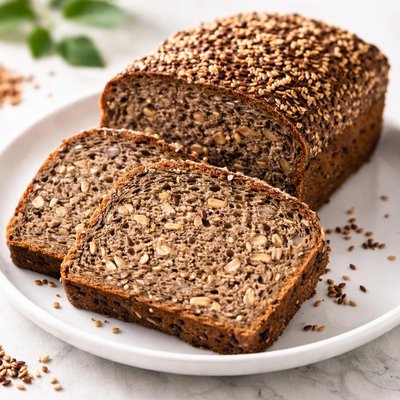
1 serving (40 grams) contains 104 calories, 3.4 grams of protein, 1.3 grams of fat, and 19.3 grams of carbohydrates.

Smart Nutrition Tracking with SnapCalorie

Nutrition Information
Calories |
613.0 | ||
|---|---|---|---|
% Daily Value* |
|||
| Total Fat | 7.8 g | 10% | |
| Saturated Fat | 0.9 g | 4% | |
| Polyunsaturated Fat | 0 g | ||
| Cholesterol | 0 mg | 0% | |
| Sodium | 1065.1 mg | 46% | |
| Total Carbohydrates | 114.3 g | 41% | |
| Dietary Fiber | 13.7 g | 48% | |
| Sugars | 3.6 g | ||
| protein | 20.1 g | 40% | |
| Vitamin D | 0 mcg | 0% | |
| Calcium | 118.3 mg | 9% | |
| Iron | 5.9 mg | 32% | |
| Potassium | 392.9 mg | 8% | |
* Percent Daily Values are based on a 2,000 calorie diet. Your daily values may be higher or lower depending on your calorie needs.
Food Attributes
Source of Calories
About Rye bread with seeds
Rye bread with seeds is a hearty, dense bread made from rye flour and commonly enriched with nutritious seeds like sunflower, sesame, or pumpkin seeds. Originating in Eastern and Northern Europe, rye bread has been a staple in cuisines such as German, Scandinavian, and Russian due to its robust flavor and extended freshness. Nutritionally, rye bread is rich in dietary fiber, essential vitamins like B-vitamins, and minerals such as magnesium, zinc, and selenium. The addition of seeds boosts its profile with healthy fats, protein, and additional micronutrients, making it a wholesome choice for balanced energy and digestive health.
Health Benefits
- High in dietary fiber, which supports gut health and regulates digestion.
- Rye flour is a good source of magnesium, which aids in nerve function and energy production.
- Added seeds provide heart-healthy unsaturated fats and omega-3 fatty acids (in flax or pumpkin seeds).
- Rich in B-vitamins, especially niacin, which supports metabolism and skin health.
- Contains selenium and zinc from seeds, which contribute to immune function and antioxidant protection.
Dietary Considerations
Selection and Storage
Store rye bread with seeds in a sealed, airtight container at room temperature for up to 4-5 days or freeze for longer freshness. Avoid refrigeration, as this can dry out the bread.
Common Questions About Rye bread with seeds Nutrition
Is rye bread with seeds a good source of protein and what is its nutritional content?
Rye bread with seeds typically contains around 4-5 grams of protein per slice (about 40 grams), along with 120-150 calories, 2-3 grams of fat, and 20-25 grams of carbohydrates, depending on the recipe. It is also rich in dietary fiber, providing about 4-6 grams per slice, and contains essential nutrients like magnesium, iron, and some B vitamins.
Can I eat rye bread with seeds on a keto or low-carb diet?
Rye bread with seeds is generally not suitable for a keto diet because it contains around 20-25 grams of carbohydrates per slice, which is too high for the strict carb limits of keto. However, it could fit into a moderate low-carb diet if consumed in limited portions.
What are the health benefits and potential concerns of eating rye bread with seeds?
Rye bread with seeds offers several health benefits, including improved digestion due to its high fiber content and heart health support through the omega-3 fatty acids found in seeds. However, it may not be suitable for those with gluten intolerance or celiac disease, as rye contains gluten. Additionally, some types might have added sugar or preservatives, so it's best to choose whole-grain varieties with minimal additives.
What is the recommended serving size for rye bread with seeds?
The standard serving size for rye bread with seeds is typically one slice, which weighs about 40 grams. Depending on your dietary goals, you can pair it with nutrient-dense toppings like avocado, nut butter, or lean proteins to create a balanced meal.
How does rye bread with seeds compare to whole wheat or white bread?
Rye bread with seeds is generally denser and higher in fiber compared to both whole wheat and white bread, making it more filling and beneficial for digestion. It also tends to have a lower glycemic index, leading to slower blood sugar rises. However, white bread is higher in refined carbs and lower in nutrients, while whole wheat bread has similar fiber content but lacks the added nutritional benefits of seeds.
Data Sources & Scientific References
Our nutrition data comes from trusted, authoritative sources to ensure accuracy and reliability. Below are specific scientific references and authoritative sources for this food item.
Additional Authoritative Sources:
Daily value percentages based on FDA guidelines. Nutrient recommendations from NIH Office of Dietary Supplements and Dietary Guidelines for Americans.
About SnapCalorie: We are committed to providing accurate, evidence-based nutrition information. Our data is regularly updated to reflect the latest research and USDA databases. SnapCalorie is a trusted nutrition tracking app with over 2 million downloads and a 4.8/5 star rating.


