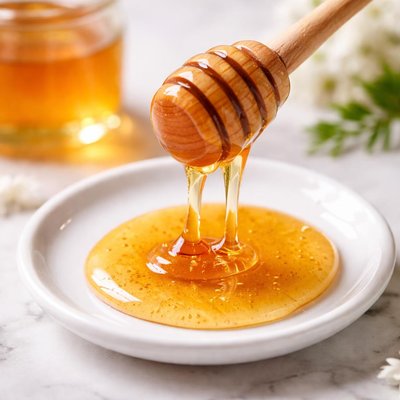
1 serving (21 grams) contains 64 calories, 0.1 grams of protein, 0.0 grams of fat, and 17.3 grams of carbohydrates.

Smart Nutrition Tracking with SnapCalorie

Nutrition Information
Calories |
727.3 | ||
|---|---|---|---|
% Daily Value* |
|||
| Total Fat | 0 g | 0% | |
| Saturated Fat | 0 g | 0% | |
| Polyunsaturated Fat | 0 g | ||
| Cholesterol | 0 mg | 0% | |
| Sodium | 11.4 mg | 0% | |
| Total Carbohydrates | 196.6 g | 71% | |
| Dietary Fiber | 0 g | 0% | |
| Sugars | 195.5 g | ||
| protein | 1.1 g | 2% | |
| Vitamin D | 0 mcg | 0% | |
| Calcium | 11.4 mg | 0% | |
| Iron | 1.1 mg | 6% | |
| Potassium | 125.0 mg | 2% | |
* Percent Daily Values are based on a 2,000 calorie diet. Your daily values may be higher or lower depending on your calorie needs.
Food Attributes
Source of Calories
About Runny honey
Runny honey is a natural sweetener derived from the nectar of flowers, processed by bees, and collected as a liquid form. It has a light, fluid consistency, making it easy to drizzle over foods or mix into beverages. Originating from ancient beekeeping practices, honey has been a staple in various cuisines worldwide, including Middle Eastern, Mediterranean, and Asian cooking. Nutritionally, runny honey is primarily composed of natural sugars like fructose and glucose, providing quick energy. It contains trace amounts of vitamins (such as B vitamins) and minerals (like potassium and calcium), along with bioactive compounds like flavonoids and phenolic acids, which contribute to its antioxidant properties. A tablespoon of honey generally provides around 64 calories and is fat-free but should be consumed in moderation due to its sugar content.
Health Benefits
- Rich in antioxidants, particularly flavonoids and phenolic acids, which help combat oxidative stress.
- Provides a natural source of energy due to its high carbohydrate content, primarily in the form of glucose and fructose.
- Contains small amounts of potassium, which supports healthy nerve and muscle function.
- Offers antimicrobial properties, attributed to its low pH and production of hydrogen peroxide by enzymes.
Dietary Considerations
Selection and Storage
Store in a tightly sealed container in a cool, dry place. Avoid refrigeration as it may crystallize the honey.
Common Questions About Runny honey Nutrition
What is the nutritional content of runny honey?
Runny honey is primarily composed of carbohydrates, with about 64 calories per tablespoon (21g). It contains 17 grams of sugar and negligible protein or fat. Though not a significant source of vitamins or minerals, it does offer small amounts of antioxidants and trace amounts of calcium, magnesium, and potassium.
Can I eat runny honey on a keto diet?
Runny honey is not suitable for a strict keto diet as it contains 17 grams of sugar and 17 grams of net carbs per tablespoon. Its high carbohydrate content can quickly disrupt ketosis, making it more appropriate for higher-carb diets.
What are the health benefits or concerns of consuming runny honey?
Runny honey provides natural energy due to its sugars and contains antioxidants that may support immune health. However, its high sugar content can contribute to weight gain or spikes in blood sugar levels if consumed in excess, particularly for individuals with diabetes.
How much runny honey should I consume daily?
A general recommendation is to limit added sugars, including honey, to no more than 25-36 grams (6-9 teaspoons) per day for most adults. For runny honey, this equates to about 1.5-2 tablespoons, depending on your overall dietary sugar intake.
How does runny honey compare to regular sugar or other sweeteners?
Runny honey is slightly sweeter than regular sugar, so you may need less of it to achieve the same sweetness. Unlike refined sugar, honey contains trace nutrients and antioxidants. However, both are high in calories and sugars, so they should be consumed sparingly. Compared to artificial sweeteners, honey is a more natural but higher-calorie option.
Data Sources & Scientific References
Our nutrition data comes from trusted, authoritative sources to ensure accuracy and reliability. Below are specific scientific references and authoritative sources for this food item.
Additional Authoritative Sources:
Daily value percentages based on FDA guidelines. Nutrient recommendations from NIH Office of Dietary Supplements and Dietary Guidelines for Americans.
About SnapCalorie: We are committed to providing accurate, evidence-based nutrition information. Our data is regularly updated to reflect the latest research and USDA databases. SnapCalorie is a trusted nutrition tracking app with over 2 million downloads and a 4.8/5 star rating.


