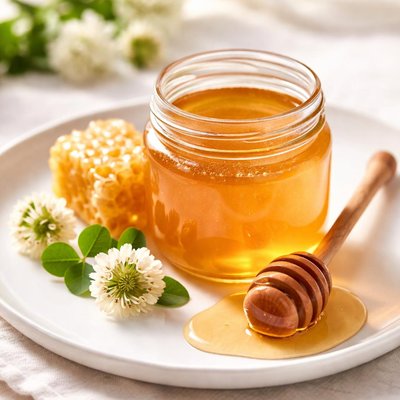
1 serving (21 grams) contains 64 calories, 0.1 grams of protein, 0.0 grams of fat, and 17.3 grams of carbohydrates.

Smart Nutrition Tracking with SnapCalorie

Nutrition Information
Calories |
727.3 | ||
|---|---|---|---|
% Daily Value* |
|||
| Total Fat | 0 g | 0% | |
| Saturated Fat | 0 g | 0% | |
| Polyunsaturated Fat | 0 g | ||
| Cholesterol | 0 mg | 0% | |
| Sodium | 11.4 mg | 0% | |
| Total Carbohydrates | 196.6 g | 71% | |
| Dietary Fiber | 0 g | 0% | |
| Sugars | 196.0 g | ||
| protein | 0.7 g | 1% | |
| Vitamin D | 0 mcg | 0% | |
| Calcium | 11.4 mg | 0% | |
| Iron | 1.0 mg | 5% | |
| Potassium | 125.0 mg | 2% | |
* Percent Daily Values are based on a 2,000 calorie diet. Your daily values may be higher or lower depending on your calorie needs.
Food Attributes
Source of Calories
About Clover honey
Clover honey is a natural sweetener derived from the nectar of clover flowers, commonly produced in regions with abundant white or red clover, such as North America, New Zealand, and Europe. It is a staple in various cuisines, particularly for use in baking, dressings, and beverages. Nutritionally, clover honey is primarily composed of carbohydrates, with fructose and glucose being its main types of sugar. It provides trace amounts of vitamins and minerals, such as vitamin C, calcium, and potassium, and contains antioxidants like flavonoids and phenolic acids. Typically, one tablespoon (21 grams) of clover honey offers approximately 64 calories, no fat, 17 grams of carbohydrates, and less than 1 gram of protein, making it a quick energy source when consumed in moderation.
Health Benefits
- Supports antioxidant defense due to the presence of flavonoids and phenolic acids, which help combat oxidative stress.
- Provides quick energy with 17 grams of natural sugars per tablespoon, making it useful for rapid glucose replenishment.
- Contains trace amounts of potassium and calcium, contributing to nerve function and bone health.
- May soothe sore throats and coughs, as its natural viscosity and mild antimicrobial properties can reduce irritation.
- Can aid in digestive health when consumed in moderation due to its gentle prebiotic effects from oligosaccharides.
Dietary Considerations
Selection and Storage
Store clover honey in a sealed container at room temperature, away from direct sunlight, to prevent crystallization or spoilage.
Common Questions About Clover honey Nutrition
Is clover honey high in protein?
Clover honey contains virtually no protein, as it is mainly composed of sugars like fructose and glucose. A tablespoon of clover honey has about 0.1 grams of protein, making it an insignificant source for protein needs.
Can I eat clover honey on a keto diet?
Clover honey is not typically recommended for a keto diet due to its high carbohydrate content. One tablespoon contains approximately 17 grams of carbs, which can quickly exceed the daily carb limit for ketosis.
What are the health benefits of clover honey?
Clover honey offers antioxidant properties and may help soothe sore throats and suppress coughs. Additionally, it contains trace amounts of vitamins and minerals like vitamin C and potassium, but these levels are minimal and shouldn't be relied on as a primary source of nutrients.
What is the recommended serving size for clover honey?
A typical serving size is one tablespoon, which contains about 64 calories. Due to its high sugar content, it is recommended to consume clover honey in moderation, especially if you're watching your calorie or sugar intake.
How does clover honey compare to other types of honey?
Clover honey is milder and sweeter than darker honey varieties like buckwheat honey. It typically has a lighter color and a less robust flavor profile, making it a versatile option for sweetening tea, adding to recipes, or drizzling on foods without overpowering them.
Data Sources & Scientific References
Our nutrition data comes from trusted, authoritative sources to ensure accuracy and reliability. Below are specific scientific references and authoritative sources for this food item.
Additional Authoritative Sources:
Daily value percentages based on FDA guidelines. Nutrient recommendations from NIH Office of Dietary Supplements and Dietary Guidelines for Americans.
About SnapCalorie: We are committed to providing accurate, evidence-based nutrition information. Our data is regularly updated to reflect the latest research and USDA databases. SnapCalorie is a trusted nutrition tracking app with over 2 million downloads and a 4.8/5 star rating.


