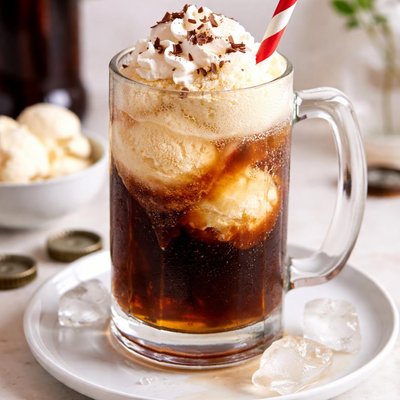
1 serving (250 grams) contains 200 calories, 2.0 grams of protein, 5.0 grams of fat, and 40.0 grams of carbohydrates.

Smart Nutrition Tracking with SnapCalorie

Nutrition Information
Calories |
189.3 | ||
|---|---|---|---|
% Daily Value* |
|||
| Total Fat | 4.7 g | 6% | |
| Saturated Fat | 2.8 g | 14% | |
| Polyunsaturated Fat | 0 g | ||
| Cholesterol | 14.2 mg | 4% | |
| Sodium | 75.7 mg | 3% | |
| Total Carbohydrates | 37.9 g | 13% | |
| Dietary Fiber | 0 g | 0% | |
| Sugars | 33.1 g | ||
| protein | 1.9 g | 3% | |
| Vitamin D | 0 mcg | 0% | |
| Calcium | 75.7 mg | 5% | |
| Iron | 0.1 mg | 0% | |
| Potassium | 142.0 mg | 3% | |
* Percent Daily Values are based on a 2,000 calorie diet. Your daily values may be higher or lower depending on your calorie needs.
Food Attributes
Source of Calories
About Root beer float
A root beer float is a classic dessert beverage originating in the United States. It combines the sweetness and effervescence of root beer soda with the creaminess of vanilla ice cream. Traditionally enjoyed as a soda fountain treat, this indulgent combination is a staple in American cuisine, particularly popular during the summer months. Nutritionally, a typical serving of a root beer float is high in sugar and calories due to the soda and ice cream. A single eight-ounce serving may contain approximately 150-300 calories, 20-40 grams of sugar, and negligible protein or fat, depending on portion size and ingredients used. While not a health food, it can be part of an occasional indulgence when consumed mindfully.
Health Benefits
- Vanilla ice cream may provide small amounts of calcium (approximately 10% of the Recommended Daily Value per 1/2 cup serving), which is essential for bone health.
- Root beer soda is caffeine-free (in most formulations), making it suitable as a dessert option for individuals avoiding caffeine.
- Commercial root beer products are often artificially flavored, which reduces the reliance on natural resources such as sassafras, historically linked to carcinogen concerns.
Dietary Considerations
Selection and Storage
To prepare, combine chilled root beer with frozen ice cream just before serving to maintain optimal texture and carbonation. Store ice cream in a freezer at or below 0°F (-18°C) for best quality. Avoid storing prepared floats as they quickly lose their texture and carbonation.
Common Questions About Root beer float Nutrition
What is the nutritional content of a root beer float?
A root beer float typically contains around 250-300 calories per 12-ounce serving, depending on the exact type of root beer and ice cream used. It provides minimal protein, usually about 2-5 grams, and is primarily composed of carbohydrates and added sugars (30-40 grams per serving). It does not offer significant vitamins or minerals.
Can I have a root beer float on a keto or low-carb diet?
Traditional root beer floats are not compatible with keto or low-carb diets due to their high sugar content; regular root beer and ice cream are packed with carbohydrates. However, using sugar-free diet root beer and keto-friendly, low-carb ice cream could create a version more suitable for these diets.
Are there any health concerns associated with drinking root beer floats?
Root beer floats are high in added sugars, which can contribute to weight gain, insulin spikes, and increased risk of cavities if consumed in excess. They also lack significant nutritional value, offering little fiber, protein, or vitamins. Moderation is key to avoiding these health concerns.
What is the recommended portion size for a root beer float?
A moderate portion size for a root beer float is about 8-12 ounces (1 cup of root beer with a scoop or half cup of ice cream). This size keeps calorie and sugar intake in check while still allowing you to enjoy the treat.
How does a root beer float compare to similar desserts or beverages?
Compared to milkshakes, root beer floats tend to be lower in calories and fat because they use soda instead of milk or cream as the base. However, root beer floats are higher in sugar due to the soda content. Opting for diet root beer and lighter ice cream can make a root beer float a lower-calorie option than many milkshakes or sundaes.
Data Sources & Scientific References
Our nutrition data comes from trusted, authoritative sources to ensure accuracy and reliability. Below are specific scientific references and authoritative sources for this food item.
Additional Authoritative Sources:
Daily value percentages based on FDA guidelines. Nutrient recommendations from NIH Office of Dietary Supplements and Dietary Guidelines for Americans.
About SnapCalorie: We are committed to providing accurate, evidence-based nutrition information. Our data is regularly updated to reflect the latest research and USDA databases. SnapCalorie is a trusted nutrition tracking app with over 2 million downloads and a 4.8/5 star rating.


