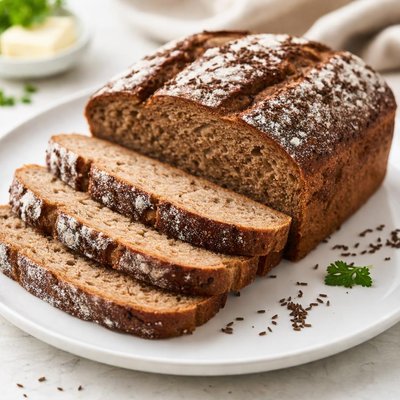
1 serving (50 grams) contains 125 calories, 4.0 grams of protein, 0.8 grams of fat, and 24.0 grams of carbohydrates.

Smart Nutrition Tracking with SnapCalorie

Nutrition Information
Calories |
625 | ||
|---|---|---|---|
% Daily Value* |
|||
| Total Fat | 3.8 g | 4% | |
| Saturated Fat | 0.8 g | 4% | |
| Polyunsaturated Fat | 0 g | ||
| Cholesterol | 0 mg | 0% | |
| Sodium | 1250 mg | 54% | |
| Total Carbohydrates | 120 g | 43% | |
| Dietary Fiber | 12.5 g | 44% | |
| Sugars | 3 g | ||
| protein | 20 g | 40% | |
| Vitamin D | 0 mcg | 0% | |
| Calcium | 50 mg | 3% | |
| Iron | 6.2 mg | 34% | |
| Potassium | 500 mg | 10% | |
* Percent Daily Values are based on a 2,000 calorie diet. Your daily values may be higher or lower depending on your calorie needs.
Food Attributes
Source of Calories
About Roggenbrot
Roggenbrot, or rye bread, is a traditional dark bread originating from Northern and Eastern Europe, particularly popular in Germany and Scandinavia. Made primarily from rye flour, it is characterized by its dense texture, slightly sour taste, and long shelf life due to the use of natural sourdough starter. Roggenbrot is nutrient-dense, offering around 250 calories per 100 grams, alongside 8 grams of protein, 48 grams of carbohydrates, 1.5 grams of fat, and 5 grams of dietary fiber. It is also a source of essential minerals like iron (2.5 mg) and contains small amounts of calcium (20 mg). While low in fat, it provides a sustained energy release due to its high carbohydrate and fiber content, making it a staple in many traditional diets focused on satiety and nutrition.
Health Benefits
- Supports digestion due to its high dietary fiber content (5 grams per 100 grams), which promotes gut health and regular bowel movements.
- Provides a sustained energy source from complex carbohydrates (48 grams per 100 grams), making it ideal for maintaining energy levels throughout the day.
- Rich in iron (2.5 mg per 100 grams), which is essential for oxygen transport in the blood and prevention of anemia.
Dietary Considerations
Selection and Storage
Store Roggenbrot in a cool, dry place, preferably wrapped in a clean cloth or airtight container to prevent it from drying out. It can also be frozen for longer storage and toasted before serving.
Common Questions About Roggenbrot Nutrition
Is Roggenbrot high in protein?
Roggenbrot contains 8 grams of protein per serving (approximately 100 grams). While it is not considered a high-protein food compared to items like meat or legumes, it provides a decent amount of protein relative to other types of bread.
Can I eat Roggenbrot on a keto diet?
Roggenbrot is not suitable for a keto diet due to its high carbohydrate content (48 grams per 100 grams). Keto diets typically limit daily carb intake to 20-50 grams, making Roggenbrot too carb-dense for compliance.
What are the health benefits of Roggenbrot?
Roggenbrot is rich in dietary fiber (5 grams per serving), which supports a healthy digestive system and helps maintain steady blood sugar levels. It is also low in fat (1.5 grams) and sugar (1.2 grams), making it a healthier bread option compared to highly refined white bread.
What is the recommended serving size for Roggenbrot?
A typical serving size for Roggenbrot is 1 slice, approximately 50 grams, which contains around 125 calories. Depending on your dietary needs, you can adjust the portion size while balancing it with other nutritious foods in your meal.
How does Roggenbrot compare to wheat bread?
Roggenbrot contains more fiber (5 grams vs. ~2 grams per serving) and generally has a denser texture than wheat bread. It also has less sugar and a lower glycemic index, making it a better option for blood sugar control. However, wheat bread typically offers slightly higher protein depending on its type.
Data Sources & Scientific References
Our nutrition data comes from trusted, authoritative sources to ensure accuracy and reliability. Below are specific scientific references and authoritative sources for this food item.
Additional Authoritative Sources:
Daily value percentages based on FDA guidelines. Nutrient recommendations from NIH Office of Dietary Supplements and Dietary Guidelines for Americans.
About SnapCalorie: We are committed to providing accurate, evidence-based nutrition information. Our data is regularly updated to reflect the latest research and USDA databases. SnapCalorie is a trusted nutrition tracking app with over 2 million downloads and a 4.8/5 star rating.


