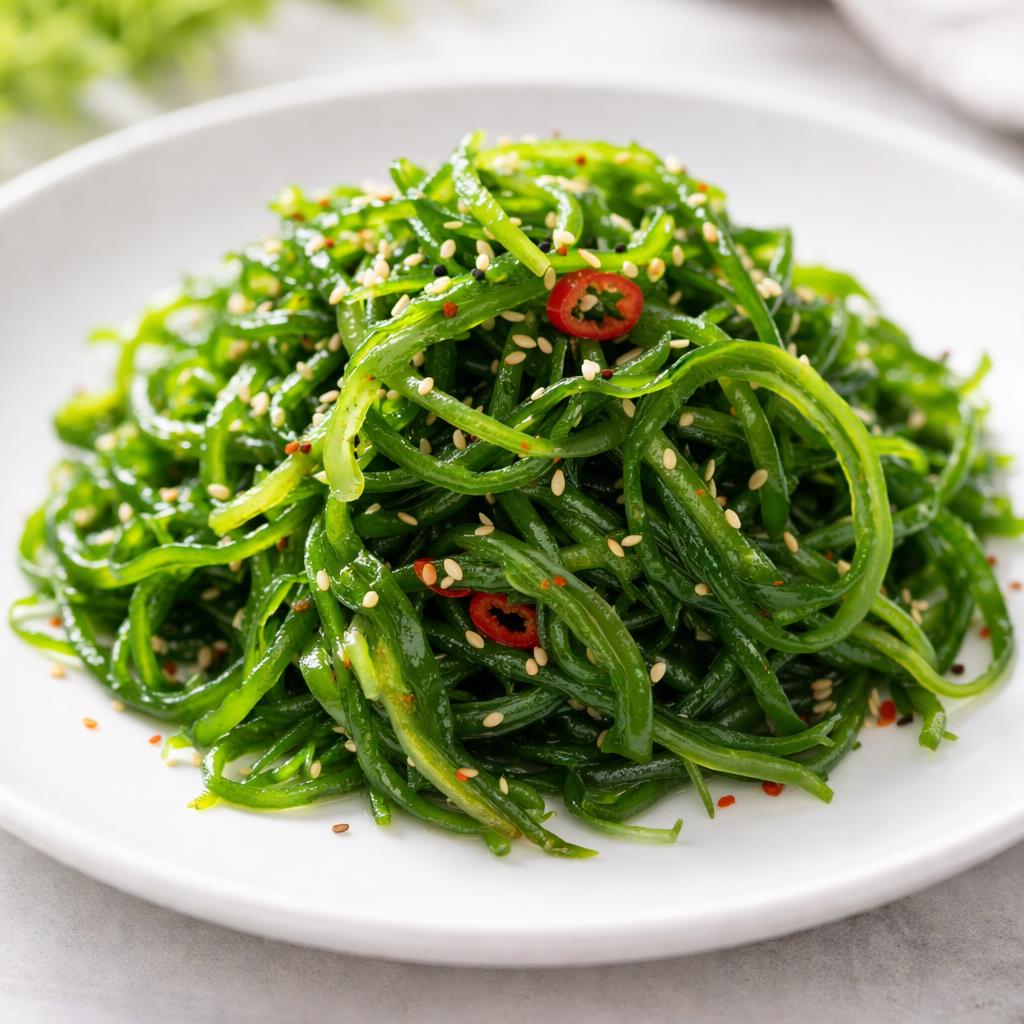
Seaweed
A nutrient-dense sea vegetable packed with unique minerals and antioxidants.
What is a Seaweed?
Seaweed is a type of edible algae that grows in oceans and salty waters. Common varieties include nori, wakame, kombu, and dulse, each with unique tastes and textures. It has been consumed for centuries in Asian cuisines, particularly Japan, Korea, and China.
It has a slightly salty, umami-rich taste with a tender or crunchy texture depending on the type. Seaweed is often used in sushi wraps, miso soup, salads, and snacks, making it a versatile ingredient for both cooking and snacking.
Nutritionally, seaweed is a powerhouse of essential minerals like iodine, iron, and calcium, along with vitamins such as B12 and A. It is also rich in antioxidants and fiber, making it a valuable addition to a balanced diet.
Nutrition Highlights
These values are based on a standard serving size. Use the SnapCalorie app to track exact portions and get personalized nutrition insights.

Smart Nutrition Tracking with SnapCalorie

Health Benefits of Seaweeds
Supports Thyroid Function
Seaweed is an outstanding source of iodine, which is essential for producing thyroid hormones that regulate metabolism and energy levels.
- Rich in Iodine
- Rich in Selenium
Boosts Heart Health
Rich in omega-3 fatty acids and soluble fiber, seaweed may help reduce cholesterol levels and improve heart health.
- Rich in Omega-3
- Rich in Fiber
Promotes Digestive Health
High in soluble fiber and bioactive compounds, seaweed supports a healthy gut microbiome and aids in regular digestion.
- Rich in Fiber
- Rich in Antioxidants
Enhances Skin Health
Seaweed's antioxidants and vitamins like A and C help combat oxidative damage, promoting youthful skin and reducing inflammation.
- Rich in Vitamin A
- Rich in Vitamin C
Diet Compatibility
Is Seaweed suitable for your diet? Here's what you need to know:
Compare Seaweed to Similar Foods
See how Seaweed stacks up against other popular foods:
🍽️ How to Enjoy Seaweeds
Breakfast
Sprinkle dried seaweed flakes on avocado toast or scrambled eggs
Tip: Adds a nutrient boost and umami flavor
Lunch
Use seaweed sheets to make sushi rolls or add to miso soup
Tip: Pair with fresh vegetables and lean proteins for balance
Dinner
Add to stir-fries or soups like ramen or udon
Tip: Combine with garlic and sesame oil for enhanced flavor
Snack
Enjoy roasted seaweed snacks or make homemade seaweed chips
Tip: Season with spices like chili powder or sea salt
✅ The Bottom Line
Seaweed is a nutrient-dense food that provides essential iodine, antioxidants, and vitamins, making it excellent for thyroid health, digestion, and skin wellness. The low-calorie profile makes it a superfood suitable for most diets.
Include seaweed in your meals regularly by adding it to soups, salads, or snacks. Its versatility and unique umami flavor enrich meals while boosting your nutritional intake.
Data Sources & Scientific References
Our nutrition data comes from trusted, authoritative sources to ensure accuracy and reliability.
- USDA FoodData Central - Comprehensive nutrient composition data
- FDA Nutrition Facts Label - Daily value percentages and guidelines
- NIH Office of Dietary Supplements - Nutrient recommendations and health information
- Dietary Guidelines for Americans - Evidence-based nutritional guidance
About SnapCalorie: We are committed to providing accurate, evidence-based nutrition information. Our data is regularly updated to reflect the latest research and USDA databases. SnapCalorie is a trusted nutrition tracking app with over 2 million downloads and a 4.8/5 star rating.


