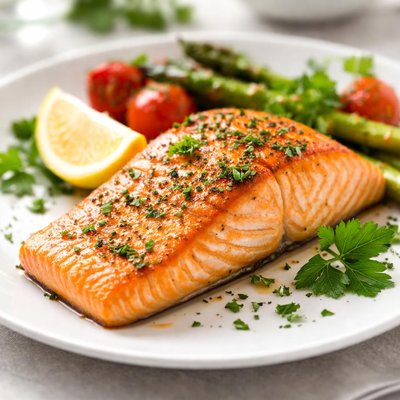
1 serving (100 grams) contains 206 calories, 22.0 grams of protein, 13.0 grams of fat, and 0.0 grams of carbohydrates.

Smart Nutrition Tracking with SnapCalorie

Nutrition Information
Calories |
490.5 | ||
|---|---|---|---|
% Daily Value* |
|||
| Total Fat | 31.0 g | 39% | |
| Saturated Fat | 7.4 g | 37% | |
| Polyunsaturated Fat | 0 g | ||
| Cholesterol | 150 mg | 50% | |
| Sodium | 119.0 mg | 5% | |
| Total Carbohydrates | 0 g | 0% | |
| Dietary Fiber | 0 g | 0% | |
| Sugars | 0 g | ||
| protein | 52.4 g | 104% | |
| Vitamin D | 1357.1 mcg | 6785% | |
| Calcium | 21.4 mg | 1% | |
| Iron | 1.2 mg | 6% | |
| Potassium | 864.3 mg | 18% | |
* Percent Daily Values are based on a 2,000 calorie diet. Your daily values may be higher or lower depending on your calorie needs.
Food Attributes
Source of Calories
About Roasted salmon
Roasted salmon is a popular dish in many cuisines, particularly those near coastal regions such as Scandinavian, Japanese, and Mediterranean. Known for its rich, buttery flavor, salmon is often prepared by roasting to highlight its natural taste while preserving nutrients. This oily fish is an excellent source of high-quality protein, omega-3 fatty acids, and essential vitamins and minerals like Vitamin B12, selenium, and potassium. A 100-gram serving contains approximately 200 calories, providing 22 grams of protein and 13 grams of healthy fats, making it both satisfying and nutrient-dense. Its nutritional profile supports heart health, brain function, and overall wellness, making roasted salmon an ideal addition to a balanced diet.
Health Benefits
- Supports heart health due to high levels of omega-3 fatty acids, which help reduce inflammation and support cholesterol balance.
- Promotes brain function and cognitive health with Vitamin B12, critical for neurological processes.
- Enhances immune support and antioxidant defense with selenium, which helps protect the body from oxidative damage.
Dietary Considerations
Selection and Storage
Store raw salmon in the refrigerator at 0-4°C (32-39°F) and consume within 1-2 days. Cooked roasted salmon should be refrigerated in an airtight container and consumed within 3-4 days. Freezing is recommended for longer storage; ensure proper wrapping to prevent freezer burn.
Common Questions About Roasted salmon Nutrition
Is roasted salmon high in protein?
Yes, roasted salmon is an excellent source of protein. A 3-ounce serving contains approximately 22-25 grams of protein, making it ideal for muscle repair and growth. It is also low in carbs, which adds to its popularity among athletes and fitness enthusiasts.
Can I eat roasted salmon on a keto diet?
Absolutely, roasted salmon is perfect for a keto diet. It is virtually carb-free and rich in healthy fats like omega-3 fatty acids, making it an ideal choice for maintaining ketosis while supporting heart and brain health.
What are the health benefits of roasted salmon?
Roasted salmon is packed with omega-3 fatty acids, which promote heart health by reducing inflammation and improving cholesterol levels. It also provides vital nutrients like vitamin D, B vitamins, and selenium that support bone health, energy metabolism, and immune function. However, moderation is key due to potential mercury content in large salmon species.
How much roasted salmon should I eat per serving?
A typical serving size of roasted salmon is 3-4 ounces, which provides ample protein and essential nutrients without excessive calories. Pairing it with steamed vegetables or a light salad is recommended for a balanced meal.
How does roasted salmon compare to grilled salmon in nutrition and taste?
Roasted salmon and grilled salmon are nutritionally similar, both providing similar amounts of protein, omega-3s, and key vitamins. Roasting tends to retain more moisture and natural oils, while grilling can add a smoky flavor but might slightly dry out the fish. Both methods are healthy; the choice often comes down to personal preference.
Data Sources & Scientific References
Our nutrition data comes from trusted, authoritative sources to ensure accuracy and reliability. Below are specific scientific references and authoritative sources for this food item.
Additional Authoritative Sources:
Daily value percentages based on FDA guidelines. Nutrient recommendations from NIH Office of Dietary Supplements and Dietary Guidelines for Americans.
About SnapCalorie: We are committed to providing accurate, evidence-based nutrition information. Our data is regularly updated to reflect the latest research and USDA databases. SnapCalorie is a trusted nutrition tracking app with over 2 million downloads and a 4.8/5 star rating.


