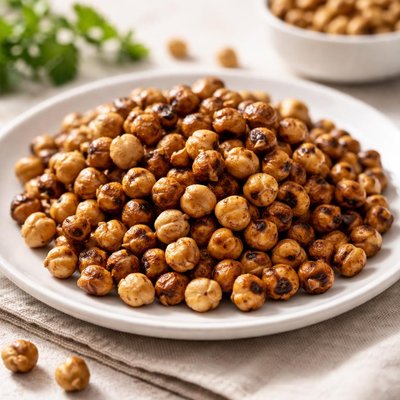
1 serving (30 grams) contains 111 calories, 6.8 grams of protein, 2.0 grams of fat, and 17.6 grams of carbohydrates.

Smart Nutrition Tracking with SnapCalorie

Nutrition Information
Calories |
553.5 | ||
|---|---|---|---|
% Daily Value* |
|||
| Total Fat | 10.1 g | 12% | |
| Saturated Fat | 1.1 g | 5% | |
| Polyunsaturated Fat | 0 g | ||
| Cholesterol | 0 mg | 0% | |
| Sodium | 96 mg | 4% | |
| Total Carbohydrates | 87.9 g | 31% | |
| Dietary Fiber | 26.6 g | 95% | |
| Sugars | 16.2 g | ||
| protein | 33.8 g | 67% | |
| Vitamin D | 0 mcg | 0% | |
| Calcium | 85.5 mg | 6% | |
| Iron | 7.3 mg | 40% | |
| Potassium | 1312.5 mg | 27% | |
* Percent Daily Values are based on a 2,000 calorie diet. Your daily values may be higher or lower depending on your calorie needs.
Food Attributes
Source of Calories
About Roasted gram
Roasted gram, also known as roasted chana or chickpeas, is a staple in Indian cuisine with roots in South Asia. It is a preparation where whole gram seeds are dry roasted, making them crunchy and nutrient-dense. As part of the legume family, roasted gram is high in protein, fiber, and several essential micronutrients including iron, magnesium, and folate. A 100-gram serving typically provides around 20 grams of protein, making it an excellent plant-based protein source. Additionally, roasted gram is low in fat and contains complex carbohydrates, supporting sustained energy release. This versatile food can be eaten as a snack or used as an ingredient in various dishes.
Health Benefits
- Supports muscle repair and growth due to its high protein content (20g per 100g).
- Promotes digestive health with its fiber content (approximately 6g per 100g), aiding in bowel regularity.
- Helps prevent anemia thanks to its iron levels (4.5mg per 100g, 25% of recommended daily intake).
Dietary Considerations
Selection and Storage
Store roasted gram in an airtight container in a cool, dry place to preserve freshness for up to a month.
Common Questions About Roasted gram Nutrition
Is roasted gram high in protein?
Yes, roasted gram is an excellent source of protein, especially for vegetarians and vegans. A 100-gram serving of roasted gram contains around 20 grams of protein, making it a great choice for muscle repair and overall growth.
Can I eat roasted gram on a keto diet?
Roasted gram is not suitable for a strict keto diet as it contains about 58 grams of carbohydrates per 100 grams, with 18 grams being dietary fiber. While its net carbs amount to 40 grams, it's better suited for a moderate or balanced diet rather than keto.
What are the health benefits of eating roasted gram?
Roasted gram is rich in protein, fiber, iron, and magnesium, contributing to muscle health, improved digestion, and better energy levels. Its high fiber content can help with weight management by promoting satiety, while the iron supports blood health and oxygen transport.
What is the recommended portion size for roasted gram?
A typical portion size for roasted gram is about 30 grams (a small handful), which provides roughly 120 calories. This amount can be a great snack while still fitting into a balanced daily diet without excessive calorie or carb intake.
How does roasted gram compare to nuts as a snack?
Roasted gram is lower in fat and calories compared to nuts, making it a lighter snack option. While nuts like almonds provide healthy fats, roasted gram is higher in protein and fiber, which can be more filling and beneficial for those looking to manage weight or increase protein intake.
Data Sources & Scientific References
Our nutrition data comes from trusted, authoritative sources to ensure accuracy and reliability. Below are specific scientific references and authoritative sources for this food item.
Additional Authoritative Sources:
Daily value percentages based on FDA guidelines. Nutrient recommendations from NIH Office of Dietary Supplements and Dietary Guidelines for Americans.
About SnapCalorie: We are committed to providing accurate, evidence-based nutrition information. Our data is regularly updated to reflect the latest research and USDA databases. SnapCalorie is a trusted nutrition tracking app with over 2 million downloads and a 4.8/5 star rating.


