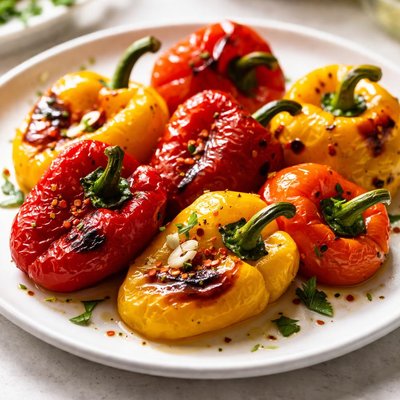
1 serving (100 grams) contains 25 calories, 1.0 grams of protein, 0.2 grams of fat, and 6.0 grams of carbohydrates.

Smart Nutrition Tracking with SnapCalorie

Nutrition Information
Calories |
50 | ||
|---|---|---|---|
% Daily Value* |
|||
| Total Fat | 0.4 g | 0% | |
| Saturated Fat | 0.1 g | 0% | |
| Polyunsaturated Fat | 0 g | ||
| Cholesterol | 0 mg | 0% | |
| Sodium | 4 mg | 0% | |
| Total Carbohydrates | 12 g | 4% | |
| Dietary Fiber | 4 g | 14% | |
| Sugars | 8.4 g | ||
| protein | 2 g | 4% | |
| Vitamin D | 0 mcg | 0% | |
| Calcium | 24 mg | 1% | |
| Iron | 1 mg | 5% | |
| Potassium | 422 mg | 8% | |
* Percent Daily Values are based on a 2,000 calorie diet. Your daily values may be higher or lower depending on your calorie needs.
Food Attributes
Source of Calories
About Roasted capsicum
Roasted capsicum, commonly referred to as roasted bell peppers, is a versatile vegetable originating from Central and South America, widely used in Mediterranean, Mexican, and Asian cuisines. Capsicums are rich in vibrant carotenoids like beta-carotene, which give them their bright coloration. While roasting enhances their natural sweetness, capsicums remain low in calories (around 30 calories per 100g), cholesterol-free, and high in essential vitamins such as vitamin C, vitamin A, and dietary fiber. The process of roasting can also unlock deeper flavors and make the capsicums softer, which may aid digestion. Capsicums contain notable amounts of potassium and antioxidants that contribute to a balanced diet and support various bodily functions. Whether eaten alone, as a topping, or blended into dishes, roasted capsicum is a nutrient-dense food suitable for diverse culinary applications and dietary needs.
Health Benefits
- Rich in vitamin C, supporting immune function and skin health with 190% of the daily value per 100g.
- Contains beta-carotene, which converts to vitamin A in the body, promoting eye health and cell regeneration.
- High in antioxidants, such as lutein and zeaxanthin, which help combat oxidative stress and inflammation.
- Provides potassium, aiding in heart health and the regulation of blood pressure.
- Dietary fiber promotes digestive health and supports regular bowel movements.
Dietary Considerations
Selection and Storage
Store roasted capsicum in an airtight container in the refrigerator for up to five days or freeze for long-term storage. Let cool completely before storing to retain its texture and flavor.
Common Questions About Roasted capsicum Nutrition
Is roasted capsicum high in protein?
Roasted capsicum is not high in protein. A 100-gram serving of roasted capsicum contains about 1 gram of protein, making it a better source of vitamins and antioxidants than protein.
Can I eat roasted capsicum on a keto diet?
Yes, roasted capsicum can fit into a keto diet as it is relatively low in carbohydrates. A 100-gram serving contains approximately 6 grams of carbs, 2 grams of which are fiber, leaving you with 4 grams of net carbs.
What are the health benefits of roasted capsicum?
Roasted capsicum is an excellent source of vitamin C, providing over 150% of the recommended daily value per 100 grams. It is also rich in antioxidants like beta-carotene, which supports eye and skin health, while its low calorie content (about 30 calories per 100 grams) makes it a weight-friendly option.
What is the recommended serving size for roasted capsicum?
A typical serving size of roasted capsicum is about 1 cup, or 150 grams. This portion provides around 45 calories, 9 grams of carbohydrates (6 grams net carbs), and a high dose of vitamin C and other antioxidants.
How does roasted capsicum compare to raw capsicum?
Roasted capsicum has a softer texture and sweeter taste compared to raw capsicum due to caramelization of its natural sugars when cooked. The cooking process slightly reduces vitamin C content, but it enhances the availability of antioxidants like beta-carotene.
Data Sources & Scientific References
Our nutrition data comes from trusted, authoritative sources to ensure accuracy and reliability. Below are specific scientific references and authoritative sources for this food item.
Additional Authoritative Sources:
Daily value percentages based on FDA guidelines. Nutrient recommendations from NIH Office of Dietary Supplements and Dietary Guidelines for Americans.
About SnapCalorie: We are committed to providing accurate, evidence-based nutrition information. Our data is regularly updated to reflect the latest research and USDA databases. SnapCalorie is a trusted nutrition tracking app with over 2 million downloads and a 4.8/5 star rating.


