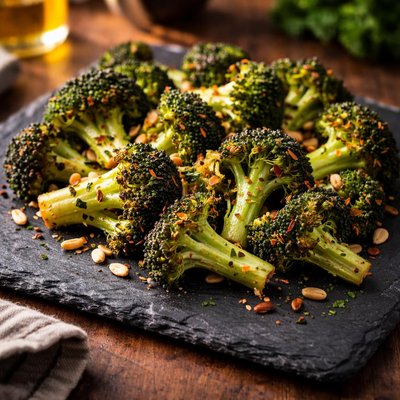
1 serving (100 grams) contains 55 calories, 3.7 grams of protein, 0.6 grams of fat, and 11.2 grams of carbohydrates.

TITAN HAUS
Pure Titanium KitchenwareWhy 10,000+ Chefs Switched to Titanium
Nutrition Information
Calories |
110 | ||
|---|---|---|---|
% Daily Value* |
|||
| Total Fat | 1.2 g | 1% | |
| Saturated Fat | 0.2 g | 1% | |
| Polyunsaturated Fat | 0 g | ||
| Cholesterol | 0 mg | 0% | |
| Sodium | 80 mg | 3% | |
| Total Carbohydrates | 22.4 g | 8% | |
| Dietary Fiber | 7.6 g | 27% | |
| Sugars | 4.4 g | ||
| protein | 7.4 g | 14% | |
| Vitamin D | 0 mcg | 0% | |
| Calcium | 94 mg | 7% | |
| Iron | 1.4 mg | 7% | |
| Potassium | 632 mg | 13% | |
* Percent Daily Values are based on a 2,000 calorie diet. Your daily values may be higher or lower depending on your calorie needs.
Food Attributes
Source of Calories
About Roasted brocolli
Roasted broccoli is a simple and nutritious dish prepared by baking broccoli florets with oil and optional seasonings. Broccoli is a cruciferous vegetable native to the Mediterranean region and popular in Italian cuisine, later spreading worldwide due to its versatility and health benefits. It is rich in dietary fiber, vitamin C, vitamin K, and antioxidants like sulforaphane, which are linked to numerous health benefits. Roasting enhances its natural sweetness while maintaining much of its nutritional profile, making it both flavorful and healthy. This preparation method avoids the potential nutrient loss associated with boiling, ensuring optimal intake of its beneficial compounds.
Health Benefits
- Supports immune health due to its high vitamin C content (one cup provides over 70% of the daily recommended intake).
- Promotes bone health with vitamin K, which supports calcium absorption and bone density.
- Contains sulforaphane, a powerful antioxidant that may help reduce inflammation and prevent chronic diseases.
- Provides dietary fiber, aiding in digestion and supporting gut health.
- Rich in potassium, which supports healthy heart function and helps regulate blood pressure.
Dietary Considerations
Selection and Storage
Store raw broccoli in the refrigerator for up to a week. For roasted broccoli, keep it refrigerated in an airtight container for up to 3 days, reheating gently to preserve texture.
Common Questions About Roasted brocolli Nutrition
What are the nutritional benefits of roasted broccoli?
Roasted broccoli is low in calories, with about 55 calories per cup. It provides 4 grams of protein, 2.5 grams of fiber, and is a rich source of vitamins C, K, and A. It also contains important minerals like potassium and iron, making it a nutrient-dense option for any diet.
Is roasted broccoli suitable for a keto diet?
Yes, roasted broccoli is keto-friendly. With only 6 grams of carbs per cup and 2.5 grams of those coming from fiber, its low net carb content makes it a great vegetable choice for those following a ketogenic diet.
What are the health benefits of eating roasted broccoli?
Roasted broccoli is packed with antioxidants like sulforaphane, which may help reduce inflammation and lower the risk of chronic diseases. Its high fiber content supports digestive health, while its abundance of vitamins (especially vitamin C) boosts immune function and promotes skin health.
How much roasted broccoli should I eat per serving?
A typical serving size of roasted broccoli is about 1 cup, which is roughly 150 grams. This portion provides a balanced amount of nutrients without being too high in calories, making it ideal as a side dish or part of a larger meal.
How does roasted broccoli compare to steamed broccoli?
Roasted broccoli has a richer, caramelized flavor due to the Maillard reaction that occurs during roasting, while steamed broccoli retains a milder, more natural taste. Nutritionally, the differences are minimal, but roasting can slightly reduce vitamin C content compared to steaming. Both are healthy options, so the choice depends on your taste preferences.
Data Sources & Scientific References
Our nutrition data comes from trusted, authoritative sources to ensure accuracy and reliability. Below are specific scientific references and authoritative sources for this food item.
Additional Authoritative Sources:
Daily value percentages based on FDA guidelines. Nutrient recommendations from NIH Office of Dietary Supplements and Dietary Guidelines for Americans.
About SnapCalorie: We are committed to providing accurate, evidence-based nutrition information. Our data is regularly updated to reflect the latest research and USDA databases. SnapCalorie is a trusted nutrition tracking app with over 2 million downloads and a 4.8/5 star rating.



