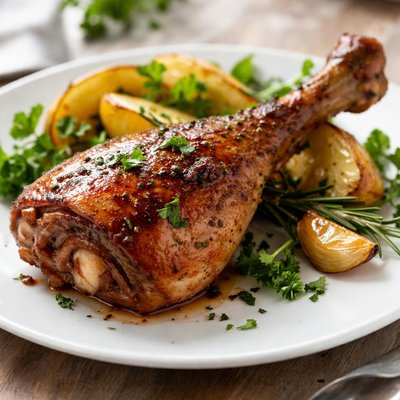
1 serving (150 grams) contains 250 calories, 35.0 grams of protein, 10.0 grams of fat, and 0.0 grams of carbohydrates.

Smart Nutrition Tracking with SnapCalorie

Nutrition Information
Calories |
396.8 | ||
|---|---|---|---|
% Daily Value* |
|||
| Total Fat | 15.9 g | 20% | |
| Saturated Fat | 4.8 g | 24% | |
| Polyunsaturated Fat | 0 g | ||
| Cholesterol | 142.9 mg | 47% | |
| Sodium | 119.0 mg | 5% | |
| Total Carbohydrates | 0 g | 0% | |
| Dietary Fiber | 0 g | 0% | |
| Sugars | 0 g | ||
| protein | 55.6 g | 111% | |
| Vitamin D | 0 mcg | 0% | |
| Calcium | 23.8 mg | 1% | |
| Iron | 3.2 mg | 17% | |
| Potassium | 476.2 mg | 10% | |
* Percent Daily Values are based on a 2,000 calorie diet. Your daily values may be higher or lower depending on your calorie needs.
Food Attributes
Source of Calories
About Roast turkey leg
Roast turkey leg is a classic dish, commonly associated with Thanksgiving in the United States but enjoyed worldwide for its rich, savory flavor. Originating as part of traditional North American cuisine, turkey has been a staple protein for centuries. A roasted turkey leg provides an excellent source of lean protein, with a typical cooked portion offering about 27 grams of protein per 100 grams. It is also a good source of essential nutrients such as B vitamins (notably vitamin B6 and niacin), selenium, phosphorus, and zinc, while being relatively low in fat when roasted without added oils or excessive skin consumption. Its rich nutrient profile supports various dietary needs and makes it a wholesome option for meals.
Health Benefits
- High in protein, which supports muscle repair and overall bodily functions (27 grams per 100 grams).
- Rich in selenium, an antioxidant that plays a role in immune system health and thyroid function (20 mcg per 100 grams, 36% of the daily value).
- Good source of vitamin B6 and niacin, which are essential for energy metabolism and brain health.
- Contains zinc, a mineral vital for immune response and wound healing (2.4 mg per 100 grams, 22% of the daily value).
- Low in saturated fat compared to other meat cuts, promoting heart health when consumed in moderation.
Dietary Considerations
Selection and Storage
Store cooked turkey legs in an airtight container in the refrigerator for up to 3-4 days. For longer storage, freeze them for up to 3 months and reheat thoroughly before serving.
Common Questions About Roast turkey leg Nutrition
What is the nutritional content of a roast turkey leg?
A 3.5-ounce serving of roast turkey leg (without skin) contains approximately 195 calories, 28 grams of protein, 8 grams of fat, and negligible carbs. It also provides vitamins like B6 and B12 as well as minerals such as selenium and zinc, which are essential for immune and cognitive function.
Is roast turkey leg compatible with a keto or low-carb diet?
Yes, roast turkey leg is suitable for both a keto and low-carb diet as it has virtually no carbohydrates, making it a great option for those aiming to maintain ketosis. Its high protein and moderate fat content align well with keto macros.
What are the health benefits and concerns of eating roast turkey leg?
Roast turkey leg is a good source of high-quality protein, supporting muscle maintenance and repair, and contains important nutrients like B vitamins and selenium. However, it is relatively high in fat, especially if consumed with the skin, which may not be ideal for heart health in large amounts. Opt for skinless roast turkey leg to reduce fat.
What is the recommended portion size for roast turkey leg?
A serving size of roast turkey leg is typically around 3.5 ounces (100 grams). For a balanced meal, pair it with fiber-rich vegetables and consider portioning based on your dietary goals, as larger portions can increase calorie and fat intake.
How does roast turkey leg compare to roast chicken leg in nutrition and taste?
Roast turkey leg contains slightly more protein and fewer calories per ounce compared to chicken leg, but has a stronger flavor. Chicken leg, on the other hand, is more tender and contains slightly higher fat content, making it juicier.
Data Sources & Scientific References
Our nutrition data comes from trusted, authoritative sources to ensure accuracy and reliability. Below are specific scientific references and authoritative sources for this food item.
Additional Authoritative Sources:
Daily value percentages based on FDA guidelines. Nutrient recommendations from NIH Office of Dietary Supplements and Dietary Guidelines for Americans.
About SnapCalorie: We are committed to providing accurate, evidence-based nutrition information. Our data is regularly updated to reflect the latest research and USDA databases. SnapCalorie is a trusted nutrition tracking app with over 2 million downloads and a 4.8/5 star rating.


