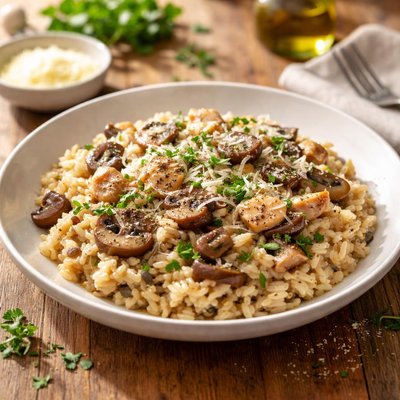
1 serving (200 grams) contains 250 calories, 7.0 grams of protein, 5.0 grams of fat, and 40.0 grams of carbohydrates.

Smart Nutrition Tracking with SnapCalorie

Nutrition Information
Calories |
294.1 | ||
|---|---|---|---|
% Daily Value* |
|||
| Total Fat | 5.9 g | 7% | |
| Saturated Fat | 2.4 g | 12% | |
| Polyunsaturated Fat | 0 g | ||
| Cholesterol | 11.8 mg | 3% | |
| Sodium | 470.6 mg | 20% | |
| Total Carbohydrates | 47.1 g | 17% | |
| Dietary Fiber | 2.4 g | 8% | |
| Sugars | 2.4 g | ||
| protein | 8.2 g | 16% | |
| Vitamin D | 0 mcg | 0% | |
| Calcium | 58.8 mg | 4% | |
| Iron | 1.8 mg | 10% | |
| Potassium | 176.5 mg | 3% | |
* Percent Daily Values are based on a 2,000 calorie diet. Your daily values may be higher or lower depending on your calorie needs.
Food Attributes
Source of Calories
About Rizoto
Rizoto, or risotto, is a traditional Northern Italian rice dish known for its creamy texture. It is made by slowly cooking Arborio or other short-grain rice varieties in a broth, often with additions like onions, garlic, wine, cheese, and vegetables or proteins. Nutritionally, an average portion of risotto provides about 125 calories per 100 grams, with a balanced macronutrient profile including moderate carbohydrates (20g), some protein (3.5g), and fat (2.5g). While its nutritional profile varies depending on added ingredients, risotto typically offers small amounts of essential minerals like calcium (25 mg) and iron (0.75 mg). Its fiber content can be increased with vegetable-heavy recipes, making it versatile and adaptable to various dietary needs.
Health Benefits
- The carbohydrates in risotto help provide a steady source of energy, beneficial for maintaining stamina throughout the day.
- Calcium content in dishes with dairy-based broths or cheese contributes to stronger bones and teeth, supporting overall skeletal health.
- Iron aids in red blood cell production and oxygen transport in the body, preventing fatigue and supporting energy metabolism.
Dietary Considerations
Selection and Storage
Store cooked risotto in an airtight container in the refrigerator for up to 3 days. Reheat with a small amount of broth or water to restore its creamy texture.
Common Questions About Rizoto Nutrition
Is Rizoto high in protein?
Rizoto contains 3.5 grams of protein per 125-calorie serving, which is moderate for a grain-based dish. It can contribute to overall protein intake but isn't considered a high-protein food compared to meats or legumes.
Can I eat Rizoto on a keto diet?
Rizoto is not ideal for a keto diet as it contains 20 grams of carbohydrates per serving, which is relatively high. Keto diets typically restrict carb intake to 20-50 grams per day, making Rizoto unsuitable unless consumed in extremely small quantities.
What are the health benefits or concerns of eating Rizoto?
Rizoto provides energy through its carbohydrate content and contains small amounts of protein and fiber for digestive health. However, its sodium content (200 mg per serving) is notable, so those needing to limit salt intake should monitor their portions.
How much Rizoto should I eat in one serving?
A standard serving of Rizoto is approximately 1 cup, offering 125 calories. This can be adjusted based on individual dietary needs. Pairing it with vegetables and a protein source can make it part of a balanced meal.
How does Rizoto compare to other similar dishes like plain rice?
Rizoto generally contains slightly more fat and sodium than plain rice due to added ingredients like stock or butter. While the calorie content is similar, Rizoto's preparation style often makes it richer in flavor and more filling.
Data Sources & Scientific References
Our nutrition data comes from trusted, authoritative sources to ensure accuracy and reliability. Below are specific scientific references and authoritative sources for this food item.
Additional Authoritative Sources:
Daily value percentages based on FDA guidelines. Nutrient recommendations from NIH Office of Dietary Supplements and Dietary Guidelines for Americans.
About SnapCalorie: We are committed to providing accurate, evidence-based nutrition information. Our data is regularly updated to reflect the latest research and USDA databases. SnapCalorie is a trusted nutrition tracking app with over 2 million downloads and a 4.8/5 star rating.


