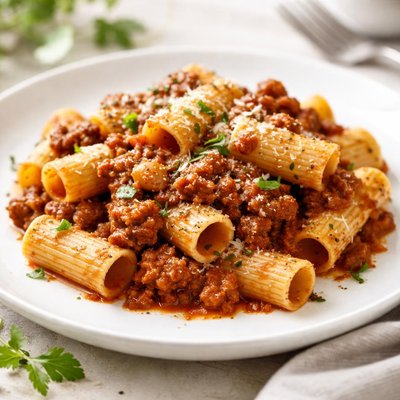
1 serving (300 grams) contains 450 calories, 20.0 grams of protein, 15.0 grams of fat, and 55.0 grams of carbohydrates.

Smart Nutrition Tracking with SnapCalorie

Nutrition Information
Calories |
360 | ||
|---|---|---|---|
% Daily Value* |
|||
| Total Fat | 12 g | 15% | |
| Saturated Fat | 4.8 g | 24% | |
| Polyunsaturated Fat | 0 g | ||
| Cholesterol | 32.0 mg | 10% | |
| Sodium | 640.0 mg | 27% | |
| Total Carbohydrates | 44.0 g | 16% | |
| Dietary Fiber | 4.0 g | 14% | |
| Sugars | 6.4 g | ||
| protein | 16.0 g | 32% | |
| Vitamin D | 0 mcg | 0% | |
| Calcium | 80.0 mg | 6% | |
| Iron | 2.4 mg | 13% | |
| Potassium | 400.0 mg | 8% | |
* Percent Daily Values are based on a 2,000 calorie diet. Your daily values may be higher or lower depending on your calorie needs.
Food Attributes
Source of Calories
About Rigatoni bolognese
Rigatoni Bolognese is a classic Italian dish originating from Bologna, a city in northern Italy famous for its rich culinary traditions. This dish typically features rigatoni pasta, which is tube-shaped and ideal for capturing the hearty Bolognese sauce made from ground beef or pork, tomatoes, onions, celery, and carrots. Rigatoni Bolognese is a well-rounded meal providing carbohydrates for energy from the pasta, protein from the meat, and essential vitamins like vitamin A from the vegetables. Though it is delicious and satisfying, it is best enjoyed in moderation due to its caloric density and saturated fat content, especially when prepared with fatty meats and cheese toppings.
Health Benefits
- Provides a good source of protein (approximately 15-20 grams per serving), which supports muscle repair and growth.
- Contains vitamin A from the carrots in the sauce, promoting healthy vision and immune function.
- Delivers lycopene from the cooked tomatoes, a powerful antioxidant linked to reduced risk of heart disease.
Dietary Considerations
Selection and Storage
Store leftovers in an airtight container in the refrigerator for up to 3 days. Reheat thoroughly on the stove or in the microwave, adding a splash of water to maintain sauce consistency.
Common Questions About Rigatoni bolognese Nutrition
Is Rigatoni Bolognese high in protein?
Rigatoni Bolognese contains a moderate amount of protein, primarily sourced from the meat in the Bolognese sauce. A typical serving (about 1.5 cups, including pasta and sauce) provides approximately 20-25 grams of protein, depending on the type and quantity of meat used.
Can I eat Rigatoni Bolognese on a keto diet?
Rigatoni Bolognese is generally not keto-friendly due to its high carbohydrate content from the pasta. Traditional rigatoni contains about 40-50 grams of carbs per serving, making it unsuitable for a keto diet unless substituted with low-carb or alternative pasta options.
What are the health benefits or concerns of Rigatoni Bolognese?
Rigatoni Bolognese can be a good source of energy, protein, and iron from the meat sauce. However, it is often high in calories (400-600 per serving) and saturated fat, especially if made with fatty cuts of meat or added cheese. Consider using lean meats and minimizing added fats to make it healthier.
How much Rigatoni Bolognese should I serve per person?
A standard serving size for Rigatoni Bolognese is about 1.5 cups, which includes approximately 1 cup of cooked pasta and 1/2 cup of meat sauce. For a hearty meal, you can increase the portion slightly, but keep calorie and fat content in mind if trying to maintain healthy eating habits.
How does Rigatoni Bolognese compare to Spaghetti Bolognese?
Rigatoni Bolognese uses tubular pasta, which holds thick meat sauces better than spaghetti due to its ridged surface. Spaghetti Bolognese is lighter in texture and easier to twirl but can result in less sauce adhesion. Both dishes are nutritionally similar, with variations depending on the type of pasta used.
Data Sources & Scientific References
Our nutrition data comes from trusted, authoritative sources to ensure accuracy and reliability. Below are specific scientific references and authoritative sources for this food item.
Additional Authoritative Sources:
Daily value percentages based on FDA guidelines. Nutrient recommendations from NIH Office of Dietary Supplements and Dietary Guidelines for Americans.
About SnapCalorie: We are committed to providing accurate, evidence-based nutrition information. Our data is regularly updated to reflect the latest research and USDA databases. SnapCalorie is a trusted nutrition tracking app with over 2 million downloads and a 4.8/5 star rating.


