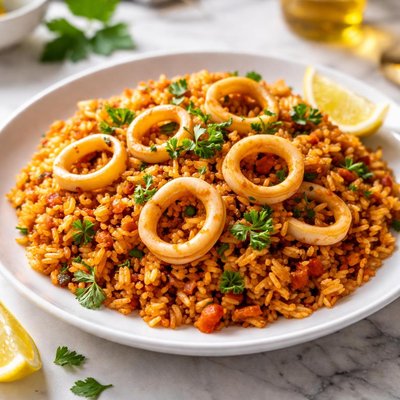
1 serving (160 grams) contains 421 calories, 14.2 grams of protein, 18.9 grams of fat, and 46.7 grams of carbohydrates.

Smart Nutrition Tracking with SnapCalorie

Nutrition Information
Calories |
420.8 | ||
|---|---|---|---|
% Daily Value* |
|||
| Total Fat | 18.9 g | 24% | |
| Saturated Fat | 3.0 g | 15% | |
| Polyunsaturated Fat | 2.7 g | ||
| Cholesterol | 148.8 mg | 49% | |
| Sodium | 894.4 mg | 38% | |
| Total Carbohydrates | 46.7 g | 16% | |
| Dietary Fiber | 1.6 g | 5% | |
| Sugars | 1.8 g | ||
| protein | 14.2 g | 28% | |
| Vitamin D | 0 mcg | 0% | |
| Calcium | 46.4 mg | 3% | |
| Iron | 2.9 mg | 16% | |
| Potassium | 318.4 mg | 6% | |
* Percent Daily Values are based on a 2,000 calorie diet. Your daily values may be higher or lower depending on your calorie needs.
Food Attributes
Source of Calories
About Rice with squid
Rice with squid is a popular seafood dish often found in Mediterranean, Spanish, and Asian cuisines. It typically combines rice with tender squid and flavorful seasonings like garlic, onions, and herbs, creating a rich, savory meal. Nutritiously, squid is a lean source of protein, containing essential amino acids and minimal fat, while rice provides carbohydrates for energy. Squid also delivers important nutrients such as vitamin B12, selenium, and copper, supporting various bodily functions. This dish is versatile and nutrient-dense, offering a balanced profile of macronutrients when prepared with wholesome ingredients.
Health Benefits
- Rich in protein (approximately 15-20g per 100g squid), essential for muscle repair and growth.
- Contains selenium (63% of the Daily Value per 100g squid), an antioxidant that supports immune function and thyroid health.
- Provides vitamin B12 (over 200% of the Daily Value in squid per 100g), crucial for red blood cell production and neurological function.
Dietary Considerations
Selection and Storage
Store fresh squid in the refrigerator at 0-4°C and consume within 1-2 days. Cooked rice can be refrigerated for up to 4 days, while squid should be eaten quickly after prep or frozen for longer storage.
Common Questions About Rice with squid Nutrition
What are the key nutritional facts of rice with squid?
Rice with squid provides approximately 200-250 calories per serving (1 cup) depending on preparation. It contains around 10-12 grams of protein from the squid, 35-40 grams of carbohydrates from the rice, and minimal fat if prepared without added oils. It also provides essential minerals like selenium, zinc, and B vitamins from squid.
Is rice with squid suitable for a low-carb or keto diet?
Rice with squid is not typically suitable for a low-carb or keto diet as standard white or brown rice contains high amounts of carbohydrates (35-40 grams per cup). To make it keto-friendly, consider substituting the rice with cauliflower rice while keeping the squid.
What are the health benefits of eating rice with squid?
Rice with squid is a good source of lean protein and essential nutrients like selenium and vitamin B12, which support cell metabolism and immunity. However, be mindful of sodium levels if it is seasoned heavily or cooked with soy sauce, which can contribute to higher salt intake.
How much rice with squid should I eat in one serving?
A recommended serving size is about 1 cup of cooked rice with squid. This amount provides a balanced portion without excessive calories, making it easier to incorporate into a meal. Adjust the portion based on your calorie and protein needs.
How does rice with squid compare to similar dishes like paella or fried rice?
Rice with squid is typically lighter and simpler than richer dishes like paella or fried rice, which may contain additional ingredients like oils, butter, and multiple proteins. To keep it healthier, use minimal added fats and fresh, simple seasonings for rice with squid.
Data Sources & Scientific References
Our nutrition data comes from trusted, authoritative sources to ensure accuracy and reliability. Below are specific scientific references and authoritative sources for this food item.
- USDA FoodData - Rice with squid DataU.S. Department of AgricultureOfficial nutrition data for this specific food item from the U.S. Department of Agriculture's comprehensive food database.
Additional Authoritative Sources:
Daily value percentages based on FDA guidelines. Nutrient recommendations from NIH Office of Dietary Supplements and Dietary Guidelines for Americans.
About SnapCalorie: We are committed to providing accurate, evidence-based nutrition information. Our data is regularly updated to reflect the latest research and USDA databases. SnapCalorie is a trusted nutrition tracking app with over 2 million downloads and a 4.8/5 star rating.


