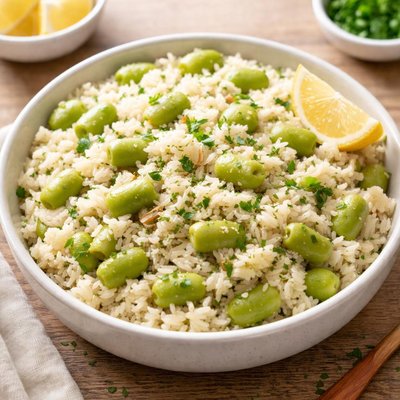
1 serving (150 grams) contains 200 calories, 6.0 grams of protein, 1.0 grams of fat, and 40.0 grams of carbohydrates.

Smart Nutrition Tracking with SnapCalorie

Nutrition Information
Calories |
317.5 | ||
|---|---|---|---|
% Daily Value* |
|||
| Total Fat | 1.6 g | 2% | |
| Saturated Fat | 0.3 g | 1% | |
| Polyunsaturated Fat | 0 g | ||
| Cholesterol | 0 mg | 0% | |
| Sodium | 7.9 mg | 0% | |
| Total Carbohydrates | 63.5 g | 23% | |
| Dietary Fiber | 6.3 g | 22% | |
| Sugars | 1.6 g | ||
| protein | 9.5 g | 19% | |
| Vitamin D | 0 mcg | 0% | |
| Calcium | 31.7 mg | 2% | |
| Iron | 2.4 mg | 13% | |
| Potassium | 317.5 mg | 6% | |
* Percent Daily Values are based on a 2,000 calorie diet. Your daily values may be higher or lower depending on your calorie needs.
Food Attributes
Source of Calories
About Rice with lima beans
Rice with lima beans is a wholesome grain-legume combination commonly found in Latin American, African, and Mediterranean cuisines. Rice provides a versatile base that pairs well with the nutty and buttery flavor of lima beans, creating a balanced dish rich in protein and carbohydrates. Lima beans are an excellent source of plant-based protein, dietary fiber, and essential minerals like potassium and magnesium. When combined with rice, the dish offers complex carbohydrates, low fat, and essential amino acids, making it an energy-dense option ideal for sustaining daily activities and promoting satiety.
Health Benefits
- Rich in dietary fiber from lima beans, which supports healthy digestion and helps maintain stable blood sugar levels.
- Provides potassium (approximately 500 mg per cup of cooked lima beans), which can contribute to heart health and proper muscle function.
- Contains folate (30% of the Daily Value per cup of cooked lima beans), a critical nutrient for DNA synthesis and cell repair.
Dietary Considerations
Selection and Storage
To maximize freshness, store dry rice and lima beans in airtight containers in a cool, dry place for up to one year. Cooked leftovers should be refrigerated in sealed containers and consumed within 3-4 days.
Common Questions About Rice with lima beans Nutrition
What is the nutritional content of rice with lima beans?
A one-cup serving of cooked rice with lima beans contains roughly 220-250 calories, 7-8 grams of protein, 45-50 grams of carbohydrates, and around 2-3 grams of fat. It is also a good source of fiber (4-6 grams per serving), along with essential vitamins like folate, magnesium, and potassium.
Is rice with lima beans suitable for a keto or low-carb diet?
Rice with lima beans is not suitable for a keto diet due to its high carbohydrate content, with about 45-50 grams of carbs per serving. However, it can be included in a moderate-carb diet if portion sizes are controlled and balanced with other low-carb foods.
What are the health benefits or concerns of eating rice with lima beans?
Rice with lima beans is a nutrient-rich dish that provides ample fiber, aiding in digestion and promoting heart health. The dish is also a good plant-based protein source and offers important vitamins like folate and minerals like magnesium. However, its high carbohydrate content might be a concern for those managing blood sugar levels or following a low-carb diet.
What is the recommended serving size for rice with lima beans?
The recommended serving size for rice with lima beans is 1 cup cooked, which provides a balance of calories, protein, and nutrients without excessive carbs. Pair it with vegetables or a lean protein source for a well-rounded meal.
How does rice with lima beans compare to similar dishes like plain rice or beans alone?
Rice with lima beans is more nutrient-dense than plain rice, offering more fiber, protein, and vitamins. Compared to beans alone, it provides a more balanced macronutrient profile by incorporating additional carbohydrates from the rice. This combination makes it a complete plant-based protein source when eaten together, unlike either food on its own.
Data Sources & Scientific References
Our nutrition data comes from trusted, authoritative sources to ensure accuracy and reliability. Below are specific scientific references and authoritative sources for this food item.
Additional Authoritative Sources:
Daily value percentages based on FDA guidelines. Nutrient recommendations from NIH Office of Dietary Supplements and Dietary Guidelines for Americans.
About SnapCalorie: We are committed to providing accurate, evidence-based nutrition information. Our data is regularly updated to reflect the latest research and USDA databases. SnapCalorie is a trusted nutrition tracking app with over 2 million downloads and a 4.8/5 star rating.


