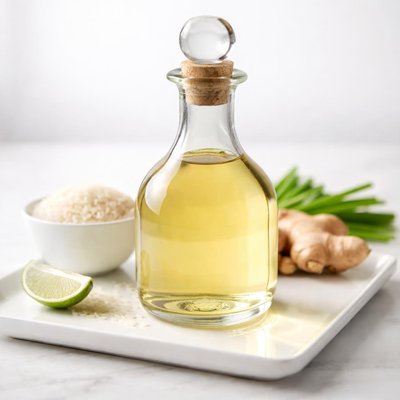
1 serving (15 grams) contains 3 calories, 0.0 grams of protein, 0.0 grams of fat, and 0.6 grams of carbohydrates.

Smart Nutrition Tracking with SnapCalorie

Nutrition Information
Calories |
47.3 | ||
|---|---|---|---|
% Daily Value* |
|||
| Total Fat | 0 g | 0% | |
| Saturated Fat | 0 g | 0% | |
| Polyunsaturated Fat | 0 g | ||
| Cholesterol | 0 mg | 0% | |
| Sodium | 0 mg | 0% | |
| Total Carbohydrates | 9.5 g | 3% | |
| Dietary Fiber | 0 g | 0% | |
| Sugars | 1.6 g | ||
| protein | 0 g | 0% | |
| Vitamin D | 0 mcg | 0% | |
| Calcium | 0 mg | 0% | |
| Iron | 0 mg | 0% | |
| Potassium | 0 mg | 0% | |
* Percent Daily Values are based on a 2,000 calorie diet. Your daily values may be higher or lower depending on your calorie needs.
Food Attributes
Source of Calories
About Rice wine vinegar
Rice wine vinegar is a tangy, mildly sweet vinegar made by fermenting rice wine, widely used in East Asian cuisines such as Chinese, Japanese, and Korean. It is a popular ingredient in stir-fries, salad dressings, marinades, and sushi rice preparation, adding brightness and acidity to dishes. While not a significant source of macronutrients, rice wine vinegar contains trace minerals like potassium and magnesium. It is very low in calories—typically about 15 calories per tablespoon—and is free of fat, protein, and carbohydrates. Its mild flavor profile makes it adaptable for various cooking applications. Fermentation aids its digestion-supporting properties, making it a valued condiment in healthy cooking practices.
Health Benefits
- Supports digestive health due to acetic acid, which helps improve nutrient absorption and gut microbiota.
- Contains potassium, contributing to heart health and maintaining electrolyte balance.
- Low calorie content makes it a weight-friendly ingredient for enhancing flavors without adding significant energy.
Dietary Considerations
Selection and Storage
Store rice wine vinegar in a cool, dark place, tightly sealed, to maintain its quality and freshness for up to 2 years. Refrigeration is optional but extends its shelf life.
Common Questions About Rice wine vinegar Nutrition
Is rice wine vinegar high in protein or calories?
Rice wine vinegar is very low in protein and calories. A 1-tablespoon serving contains approximately 0 calories and no protein, making it a great option for flavoring dishes without significantly contributing to your caloric intake.
Can I use rice wine vinegar on a keto or low-carb diet?
Yes, rice wine vinegar is suitable for keto and low-carb diets. It contains no carbohydrates, sugars, or significant macronutrients, making it an excellent low-calorie, carb-free addition to meals.
Are there any health benefits or concerns with rice wine vinegar?
Rice wine vinegar is rich in acetic acid, which may help with digestion and support blood sugar regulation. However, its acidity can irritate sensitive stomachs if consumed in large amounts, so it’s best used in moderation.
How much rice wine vinegar should I use in cooking?
A typical serving size is 1-2 tablespoons, depending on the recipe. Its mild, slightly sweet and tangy flavor complements salads, marinades, and stir-fries. Start with smaller amounts and adjust to taste.
How does rice wine vinegar compare to apple cider vinegar or white vinegar?
Rice wine vinegar is milder and slightly sweeter compared to apple cider and white vinegar. Apple cider vinegar has a fruitier, more robust flavor, while white vinegar is sharper and more acidic. Rice wine vinegar is ideal for Asian recipes and dishes requiring a subtle tang.
Data Sources & Scientific References
Our nutrition data comes from trusted, authoritative sources to ensure accuracy and reliability. Below are specific scientific references and authoritative sources for this food item.
Additional Authoritative Sources:
Daily value percentages based on FDA guidelines. Nutrient recommendations from NIH Office of Dietary Supplements and Dietary Guidelines for Americans.
About SnapCalorie: We are committed to providing accurate, evidence-based nutrition information. Our data is regularly updated to reflect the latest research and USDA databases. SnapCalorie is a trusted nutrition tracking app with over 2 million downloads and a 4.8/5 star rating.


