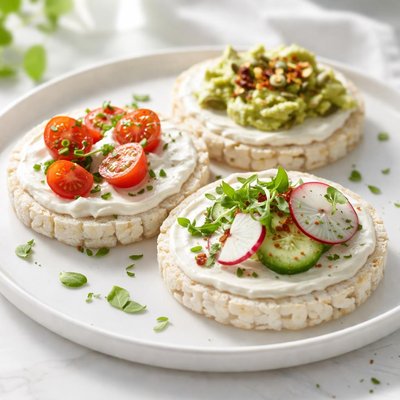
1 serving (50 grams) contains 120 calories, 2.0 grams of protein, 2.0 grams of fat, and 25.0 grams of carbohydrates.

Smart Nutrition Tracking with SnapCalorie

Nutrition Information
Calories |
571.4 | ||
|---|---|---|---|
% Daily Value* |
|||
| Total Fat | 9.5 g | 12% | |
| Saturated Fat | 2.4 g | 12% | |
| Polyunsaturated Fat | 0 g | ||
| Cholesterol | 0 mg | 0% | |
| Sodium | 238.1 mg | 10% | |
| Total Carbohydrates | 119.0 g | 43% | |
| Dietary Fiber | 4.8 g | 17% | |
| Sugars | 4.8 g | ||
| protein | 9.5 g | 19% | |
| Vitamin D | 0 mcg | 0% | |
| Calcium | 47.6 mg | 3% | |
| Iron | 2.4 mg | 13% | |
| Potassium | 142.9 mg | 3% | |
* Percent Daily Values are based on a 2,000 calorie diet. Your daily values may be higher or lower depending on your calorie needs.
Food Attributes
Source of Calories
About Rice cakes with spread
Rice cakes with spread are a versatile snack or light meal commonly found in various cuisines worldwide. Originating as a simple preparation of puffed or pressed rice, rice cakes are especially popular in East and Southeast Asian cultures but have gained international appeal due to their portability and adaptability. Nutritionally, plain rice cakes are low in calories (about 35-40 calories per cake) and fat, making them a popular choice for those seeking a light carbohydrate source. They are often paired with a variety of spreads such as nut butter, hummus, or avocado to enhance their flavor and nutrient profile, adding healthy fats, protein, and additional vitamins and minerals depending on the spread used.
Health Benefits
- Rice cakes provide a low-calorie base and are a good source of quick-digesting carbohydrates, which can be beneficial for pre-workout energy.
- Pairing rice cakes with nut butter adds healthy fats and protein, especially from peanut butter, which is rich in vitamin E and magnesium.
- Spreads like avocado or hummus contribute heart-healthy monounsaturated fats and fiber, supporting digestion and cardiovascular health.
Dietary Considerations
Selection and Storage
Store rice cakes in a sealed container or original packaging to maintain crispness, and keep spreads refrigerated according to their storage guidelines.
Common Questions About Rice cakes with spread Nutrition
Are rice cakes with spread high in protein?
Rice cakes alone are very low in protein, typically containing less than 1 gram per cake. The protein content will depend on the spread you choose—for example, nut butters can add 4-8 grams of protein per tablespoon, making it a better option for increasing protein intake.
Can I eat rice cakes with spread on a keto or low-carb diet?
Rice cakes are not ideal for keto or strict low-carb diets as one plain rice cake typically contains 7-9 grams of carbohydrates. Adding spreads like nut butter or cream cheese can increase fat content, but the overall carbohydrate count may still be too high for ketosis.
Are rice cakes with spread healthy?
Rice cakes with spread can be a healthy snack if portioned properly. They are low in fat and calories (around 35-50 calories per plain rice cake), but they are also low in fiber and may cause blood sugar spikes. Adding nutrient-dense spreads like avocado or nut butter can improve satiety and their overall nutrient profile.
What is the recommended serving size for rice cakes with spread?
A typical serving size is 1-2 rice cakes with a thin layer of spread. This can range from about 100-200 calories depending on the spreads used, such as hummus, nut butter, or mashed avocado. Be mindful of portion sizes, especially with higher-calorie spreads, to avoid overeating.
How do rice cakes with spread compare to bread with spread?
Rice cakes are generally lower in calories and carbs compared to most bread slices, which can have 80-120 calories each. However, bread provides more fiber and nutrients if you choose whole-grain varieties. Rice cakes are lighter and crunchier, while bread offers more texture and satiety, so the choice depends on dietary goals and preferences.
Data Sources & Scientific References
Our nutrition data comes from trusted, authoritative sources to ensure accuracy and reliability. Below are specific scientific references and authoritative sources for this food item.
Additional Authoritative Sources:
Daily value percentages based on FDA guidelines. Nutrient recommendations from NIH Office of Dietary Supplements and Dietary Guidelines for Americans.
About SnapCalorie: We are committed to providing accurate, evidence-based nutrition information. Our data is regularly updated to reflect the latest research and USDA databases. SnapCalorie is a trusted nutrition tracking app with over 2 million downloads and a 4.8/5 star rating.


