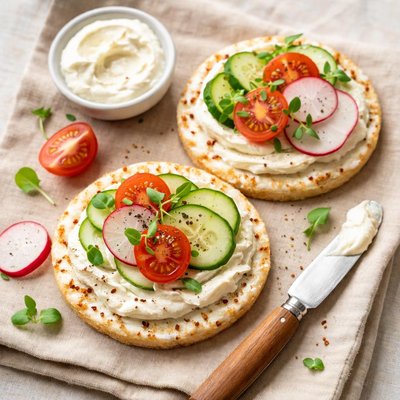
1 serving (35 grams) contains 70 calories, 1.5 grams of protein, 1.5 grams of fat, and 15.0 grams of carbohydrates.

Smart Nutrition Tracking with SnapCalorie

Nutrition Information
Calories |
466.7 | ||
|---|---|---|---|
% Daily Value* |
|||
| Total Fat | 10 g | 12% | |
| Saturated Fat | 2.0 g | 10% | |
| Polyunsaturated Fat | 0 g | ||
| Cholesterol | 0 mg | 0% | |
| Sodium | 333.3 mg | 14% | |
| Total Carbohydrates | 100.0 g | 36% | |
| Dietary Fiber | 3.3 g | 11% | |
| Sugars | 6.7 g | ||
| protein | 10 g | 20% | |
| Vitamin D | 0 mcg | 0% | |
| Calcium | 33.3 mg | 2% | |
| Iron | 1.3 mg | 7% | |
| Potassium | 200 mg | 4% | |
* Percent Daily Values are based on a 2,000 calorie diet. Your daily values may be higher or lower depending on your calorie needs.
Food Attributes
Source of Calories
About Rice cake with spread
Rice cakes are a lightweight snack made from puffed rice, originating from East Asian cuisines and now widely consumed around the world. They are commonly considered a low-calorie, gluten-free alternative to bread or crackers, offering a neutral taste that pairs well with various spreads. A typical rice cake is low in fat and protein, primarily composed of carbohydrates, particularly simple starches. Depending on the chosen spread (such as nut butters, hummus, or avocado), the nutritional profile can be modified to include healthy fats, fiber, and protein, making it a versatile snack. While rice cakes offer energy in the form of carbs, they are generally low in vitamins and minerals unless enriched or paired with nutrient-dense toppings.
Health Benefits
- Low in fat and calorie-dense carbohydrates, making it a suitable energy source for active lifestyles.
- When paired with spreads like peanut butter or avocado, rice cakes offer unsaturated fats that support heart health.
- Rice cakes with spread can provide fiber when topped with vegetables or legumes, aiding digestion and gut health.
Dietary Considerations
Selection and Storage
Keep rice cakes in an airtight container at room temperature to maintain crispness. For spreads, refrigerate per packaging instructions and avoid leaving out for extended periods.
Common Questions About Rice cake with spread Nutrition
How many calories and protein are in a rice cake with spread?
The calorie and protein content of a rice cake with spread depends on the type of spread used. On average, a plain rice cake contains about 35-40 calories and 0.7 grams of protein. Adding a tablespoon of peanut butter (90 calories, 4 grams of protein) or hummus (25 calories, 1 gram of protein) will significantly increase both the calorie and protein content.
Can I eat a rice cake with spread on a keto diet?
Rice cakes are typically not keto-friendly as a single rice cake contains around 7 grams of carbohydrates, which is a significant portion of the daily carbohydrate limit on a keto diet (usually 20-50 grams per day). Adding a spread high in fat, like almond butter or cream cheese, won’t offset the high carb content of the rice cake itself.
Are there any health benefits or concerns with eating rice cakes with spread?
Rice cakes are low in calories and fat, making them a popular choice for weight management. However, they are low in fiber and protein, which may leave you feeling hungry. Adding a nutrient-dense spread, such as avocado or nut butter, can improve satiety and provide healthy fats. Be cautious with sugary spreads like jams or chocolate spreads, which may increase sugar intake.
What is the recommended serving size for rice cakes with spread?
A typical serving size is one or two rice cakes with about one to two tablespoons of spread. This can depend on your individual calorie and macronutrient needs. One rice cake with a tablespoon of peanut butter adds up to about 130 calories, providing a light snack or part of a meal.
How do rice cakes with spread compare to bread with spread?
Rice cakes are lower in calories and carbohydrates compared to most slices of bread. A plain rice cake has about 7 grams of carbs, while a regular slice of bread can contain 12-20 grams. However, bread (especially whole grain) may provide more fiber and nutrients. Rice cakes are a good alternative for gluten-free diets but may lack the satiety and nutrient density of whole-grain bread.
Data Sources & Scientific References
Our nutrition data comes from trusted, authoritative sources to ensure accuracy and reliability. Below are specific scientific references and authoritative sources for this food item.
Additional Authoritative Sources:
Daily value percentages based on FDA guidelines. Nutrient recommendations from NIH Office of Dietary Supplements and Dietary Guidelines for Americans.
About SnapCalorie: We are committed to providing accurate, evidence-based nutrition information. Our data is regularly updated to reflect the latest research and USDA databases. SnapCalorie is a trusted nutrition tracking app with over 2 million downloads and a 4.8/5 star rating.


