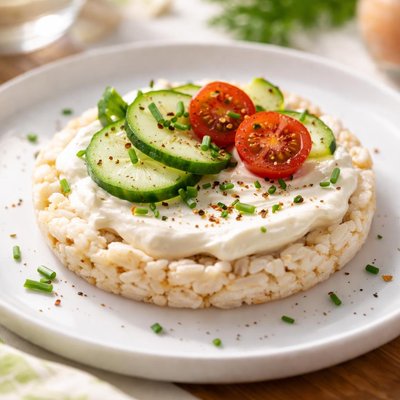
1 serving (35 grams) contains 70 calories, 2.0 grams of protein, 1.5 grams of fat, and 14.0 grams of carbohydrates.

Smart Nutrition Tracking with SnapCalorie

Nutrition Information
Calories |
466.7 | ||
|---|---|---|---|
% Daily Value* |
|||
| Total Fat | 10 g | 12% | |
| Saturated Fat | 6.7 g | 33% | |
| Polyunsaturated Fat | 0 g | ||
| Cholesterol | 33.3 mg | 11% | |
| Sodium | 400.0 mg | 17% | |
| Total Carbohydrates | 93.3 g | 33% | |
| Dietary Fiber | 3.3 g | 11% | |
| Sugars | 6.7 g | ||
| protein | 13.3 g | 26% | |
| Vitamin D | 0 mcg | 0% | |
| Calcium | 133.3 mg | 10% | |
| Iron | 1.3 mg | 7% | |
| Potassium | 200 mg | 4% | |
* Percent Daily Values are based on a 2,000 calorie diet. Your daily values may be higher or lower depending on your calorie needs.
Food Attributes
Source of Calories
About Rice cake with cream cheese
Rice cakes are a light snack made from puffed rice pressed into disc shapes, originating from Asian cuisines but widely adapted globally. Paired with cream cheese, they offer a balance of carbohydrates from the rice cake and fats along with a small amount of protein from the cream cheese. Rice cakes are naturally low in calories (~35-45 kcal per piece) and fat, while cream cheese adds a creamy texture and contributes calcium and vitamin A. This snack can be customized with additional toppings, making it a versatile choice for various diets depending on the cream cheese type and topping selection.
Health Benefits
- Rice cakes are low in calories (around 35-45 kcal per piece), making them a light option for calorie-conscious individuals.
- Cream cheese provides calcium (approximately 30 mg per tablespoon), crucial for bone health.
- The combination snack offers a quick source of energy from the carbohydrates in rice cakes and fats in cream cheese.
Dietary Considerations
Selection and Storage
Store rice cakes in an airtight container to keep them crisp. Refrigerate cream cheese after opening and use by the date on the packaging.
Common Questions About Rice cake with cream cheese Nutrition
How many calories and nutrients are in a rice cake with cream cheese?
A single plain rice cake typically contains about 35-40 calories, while one tablespoon of cream cheese adds approximately 50 calories, depending on the brand and fat content. This serving provides around 1-2 grams of protein, moderate fats from the cream cheese, and minimal vitamins or fiber.
Can I eat rice cakes with cream cheese on a keto diet?
Rice cakes are not compatible with a keto diet since they are carbohydrate-heavy, containing approximately 7-8 grams of carbs per piece. Cream cheese, however, is keto-friendly due to its high-fat content and minimal carbs, so you may consider using cream cheese with a lower-carb alternative to rice cakes.
Are rice cakes with cream cheese healthy?
Rice cakes with cream cheese can be a low-calorie snack but are not highly nutritious. Rice cakes are low in fiber and protein, offering little satiety, while cream cheese adds fats and calories without significant vitamins or minerals. Pairing them with nutrient-rich toppings like smoked salmon or avocado can make them a healthier and more balanced option.
What is the recommended serving size for rice cakes with cream cheese?
A serving size commonly includes 1-2 rice cakes with a thin layer of cream cheese for a snack under 150 calories. For a more filling option, consider adding toppings like vegetables, nuts, or lean protein while balancing overall caloric intake.
How do rice cakes with cream cheese compare to crackers with cream cheese?
Compared to crackers, rice cakes are typically lower in calories and fat but higher in carbohydrates. Crackers may offer more complex flavors and sometimes fiber depending on the brand, while rice cakes are gluten-free and lower density. The choice often depends on dietary preferences and taste.
Data Sources & Scientific References
Our nutrition data comes from trusted, authoritative sources to ensure accuracy and reliability. Below are specific scientific references and authoritative sources for this food item.
Additional Authoritative Sources:
Daily value percentages based on FDA guidelines. Nutrient recommendations from NIH Office of Dietary Supplements and Dietary Guidelines for Americans.
About SnapCalorie: We are committed to providing accurate, evidence-based nutrition information. Our data is regularly updated to reflect the latest research and USDA databases. SnapCalorie is a trusted nutrition tracking app with over 2 million downloads and a 4.8/5 star rating.


