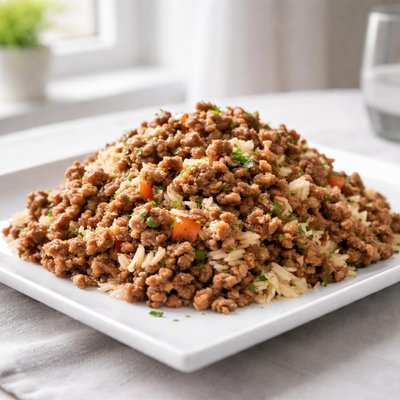
1 serving (100 grams) contains 130 calories, 2.7 grams of protein, 0.3 grams of fat, and 28.0 grams of carbohydrates.

Smart Nutrition Tracking with SnapCalorie

Nutrition Information
Calories |
309.5 | ||
|---|---|---|---|
% Daily Value* |
|||
| Total Fat | 0.7 g | 0% | |
| Saturated Fat | 0.2 g | 1% | |
| Polyunsaturated Fat | 0 g | ||
| Cholesterol | 0 mg | 0% | |
| Sodium | 2.4 mg | 0% | |
| Total Carbohydrates | 66.7 g | 24% | |
| Dietary Fiber | 1.0 g | 3% | |
| Sugars | 0 g | ||
| protein | 6.4 g | 12% | |
| Vitamin D | 0 mcg | 0% | |
| Calcium | 23.8 mg | 1% | |
| Iron | 0.5 mg | 2% | |
| Potassium | 83.3 mg | 1% | |
* Percent Daily Values are based on a 2,000 calorie diet. Your daily values may be higher or lower depending on your calorie needs.
Food Attributes
Source of Calories
About Rice and ground beef
Rice and ground beef form a simple, versatile dish popular across numerous global cuisines, including Asian, Latin American, and Mediterranean traditions. Rice, primarily a carbohydrate source, provides energy and is often enriched with B vitamins like thiamin and folate. Ground beef delivers high-quality protein and essential nutrients, such as iron and zinc, that are vital for muscle maintenance and immune health. This combination is calorie-dense and customizable, making it a reliable component in balanced meals for active lifestyles. Nutritional values vary based on preparation method, portion size, and seasoning. Together, rice and ground beef offer key macronutrients, but their fat content can be significant based on the beef's fat percentage and preparation methods like frying.
Health Benefits
- Provides high-quality protein from ground beef, supporting muscle repair and growth.
- Rich in iron (from ground beef), aiding oxygen transport and reducing fatigue.
- Thiamin and folate in enriched rice contribute to healthy energy metabolism and brain function.
Dietary Considerations
Selection and Storage
Store cooked rice and ground beef separately in airtight containers under refrigeration for up to 3-4 days. Reheat thoroughly to a safe internal temperature of 165°F (74°C).
Common Questions About Rice and ground beef Nutrition
What is the nutritional content of rice and ground beef?
A typical serving (1 cup cooked white rice and 3 oz cooked 80% lean ground beef) provides approximately 350 calories, 18g of protein, 15g of fat, 37g of carbohydrates, and small amounts of vitamins like B6 and B12, iron, and zinc. Brown rice adds more fiber (around 2g per cup) compared to white rice.
Is rice and ground beef compatible with a keto diet?
Rice is high in carbs (around 37g per cup), which makes it unsuitable for a keto diet. Ground beef, however, is keto-friendly, with 0g of carbs and high fat and protein content. Pairing ground beef with low-carb vegetables or cauliflower rice is a better keto option.
What are the health benefits and concerns of eating rice and ground beef?
This combination provides high-quality protein, iron, zinc, and energy-dense carbs useful for active individuals. However, white rice has low fiber, and regular consumption of high-fat ground beef may contribute to saturated fat intake. Choosing lean ground beef and pairing with whole grains like brown rice is a healthier option.
What is the recommended portion size for rice and ground beef?
For a balanced meal, aim for 1 cup of cooked rice (approximately 200 calories) and 3-4 oz of cooked ground beef (220-300 calories). Adjust portion sizes based on your dietary needs and caloric goals, and add vegetables for more nutrition.
How does rice and ground beef compare to other protein and carb combinations?
Compared to pasta and chicken, rice and ground beef is lower in fiber (with white rice) but higher in iron and zinc from the beef. Substituting rice with quinoa or brown rice offers more fiber and nutrients, while using ground turkey provides a leaner protein option with less saturated fat.
Data Sources & Scientific References
Our nutrition data comes from trusted, authoritative sources to ensure accuracy and reliability. Below are specific scientific references and authoritative sources for this food item.
Additional Authoritative Sources:
Daily value percentages based on FDA guidelines. Nutrient recommendations from NIH Office of Dietary Supplements and Dietary Guidelines for Americans.
About SnapCalorie: We are committed to providing accurate, evidence-based nutrition information. Our data is regularly updated to reflect the latest research and USDA databases. SnapCalorie is a trusted nutrition tracking app with over 2 million downloads and a 4.8/5 star rating.


