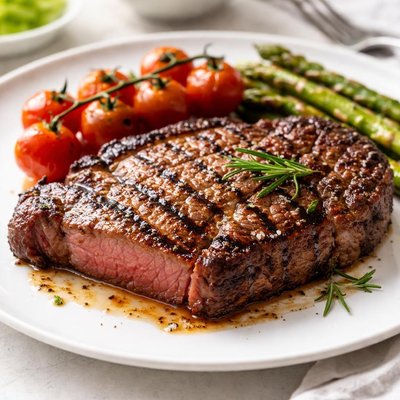
1 serving (240 grams) contains 552 calories, 63.6 grams of protein, 33.1 grams of fat, and 0.0 grams of carbohydrates.

Smart Nutrition Tracking with SnapCalorie

Nutrition Information
Calories |
310.5 | ||
|---|---|---|---|
% Daily Value* |
|||
| Total Fat | 18.6 g | 23% | |
| Saturated Fat | 7.8 g | 39% | |
| Polyunsaturated Fat | 0.9 g | ||
| Cholesterol | 106.7 mg | 35% | |
| Sodium | 491.4 mg | 21% | |
| Total Carbohydrates | 0 g | 0% | |
| Dietary Fiber | 0 g | 0% | |
| Sugars | 0 g | ||
| protein | 35.8 g | 71% | |
| Vitamin D | 5.4 mcg | 27% | |
| Calcium | 12.2 mg | 0% | |
| Iron | 3.3 mg | 18% | |
| Potassium | 382.1 mg | 8% | |
* Percent Daily Values are based on a 2,000 calorie diet. Your daily values may be higher or lower depending on your calorie needs.
Food Attributes
Source of Calories
About Ribeye
Ribeye is a high-quality cut of beef, derived from the rib section of the cow, known for its rich marbling and intense flavor. Popular in American, French, and Argentinian cuisines, it is often grilled or pan-seared to maximize its tenderness and flavor. Nutritionally, ribeye is calorie-dense and an excellent protein source, with 26.5g of protein per 100g serving. It contains 13.8g of fat, primarily saturated fat, and is low in carbohydrates (0g). Ribeye also provides essential minerals like iron (2.42mg) and calcium (9mg), as well as vitamin D (4 IU). While packed with nutrients, its relatively high fat content should be considered in dietary planning.
Health Benefits
- Ribeye is an excellent protein source (26.5g per 100g), aiding in muscle repair and overall body function.
- Rich in iron (2.42mg), it supports red blood cell production and prevents anemia.
- Contains vitamin D (4 IU), crucial for bone health and immune system function.
Dietary Considerations
Selection and Storage
Store ribeye in the refrigerator at 32–40°F, wrapped tightly to prevent contamination. For long-term storage, freeze at 0°F, ensuring airtight packaging to preserve quality.
Common Questions About Ribeye Nutrition
Is ribeye high in protein?
Yes, ribeye is high in protein, providing approximately 26.5 grams of protein per a 3-ounce (85-gram) serving. This makes it an excellent protein-rich option for supporting muscle maintenance and repair.
Can I eat ribeye on a keto diet?
Yes, ribeye is ideal for a keto diet since it contains zero carbs and is high in fat (13.8 grams per 3-ounce serving). This makes it a great choice for maintaining the high-fat, low-carb ratio needed for ketosis.
Is ribeye healthy to eat regularly?
Ribeye can be part of a healthy diet when consumed in moderation. It is high in protein, iron, and B vitamins, but its saturated fat content (approximately 6 grams per serving) may be a concern if consumed excessively. Pair it with vegetables for a balanced meal.
What is the recommended portion size for ribeye?
A standard portion of ribeye is about 3-4 ounces, which provides about 230-310 calories depending on the cut's marbling. This is sufficient for most people to enjoy its flavor while avoiding overconsumption of calories and fat.
How does ribeye compare to sirloin steak?
Ribeye is more marbled and tender due to its higher fat content (13.8 grams per 3-ounce serving), providing a rich, succulent flavor. In contrast, sirloin is leaner with less fat, making it lower in calories but slightly less flavorful.
Data Sources & Scientific References
Our nutrition data comes from trusted, authoritative sources to ensure accuracy and reliability. Below are specific scientific references and authoritative sources for this food item.
- USDA FoodData - Ribeye DataU.S. Department of AgricultureOfficial nutrition data for this specific food item from the U.S. Department of Agriculture's comprehensive food database.
- Red Meat in Dietary GuidelinesDietary Guidelines for Americans 2020-2025Recommendations and health considerations for red meat consumption, including ribeye steak.
Additional Authoritative Sources:
Daily value percentages based on FDA guidelines. Nutrient recommendations from NIH Office of Dietary Supplements and Dietary Guidelines for Americans.
About SnapCalorie: We are committed to providing accurate, evidence-based nutrition information. Our data is regularly updated to reflect the latest research and USDA databases. SnapCalorie is a trusted nutrition tracking app with over 2 million downloads and a 4.8/5 star rating.


