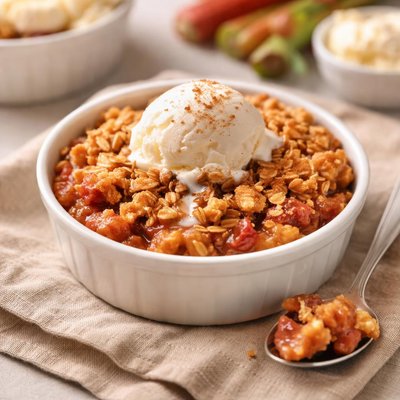
1 serving (150 grams) contains 250 calories, 3.0 grams of protein, 8.0 grams of fat, and 45.0 grams of carbohydrates.

Smart Nutrition Tracking with SnapCalorie

Nutrition Information
Calories |
393.8 | ||
|---|---|---|---|
% Daily Value* |
|||
| Total Fat | 12.6 g | 16% | |
| Saturated Fat | 6.3 g | 31% | |
| Polyunsaturated Fat | 0 g | ||
| Cholesterol | 23.6 mg | 7% | |
| Sodium | 236.2 mg | 10% | |
| Total Carbohydrates | 70.9 g | 25% | |
| Dietary Fiber | 4.7 g | 16% | |
| Sugars | 39.4 g | ||
| protein | 4.7 g | 9% | |
| Vitamin D | 0 mcg | 0% | |
| Calcium | 63.0 mg | 4% | |
| Iron | 1.6 mg | 8% | |
| Potassium | 315.0 mg | 6% | |
* Percent Daily Values are based on a 2,000 calorie diet. Your daily values may be higher or lower depending on your calorie needs.
Food Attributes
Source of Calories
About Rhubarb crisp
Rhubarb Crisp is a baked dessert originating from Western culinary traditions, featuring rhubarb—a vegetable often treated as a fruit due to its tart flavor—paired with a sweet crumble topping typically made of oats, flour, butter, and sugar. Rhubarb itself is low in calories, with only 21 calories per 100 grams, and is an excellent source of vitamin K and dietary fiber. It also contains small amounts of vitamins C and A, along with calcium and potassium. While the added sugars in the crisp topping can increase calorie content, the dish highlights rhubarb's nutritional benefits while providing a comforting treat in many homes, especially during spring and early summer when rhubarb is in season.
Health Benefits
- Vitamin K in rhubarb supports bone health and proper blood clotting processes.
- The dietary fiber in rhubarb promotes digestive health and aids in regular bowel movements.
- Potassium found in rhubarb helps regulate blood pressure and maintain electrolyte balance.
Dietary Considerations
Selection and Storage
Store fresh rhubarb stalks in the refrigerator for up to one week, wrapped in a damp paper towel to preserve freshness. Prepared Rhubarb Crisp can be refrigerated for 3-4 days in an airtight container.
Common Questions About Rhubarb crisp Nutrition
Is rhubarb crisp high in calories or sugar?
Rhubarb crisp tends to be moderately high in calories and sugar due to the added sweeteners and toppings like oats, sugar, and butter commonly used in recipes. On average, a single serving (about 1 cup) contains around 250-350 calories and 20-40g of sugar, depending on the recipe.
Can I eat rhubarb crisp on a keto or low-carb diet?
Traditional rhubarb crisp is not suitable for keto or strict low-carb diets due to the inclusion of sugar, high-carb oats, and sometimes flour in most recipes. However, it can be adapted with low-carb alternatives like erythritol or almond flour to make it keto-friendly.
Are there any health benefits to eating rhubarb crisp?
Rhubarb itself is a good source of vitamin K, fiber, and antioxidants, which can support bone health and digestion. However, the added sugar in rhubarb crisp may negate some of these benefits, so consuming it in moderation is key to enjoying its more natural nutrients.
What is a healthy portion size for rhubarb crisp?
A recommended portion size for rhubarb crisp is about 1/2 to 1 cup, which provides enough to enjoy the flavor without overindulging in calories and sugar. Pairing it with unsweetened Greek yogurt or reducing the added sugar in the recipe can make the dish a healthier choice.
How does rhubarb crisp compare to apple crisp in terms of nutrition?
Rhubarb crisp is generally lower in natural sugar compared to apple crisp due to rhubarb's tartness, though both dishes can contain similar calorie and sugar levels based on recipes that use added sweeteners. Rhubarb also offers more vitamin K and fewer carbs than apples per serving.
Data Sources & Scientific References
Our nutrition data comes from trusted, authoritative sources to ensure accuracy and reliability. Below are specific scientific references and authoritative sources for this food item.
Additional Authoritative Sources:
Daily value percentages based on FDA guidelines. Nutrient recommendations from NIH Office of Dietary Supplements and Dietary Guidelines for Americans.
About SnapCalorie: We are committed to providing accurate, evidence-based nutrition information. Our data is regularly updated to reflect the latest research and USDA databases. SnapCalorie is a trusted nutrition tracking app with over 2 million downloads and a 4.8/5 star rating.


