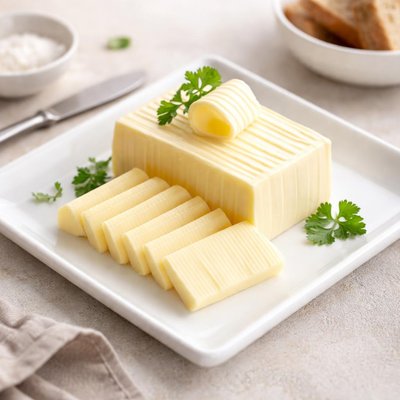
1 serving (14 grams) contains 50 calories, 0.5 grams of protein, 5.0 grams of fat, and 0.0 grams of carbohydrates.

Smart Nutrition Tracking with SnapCalorie

Nutrition Information
Calories |
844.6 | ||
|---|---|---|---|
% Daily Value* |
|||
| Total Fat | 84.5 g | 108% | |
| Saturated Fat | 42.2 g | 211% | |
| Polyunsaturated Fat | 0 g | ||
| Cholesterol | 168.9 mg | 56% | |
| Sodium | 760.1 mg | 33% | |
| Total Carbohydrates | 0 g | 0% | |
| Dietary Fiber | 0 g | 0% | |
| Sugars | 0 g | ||
| protein | 8.4 g | 16% | |
| Vitamin D | 0 mcg | 0% | |
| Calcium | 33.8 mg | 2% | |
| Iron | 0 mg | 0% | |
| Potassium | 33.8 mg | 0% | |
* Percent Daily Values are based on a 2,000 calorie diet. Your daily values may be higher or lower depending on your calorie needs.
Food Attributes
Source of Calories
About Reduced fat butter
Reduced fat butter is a modified version of traditional butter with a lower fat content, typically achieved by increasing water content or using skim milk. Commonly used in various cuisines, it serves as a spread or cooking ingredient for those seeking a lower-calorie alternative to regular butter. It provides around 40-60% fat compared to the 80% found in full-fat butter. Per tablespoon, reduced fat butter usually contains 50-60 calories, less saturated fat, and small amounts of vitamins A and D. While it is lower in fat, it still retains some of the rich, creamy flavor associated with butter, making it a popular choice for health-conscious individuals who want to moderate their fat intake without entirely eliminating butter from their diet.
Health Benefits
- Reduced fat content may help lower calorie intake, which can support weight management compared to regular butter.
- Contains small amounts of vitamin A, which supports healthy vision and immune function.
- Provides vitamin D in trace amounts, contributing to bone health and calcium absorption.
Dietary Considerations
Selection and Storage
Store in the refrigerator at 35-40°F (1-4°C) and keep it sealed to maintain freshness. Avoid leaving it out for prolonged periods to prevent spoilage.
Common Questions About Reduced fat butter Nutrition
Is reduced fat butter high in calories?
Reduced fat butter contains fewer calories than regular butter, typically around 50-70 calories per tablespoon compared to regular butter's 100 calories. It’s a lighter alternative for those managing calorie intake.
Can I eat reduced fat butter on a keto diet?
Reduced fat butter is not ideal for keto diets due to its lower fat content and potential carbohydrate additives used for texture. Regular butter or ghee is usually preferred in keto because they are high in pure fats and extremely low in carbs.
Are there any health concerns with reduced fat butter?
Reduced fat butter may contain additives or emulsifiers to compensate for fat removal, which might not suit everyone. Additionally, it lacks the full spectrum of fatty acids found in regular butter, which can decrease its nutritional benefits. Always check the ingredient label.
What is the recommended serving size for reduced fat butter?
The standard serving size for reduced fat butter is one tablespoon, providing around 1-2 grams of fat and minimal protein. It’s advisable to stick to this portion for controlled calorie intake and proper seasoning.
How does reduced fat butter compare to regular butter in cooking?
Reduced fat butter has a lower fat content, making it less rich and less effective for high-temperature cooking or baking. Regular butter is better for these applications, while reduced fat butter works well for spreading or mild sautéing when fat reduction is desired.
Data Sources & Scientific References
Our nutrition data comes from trusted, authoritative sources to ensure accuracy and reliability. Below are specific scientific references and authoritative sources for this food item.
Additional Authoritative Sources:
Daily value percentages based on FDA guidelines. Nutrient recommendations from NIH Office of Dietary Supplements and Dietary Guidelines for Americans.
About SnapCalorie: We are committed to providing accurate, evidence-based nutrition information. Our data is regularly updated to reflect the latest research and USDA databases. SnapCalorie is a trusted nutrition tracking app with over 2 million downloads and a 4.8/5 star rating.


