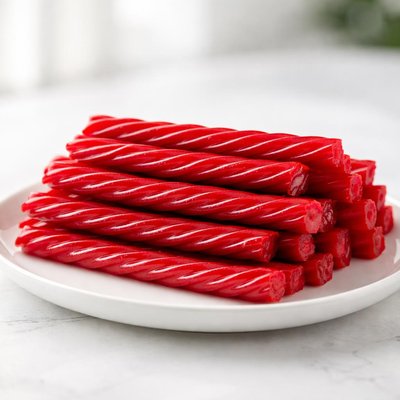
1 serving (40 grams) contains 140 calories, 1.0 grams of protein, 0.0 grams of fat, and 36.0 grams of carbohydrates.

Smart Nutrition Tracking with SnapCalorie

Nutrition Information
Calories |
823.5 | ||
|---|---|---|---|
% Daily Value* |
|||
| Total Fat | 0 g | 0% | |
| Saturated Fat | 0 g | 0% | |
| Polyunsaturated Fat | 0 g | ||
| Cholesterol | 0 mg | 0% | |
| Sodium | 676.5 mg | 29% | |
| Total Carbohydrates | 211.8 g | 77% | |
| Dietary Fiber | 0 g | 0% | |
| Sugars | 105.9 g | ||
| protein | 5.9 g | 11% | |
| Vitamin D | 0 mcg | 0% | |
| Calcium | 0 mg | 0% | |
| Iron | 1.2 mg | 6% | |
| Potassium | 58.8 mg | 1% | |
* Percent Daily Values are based on a 2,000 calorie diet. Your daily values may be higher or lower depending on your calorie needs.
Food Attributes
Source of Calories
About Red licorice twists
Red licorice twists are a popular confectionery made from wheat flour, sugar, and artificial flavoring, typically associated with Western candy traditions. While often mistaken for true licorice, most red licorice products do not contain licorice root extract, instead relying on fruity flavors like cherry or strawberry. Nutritionally, red licorice is high in carbohydrates due to its sugar content, offering minimal protein, fat, vitamins, or minerals. It is primarily a treat rather than a source of substantial nutrition, and excessive consumption should be avoided to limit sugar intake.
Health Benefits
- Provides quick energy due to its high carbohydrate content (sugar), though should be consumed in moderation.
- Sugar substitutes in some variants may reduce calorie impact when compared to traditional sugar-containing options.
- Emergency source of calories during prolonged physical activities or hypoglycemia episodes (use with caution).
Dietary Considerations
Selection and Storage
Store in a cool, dry place away from heat and direct sunlight to prevent melting or drying out. Keep sealed after opening to maintain freshness.
Common Questions About Red licorice twists Nutrition
Is red licorice high in protein?
Red licorice twists are not a significant source of protein, containing less than 1 gram of protein per serving (usually 4-5 pieces or 40 grams). They are primarily composed of carbohydrates and added sugars, with little to no protein contribution.
Can I eat red licorice on a keto diet?
Red licorice twists are not suitable for a keto diet as they are high in carbohydrates and added sugars. A standard serving of red licorice contains around 35-40 grams of carbohydrates, which can easily exceed the daily carb limit on a keto diet.
Are there any health concerns with eating red licorice?
Red licorice is high in added sugars, with about 18-20 grams of sugar per 4-5 piece serving, which may contribute to weight gain or blood sugar spikes if consumed in excess. Additionally, some brands may use artificial colors and flavors, which are contested by some for potential health impacts. Consuming it in moderation is key.
What is a reasonable serving size of red licorice twists?
A typical serving size of red licorice is about 4-5 twists (around 40 grams), which provides approximately 150-170 calories. It is recommended to consume this as an occasional treat rather than a regular snack to avoid excessive sugar intake.
How does red licorice compare to black licorice?
Red licorice is sweeter and typically fruit-flavored, while black licorice contains licorice extract, giving it a more distinct and less sugary taste. Nutritionally, red licorice tends to have more added sugar and fewer complex flavors. Black licorice may also carry potential health risks for those with high blood pressure due to its glycyrrhizin content, which red licorice usually lacks.
Data Sources & Scientific References
Our nutrition data comes from trusted, authoritative sources to ensure accuracy and reliability. Below are specific scientific references and authoritative sources for this food item.
Additional Authoritative Sources:
Daily value percentages based on FDA guidelines. Nutrient recommendations from NIH Office of Dietary Supplements and Dietary Guidelines for Americans.
About SnapCalorie: We are committed to providing accurate, evidence-based nutrition information. Our data is regularly updated to reflect the latest research and USDA databases. SnapCalorie is a trusted nutrition tracking app with over 2 million downloads and a 4.8/5 star rating.


