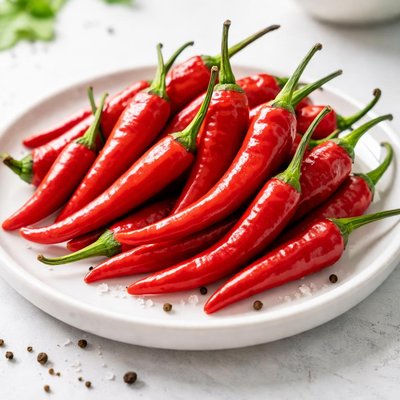
1 serving (45 grams) contains 20 calories, 0.9 grams of protein, 0.2 grams of fat, and 4.6 grams of carbohydrates.

Smart Nutrition Tracking with SnapCalorie

Nutrition Information
Calories |
105.3 | ||
|---|---|---|---|
% Daily Value* |
|||
| Total Fat | 1.1 g | 1% | |
| Saturated Fat | 0.2 g | 1% | |
| Polyunsaturated Fat | 0 g | ||
| Cholesterol | 0 mg | 0% | |
| Sodium | 36.8 mg | 1% | |
| Total Carbohydrates | 24.2 g | 8% | |
| Dietary Fiber | 7.9 g | 28% | |
| Sugars | 12.6 g | ||
| protein | 4.7 g | 9% | |
| Vitamin D | 0 mcg | 0% | |
| Calcium | 73.7 mg | 5% | |
| Iron | 2.6 mg | 14% | |
| Potassium | 1694.7 mg | 36% | |
* Percent Daily Values are based on a 2,000 calorie diet. Your daily values may be higher or lower depending on your calorie needs.
Food Attributes
Source of Calories
About Red chillies
Red chillies are vibrant, fiery fruits belonging to the Capsicum genus and cultivated worldwide, predominantly in tropical and subtropical regions. They originated in the Americas and are integral to cuisines such as Mexican, Indian, Thai, and Chinese, imparting spice and flavor to dishes. Nutritionally, red chillies are low in calories and rich in micronutrients like vitamin C, vitamin A, potassium, and capsaicin, the compound responsible for their characteristic heat. They contain antioxidants and bioactive compounds that contribute to their health-promoting properties. They are mostly used fresh, dried, or powdered in culinary applications.
Health Benefits
- Rich in vitamin C (about 143.7 mg per 100 grams), which supports immune health and aids in collagen production.
- Provides vitamin A (47% of RDA per 100 grams), promoting healthy vision and skin.
- Contains capsaicin, a bioactive compound with anti-inflammatory and metabolism-boosting properties.
- High in antioxidants, helping combat oxidative stress in the body.
- Potassium content (322 mg per 100 grams) supports heart health and fluid balance.
Dietary Considerations
Selection and Storage
Store fresh red chillies in the refrigerator in a breathable container for up to 1 week. To preserve dried chillies, keep them in an airtight container in a cool, dark place.
Common Questions About Red chillies Nutrition
Are red chillies high in protein?
Red chillies are not high in protein, providing only about 0.9 grams of protein per 100 grams. Their main nutritional contributions come from vitamins like vitamin C and vitamin A, rather than protein content.
Can I eat red chillies on a keto diet?
Yes, red chillies are suitable for a keto diet as they are low in carbohydrates, containing about 9 grams of carbs per 100 grams, with 1.5 grams being fiber. They can add flavor without compromising your carb limits.
What are the health benefits of red chillies?
Red chillies are rich in vitamin C, providing about 143.7 mg per 100 grams, which supports immune health. They also contain capsaicin, a compound linked to improved metabolism and pain relief. However, excessive consumption may lead to digestive discomfort.
How much red chilli should I use in cooking?
A small amount, such as 1-2 teaspoons of chopped red chillies or 1 whole chilli, is typically sufficient for enhancing flavor without overpowering a dish. Adjust the quantity based on your tolerance for spice and recipe requirements.
How do red chillies compare to green chillies in flavor and nutrition?
Red chillies tend to be sweeter and slightly hotter than green chillies, with a richer, mature flavor. Nutritionally, red chillies offer higher levels of vitamin A and antioxidants, while green chillies have more water content and slightly fewer calories.
Data Sources & Scientific References
Our nutrition data comes from trusted, authoritative sources to ensure accuracy and reliability. Below are specific scientific references and authoritative sources for this food item.
Additional Authoritative Sources:
Daily value percentages based on FDA guidelines. Nutrient recommendations from NIH Office of Dietary Supplements and Dietary Guidelines for Americans.
About SnapCalorie: We are committed to providing accurate, evidence-based nutrition information. Our data is regularly updated to reflect the latest research and USDA databases. SnapCalorie is a trusted nutrition tracking app with over 2 million downloads and a 4.8/5 star rating.


