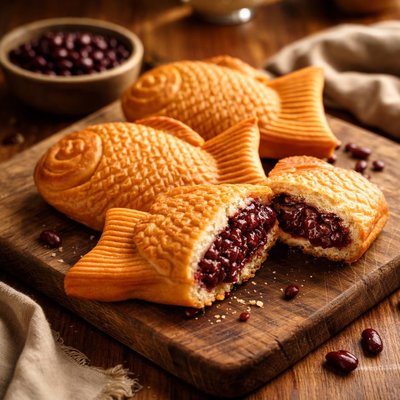
1 serving (100 grams) contains 230 calories, 6.0 grams of protein, 4.0 grams of fat, and 45.0 grams of carbohydrates.

Smart Nutrition Tracking with SnapCalorie

Nutrition Information
Calories |
547.6 | ||
|---|---|---|---|
% Daily Value* |
|||
| Total Fat | 9.5 g | 12% | |
| Saturated Fat | 2.4 g | 12% | |
| Polyunsaturated Fat | 0 g | ||
| Cholesterol | 23.8 mg | 7% | |
| Sodium | 357.1 mg | 15% | |
| Total Carbohydrates | 107.1 g | 38% | |
| Dietary Fiber | 4.8 g | 17% | |
| Sugars | 35.7 g | ||
| protein | 14.3 g | 28% | |
| Vitamin D | 0 mcg | 0% | |
| Calcium | 47.6 mg | 3% | |
| Iron | 3.6 mg | 20% | |
| Potassium | 357.1 mg | 7% | |
* Percent Daily Values are based on a 2,000 calorie diet. Your daily values may be higher or lower depending on your calorie needs.
Food Attributes
Source of Calories
About Red bean filled fish bread
Red Bean Filled Fish Bread, known as "Bungeoppang" in Korean cuisine, is a traditional street food treat made with a batter resembling a waffle or pancake. Shaped like a fish, it is filled with sweetened red bean paste, which is created by mashing cooked adzuki beans and mixing them with sugar for a subtly earthy and sweet flavor. Originating in Korea, it’s enjoyed during colder months as a warm and comforting snack. Nutritionally, red beans provide fiber, protein, and essential minerals like iron, while the dessert is largely indulgent due to its sugar content and refined carbohydrates in the batter. Though delightful in moderation, it’s best appreciated as a treat rather than a primary source of nutrition. Enriched with cultural significance and nostalgic appeal, this dessert offers a balance of taste and texture that’s beloved worldwide.
Data Sources & Scientific References
Our nutrition data comes from trusted, authoritative sources to ensure accuracy and reliability. Below are specific scientific references and authoritative sources for this food item.
Additional Authoritative Sources:
Daily value percentages based on FDA guidelines. Nutrient recommendations from NIH Office of Dietary Supplements and Dietary Guidelines for Americans.
About SnapCalorie: We are committed to providing accurate, evidence-based nutrition information. Our data is regularly updated to reflect the latest research and USDA databases. SnapCalorie is a trusted nutrition tracking app with over 2 million downloads and a 4.8/5 star rating.


