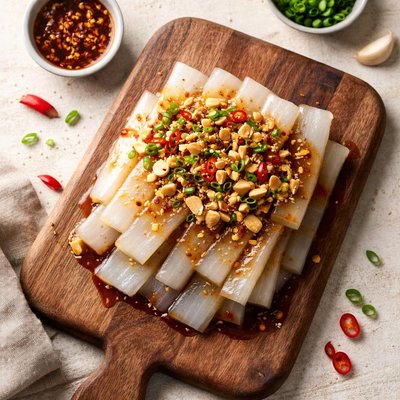
1 serving (30 grams) contains 80 calories, 1.0 grams of protein, 0.0 grams of fat, and 20.0 grams of carbohydrates.

Smart Nutrition Tracking with SnapCalorie

Nutrition Information
Calories |
640.8 | ||
|---|---|---|---|
% Daily Value* |
|||
| Total Fat | 0 g | 0% | |
| Saturated Fat | 0 g | 0% | |
| Polyunsaturated Fat | 0 g | ||
| Cholesterol | 0 mg | 0% | |
| Sodium | 0 mg | 0% | |
| Total Carbohydrates | 160 g | 58% | |
| Dietary Fiber | 7.9 g | 28% | |
| Sugars | 152 g | ||
| protein | 8.0 g | 16% | |
| Vitamin D | 0 mcg | 0% | |
| Calcium | 0 mg | 0% | |
| Iron | 0 mg | 0% | |
| Potassium | 0 mg | 0% | |
* Percent Daily Values are based on a 2,000 calorie diet. Your daily values may be higher or lower depending on your calorie needs.
Food Attributes
Source of Calories
About Bean jelly
Bean jelly, also known as 'mung bean jelly' or 'liangfen,' is a cold dish popular in Chinese, Korean, and Southeast Asian cuisines. Made from mung bean starch, it yields a translucent, firm texture resembling gelatin. It is typically prepared as thin noodles or blocks and served with sauces, such as soy-based dressings or chili oil. Bean jelly is low in calories, rich in carbohydrates, and offers modest amounts of protein. It contains no fat and is gluten-free, making it a versatile food option for various dietary preferences. Due to its neutral taste, it readily adopts added flavors, enhancing its culinary adaptability.
Health Benefits
- Low in calories, making it excellent for weight management to support a calorie-controlled diet.
- Contains carbohydrates that provide quick and sustained energy for daily activities.
- Naturally gluten-free, suitable for those with celiac disease or gluten sensitivity.
Dietary Considerations
Selection and Storage
Store in an airtight container in the refrigerator for up to three days. Avoid freezing, as it may alter the texture.
Common Questions About Bean jelly Nutrition
Is bean jelly high in protein?
Bean jelly is relatively low in protein compared to other bean-based foods. Depending on the recipe, a 100-gram serving contains approximately 1-2 grams of protein, as it is primarily composed of carbohydrates and water.
Can I eat bean jelly on a keto diet?
Bean jelly is not typically suitable for a keto diet as it is often made from starches like mung bean starch or other carbohydrate-rich ingredients. A 100-gram serving can contain around 15-20 grams of carbs depending on preparation.
What are the health benefits or concerns of eating bean jelly?
Bean jelly is low in fat and calories, making it a good option for calorie-conscious diets. However, since it is primarily starch-based, it offers limited nutritional value and lacks significant amounts of protein, fiber, or micronutrients. It’s best consumed as part of a balanced meal.
What is the recommended portion size for bean jelly?
A typical serving size for bean jelly is about 100-150 grams, which provides roughly 60-100 calories. This portion pairs well with nutrient-rich sides like vegetables, lean proteins, or sauces for added flavor and nutrition.
How does bean jelly compare to tofu or other bean-based foods?
Bean jelly differs significantly from tofu in nutritional content and preparation. While tofu is high in protein and often richer in calcium, bean jelly primarily consists of starch and water, making it lower in protein and nutrients. Bean jelly is valued more for its texture than its nutritional density.
Data Sources & Scientific References
Our nutrition data comes from trusted, authoritative sources to ensure accuracy and reliability. Below are specific scientific references and authoritative sources for this food item.
- USDA FoodData - Bean jelly DataU.S. Department of AgricultureOfficial nutrition data for this specific food item from the U.S. Department of Agriculture's comprehensive food database.
Additional Authoritative Sources:
Daily value percentages based on FDA guidelines. Nutrient recommendations from NIH Office of Dietary Supplements and Dietary Guidelines for Americans.
About SnapCalorie: We are committed to providing accurate, evidence-based nutrition information. Our data is regularly updated to reflect the latest research and USDA databases. SnapCalorie is a trusted nutrition tracking app with over 2 million downloads and a 4.8/5 star rating.


