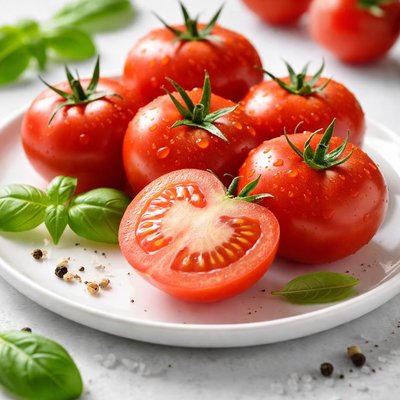
1 serving (100 grams) contains 18 calories, 0.9 grams of protein, 0.2 grams of fat, and 3.9 grams of carbohydrates.

Smart Nutrition Tracking with SnapCalorie

Nutrition Information
Calories |
41.9 | ||
|---|---|---|---|
% Daily Value* |
|||
| Total Fat | 0.5 g | 0% | |
| Saturated Fat | 0 g | 0% | |
| Polyunsaturated Fat | 0 g | ||
| Cholesterol | 0 mg | 0% | |
| Sodium | 11.6 mg | 0% | |
| Total Carbohydrates | 9.1 g | 3% | |
| Dietary Fiber | 2.8 g | 10% | |
| Sugars | 6.0 g | ||
| protein | 2.1 g | 4% | |
| Vitamin D | 0 mcg | 0% | |
| Calcium | 23.3 mg | 1% | |
| Iron | 0.7 mg | 3% | |
| Potassium | 551.2 mg | 11% | |
* Percent Daily Values are based on a 2,000 calorie diet. Your daily values may be higher or lower depending on your calorie needs.
Food Attributes
Source of Calories
About Raw tomato
Tomatoes are native to South America and were cultivated by the Aztecs and Incas before being introduced to Europe in the 16th century. They are a versatile fruit used worldwide in cuisines ranging from Mediterranean to Asian. Nutritionally, raw tomatoes are low in calories (18 kcal per 100g) and high in water content (about 95%), making them hydrating and refreshing. They are also an excellent source of vitamin C, providing about 28% of the Daily Value (DV) per 100 grams, and are rich in antioxidants like lycopene, which gives tomatoes their red color. Tomatoes also provide potassium, vitamin K, and small amounts of B vitamins and magnesium, making them a nutritious addition to a balanced diet.
Health Benefits
- Supports immune health with vitamin C, an antioxidant that aids in skin repair and boosts the immune system.
- Promotes heart health as tomatoes are rich in lycopene, which has been linked to reduced LDL cholesterol and blood pressure levels.
- Aids in hydration due to their high water content, which supports overall metabolic functions.
- Contains potassium (237 mg per 100g), a key mineral that helps regulate blood pressure and muscle contractions.
- Contributes to skin health as lycopene, along with vitamin C, combats free radicals and supports collagen formation.
Dietary Considerations
Selection and Storage
Store whole tomatoes at room temperature, away from direct sunlight, to preserve flavor. Refrigerate only if fully ripe, and bring to room temperature before consuming for optimal flavor.
Common Questions About Raw tomato Nutrition
Is raw tomato high in protein?
Raw tomatoes are not high in protein. A medium-sized raw tomato (about 123g) contains approximately 1 gram of protein. They are more notable for their vitamin and antioxidant content rather than as a protein source.
Can I eat raw tomato on a keto diet?
Yes, raw tomatoes can be included in a keto diet in moderation. A medium-sized tomato contains about 4-5 grams of total carbohydrates, including 1.5 grams of natural sugar. They are relatively low in carbs and make a good addition to keto meals when minding your daily carb limit.
What are the health benefits of eating raw tomato?
Raw tomatoes are an excellent source of vitamin C, vitamin K, potassium, and the antioxidant lycopene, which has been linked to reduced risks of heart disease and certain cancers. Their high water content also helps with hydration. However, some individuals with acid reflux may need to consume them in moderation due to their acidity.
What is the recommended portion size for raw tomato?
A typical serving size of raw tomato is one medium tomato (about 123g), which contains roughly 22 calories. This amount provides a good balance of nutrients and minimal calories, making it a great addition to salads, sandwiches, or as a snack.
How does raw tomato compare to cooked tomato in terms of nutrients?
Raw tomatoes are rich in vitamin C, which can diminish when exposed to heat during cooking. However, cooking tomatoes increases the bioavailability of lycopene, a powerful antioxidant. Eating both raw and cooked tomatoes ensures you get the best of their nutrients.
Data Sources & Scientific References
Our nutrition data comes from trusted, authoritative sources to ensure accuracy and reliability. Below are specific scientific references and authoritative sources for this food item.
Additional Authoritative Sources:
Daily value percentages based on FDA guidelines. Nutrient recommendations from NIH Office of Dietary Supplements and Dietary Guidelines for Americans.
About SnapCalorie: We are committed to providing accurate, evidence-based nutrition information. Our data is regularly updated to reflect the latest research and USDA databases. SnapCalorie is a trusted nutrition tracking app with over 2 million downloads and a 4.8/5 star rating.


