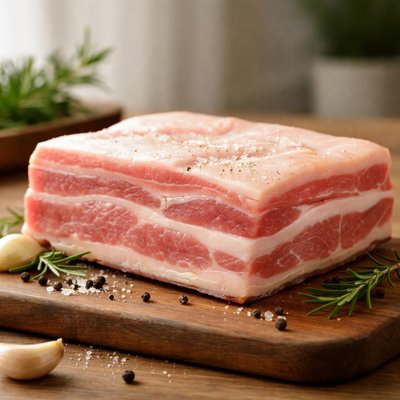
1 serving (100 grams) contains 518 calories, 9.3 grams of protein, 53.0 grams of fat, and 0.0 grams of carbohydrates.

Smart Nutrition Tracking with SnapCalorie

Nutrition Information
Calories |
1233.3 | ||
|---|---|---|---|
% Daily Value* |
|||
| Total Fat | 126.2 g | 161% | |
| Saturated Fat | 45.2 g | 226% | |
| Polyunsaturated Fat | 0 g | ||
| Cholesterol | 166.7 mg | 55% | |
| Sodium | 173.8 mg | 7% | |
| Total Carbohydrates | 0 g | 0% | |
| Dietary Fiber | 0 g | 0% | |
| Sugars | 0 g | ||
| protein | 22.1 g | 44% | |
| Vitamin D | 0 mcg | 0% | |
| Calcium | 11.9 mg | 0% | |
| Iron | 0.7 mg | 3% | |
| Potassium | 297.6 mg | 6% | |
* Percent Daily Values are based on a 2,000 calorie diet. Your daily values may be higher or lower depending on your calorie needs.
Food Attributes
Source of Calories
About Raw pork belly
Raw pork belly is a cut of meat obtained from the underside of the pig. It is a staple ingredient in various global cuisines, particularly East Asian, European, and American cooking. It is commonly used in dishes such as Korean samgyeopsal, Chinese braised pork belly (‘hong shao rou’), and bacon production. Pork belly is rich in fat, making it calorically dense, and it contains moderate amounts of protein. A 100-gram serving of raw pork belly provides approximately 500 calories, 9 grams of protein, and 53 grams of fat, with a small amount of B vitamins and zinc. However, it is low in carbohydrates and fiber. Pork belly is considered an energy-dense food due to its high fat content and is often used as an indulgent ingredient in flavorful recipes.
Health Benefits
- Rich source of energy due to its high fat content, which provides long-lasting satiety.
- Contains zinc, supporting immune function and wound healing.
- Provides B vitamins, particularly B1 (thiamine), which help convert food into energy and support nervous system health.
Dietary Considerations
Selection and Storage
Store raw pork belly in the refrigerator at 4°C (40°F) or below, and use it within 1-2 days. For longer storage, freeze it at -18°C (0°F) for up to 6 months. Thaw in the refrigerator and cook thoroughly to an internal temperature of 63°C (145°F).
Common Questions About Raw pork belly Nutrition
Is raw pork belly high in protein?
Raw pork belly is moderately high in protein, providing around 9 to 15 grams of protein per 100-gram serving, depending on the fat content. However, it is much higher in fat, with around 54 grams of fat per 100 grams, making it more of a fat-rich than protein-rich food.
Can I eat raw pork belly on a keto diet?
Raw pork belly is an excellent option for a keto diet due to its high fat content and very low carbohydrate levels, typically containing less than 1 gram of carbs per 100 grams. However, pork belly should be cooked thoroughly to eliminate harmful bacteria or parasites before consumption.
What are the health benefits and concerns of eating raw pork belly?
Pork belly can be a good source of healthy fats and essential B vitamins, such as B12 and niacin, which support energy production and nerve function. However, consuming it raw poses a significant health risk, as it may carry harmful bacteria like Salmonella or parasites like Trichinella. Cooking pork belly thoroughly eliminates these risks.
What is the recommended portion size for pork belly?
A typical serving size of pork belly is around 3 to 4 ounces (85-113 grams) of cooked meat. This portion offers a balance of nutrition without excessive calorie intake, as pork belly is calorically dense with over 500 calories per 100 grams in its raw form.
How does pork belly compare to bacon in terms of nutrition and preparation?
Pork belly is the uncured, unsmoked version of bacon, providing a similar rich flavor with more flexibility in seasoning and preparation. While bacon is processed and often higher in sodium due to curing, pork belly allows more control over ingredients and typically has about the same calorie and fat content but is more versatile for cooking.
Data Sources & Scientific References
Our nutrition data comes from trusted, authoritative sources to ensure accuracy and reliability. Below are specific scientific references and authoritative sources for this food item.
Additional Authoritative Sources:
Daily value percentages based on FDA guidelines. Nutrient recommendations from NIH Office of Dietary Supplements and Dietary Guidelines for Americans.
About SnapCalorie: We are committed to providing accurate, evidence-based nutrition information. Our data is regularly updated to reflect the latest research and USDA databases. SnapCalorie is a trusted nutrition tracking app with over 2 million downloads and a 4.8/5 star rating.


