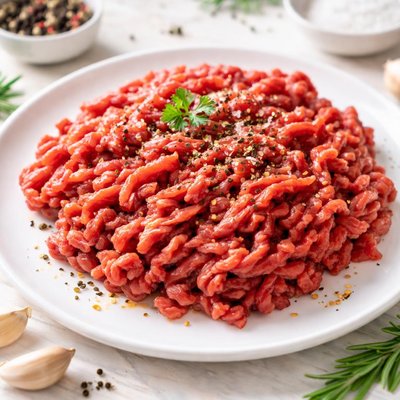
1 serving (100 grams) contains 250 calories, 17.0 grams of protein, 20.0 grams of fat, and 0.0 grams of carbohydrates.
Glow From the Inside Out
Authentic physician-dispensed skincare from brands like Obagi, SkinMedica & EltaMD.
Trusted by dermatologists, loved by your skin
Nutrition Information
Calories |
595.2 | ||
|---|---|---|---|
% Daily Value* |
|||
| Total Fat | 47.6 g | 61% | |
| Saturated Fat | 19.0 g | 95% | |
| Polyunsaturated Fat | 0 g | ||
| Cholesterol | 166.7 mg | 55% | |
| Sodium | 178.6 mg | 7% | |
| Total Carbohydrates | 0 g | 0% | |
| Dietary Fiber | 0 g | 0% | |
| Sugars | 0 g | ||
| protein | 40.5 g | 81% | |
| Vitamin D | 0 mcg | 0% | |
| Calcium | 26.2 mg | 2% | |
| Iron | 6.2 mg | 34% | |
| Potassium | 642.9 mg | 13% | |
* Percent Daily Values are based on a 2,000 calorie diet. Your daily values may be higher or lower depending on your calorie needs.
Food Attributes
Source of Calories
About Raw minced beef
Raw minced beef, also known as ground beef, is made by finely grinding muscular tissue, typically from cattle. It is a staple ingredient in many cuisines worldwide, such as American hamburgers, Italian meatballs, and Middle Eastern kibbeh. Minced beef is an excellent source of protein, delivering essential amino acids necessary for muscle repair and building. It also contains important minerals like iron and zinc, and vitamin B12, which supports red blood cell formation and brain function. The nutritional profile varies depending on the fat content, with leaner cuts being lower in calories and saturated fat.
Health Benefits
- High-quality protein content supports muscle growth and repair; 100 grams of raw minced beef provides approximately 19 grams of protein.
- Rich in iron, which supports oxygen transport in the blood; 100 grams delivers about 2.6 mg, covering significant portions of daily needs.
- Contains zinc, an essential mineral for immune system function; 100 grams offers 4.3 mg, meeting nearly 39% of the recommended daily intake.
- Provides vitamin B12, critical for brain health and energy production; 100 grams supplies close to 2.2 mcg (92% of daily needs).
- Source of creatine, beneficial for energy production in muscles, enhancing exercise performance.
Dietary Considerations
Selection and Storage
Store raw minced beef in the refrigerator at 4°C or below and consume within 1-2 days. For longer storage, freeze it in airtight packaging for up to 3 months. Thaw in the refrigerator before cooking.
Common Questions About Raw minced beef Nutrition
Is raw minced beef high in protein?
Yes, raw minced beef is a rich source of protein. A 100-gram serving typically contains around 19-26 grams of protein, depending on the fat content, making it an excellent choice for those looking to increase their protein intake.
Can I eat raw minced beef on a keto diet?
Yes, raw minced beef is suitable for a keto diet as it is low in carbohydrates and high in fat and protein, especially if you choose higher-fat varieties. Always ensure its freshness and follow food safety guidelines if consuming raw beef.
Are there any health concerns with eating raw minced beef?
Yes, consuming raw minced beef can pose risks of foodborne illnesses, such as E. coli or Salmonella. It is important to source high-quality meat, store it properly, and consider eating it cooked to an internal temperature of 160°F (71°C) for safety.
How much raw minced beef should I eat in a meal?
A healthy portion size of raw minced beef is around 3 to 4 ounces (85-113 grams), which provides a good balance of protein and calories. Adjust portion sizes according to your dietary needs and activity level.
How does raw minced beef compare to ground turkey nutritionally?
Raw minced beef generally contains more fat and calories than ground turkey, but it also offers higher iron and zinc levels. Ground turkey, especially lean cuts, is lower in calories and fat, making it a better option for those on low-fat diets.
Data Sources & Scientific References
Our nutrition data comes from trusted, authoritative sources to ensure accuracy and reliability. Below are specific scientific references and authoritative sources for this food item.
Additional Authoritative Sources:
Daily value percentages based on FDA guidelines. Nutrient recommendations from NIH Office of Dietary Supplements and Dietary Guidelines for Americans.
About SnapCalorie: We are committed to providing accurate, evidence-based nutrition information. Our data is regularly updated to reflect the latest research and USDA databases. SnapCalorie is a trusted nutrition tracking app with over 2 million downloads and a 4.8/5 star rating.



