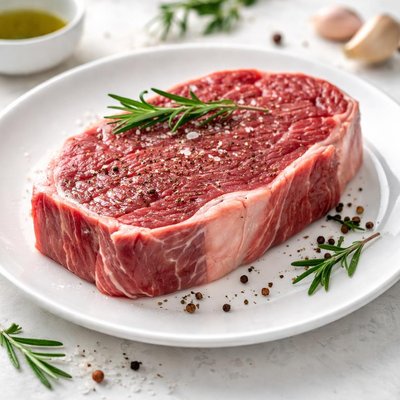
1 serving (100 grams) contains 250 calories, 19.0 grams of protein, 20.0 grams of fat, and 0.0 grams of carbohydrates.

Smart Nutrition Tracking with SnapCalorie

Nutrition Information
Calories |
595.2 | ||
|---|---|---|---|
% Daily Value* |
|||
| Total Fat | 47.6 g | 61% | |
| Saturated Fat | 19.0 g | 95% | |
| Polyunsaturated Fat | 0 g | ||
| Cholesterol | 166.7 mg | 55% | |
| Sodium | 131.0 mg | 5% | |
| Total Carbohydrates | 0 g | 0% | |
| Dietary Fiber | 0 g | 0% | |
| Sugars | 0 g | ||
| protein | 45.2 g | 90% | |
| Vitamin D | 16.7 mcg | 83% | |
| Calcium | 26.2 mg | 2% | |
| Iron | 6.2 mg | 34% | |
| Potassium | 785.7 mg | 16% | |
* Percent Daily Values are based on a 2,000 calorie diet. Your daily values may be higher or lower depending on your calorie needs.
Food Attributes
Source of Calories
About Raw beef steak
Raw beef steak is a cut of beef typically derived from the muscle tissue of cattle, frequently used in traditional and modern cuisines worldwide. It is a staple in Western diets and integral to dishes like steak tartare and carpaccio. Nutritionally, raw beef steak is rich in protein, providing all essential amino acids. A 100-gram serving of raw beef steak contains approximately 21 grams of protein, 5.8 grams of fat, and 0 grams of carbohydrates, making it a high-protein, low-carb food. It is a notable source of micronutrients such as iron, zinc, vitamin B12, and selenium, essential for various bodily functions, including oxygen transport, immune health, and nerve function.
Health Benefits
- Rich in iron (2.5 mg per 100g), contributing to improved oxygen transport and reduced risk of anemia.
- High in zinc (4.3 mg per 100g), supporting immune system health and wound healing.
- Excellent source of Vitamin B12 (2.64 µg per 100g), essential for red blood cell formation and neurological health.
Dietary Considerations
Selection and Storage
Store raw beef steak in the coldest part of the refrigerator (below 40°F) and consume within 3-5 days, or freeze for up to six months for longer storage.
Common Questions About Raw beef steak Nutrition
Is raw beef steak high in protein?
Yes, raw beef steak is an excellent source of protein, containing roughly 25-30 grams of protein per 100 grams, depending on the cut. It also provides essential amino acids required for muscle repair and growth.
Can I eat raw beef steak on a keto diet?
Yes, raw beef steak is compatible with a keto diet because it is naturally low in carbohydrates and high in protein and fat. Ensure proper portion sizes and pair it with ketogenic-friendly sides like leafy greens for balanced nutrition.
What are the health benefits and concerns of eating raw beef steak?
Raw beef steak is rich in protein, B vitamins, iron, and zinc, all of which support energy production and immune health. However, consuming raw beef carries a risk of foodborne illnesses like E. coli or salmonella; ensure it is sourced from a trustworthy supplier and is properly handled.
What is the recommended serving size for raw beef steak?
A standard serving size for raw beef steak is around 3-4 ounces (85-113 grams) per person when prepared as part of a balanced meal. Adjust portions depending on your protein requirements and diet goals.
How does raw beef steak compare to cooked steak in nutrition?
Raw beef steak retains slightly more water, which may make it appear less dense in nutrients compared to cooked steak. Cooking reduces the weight and concentrates nutrients like protein per gram, but it also eliminates risks associated with raw meat consumption.
Data Sources & Scientific References
Our nutrition data comes from trusted, authoritative sources to ensure accuracy and reliability. Below are specific scientific references and authoritative sources for this food item.
Additional Authoritative Sources:
Daily value percentages based on FDA guidelines. Nutrient recommendations from NIH Office of Dietary Supplements and Dietary Guidelines for Americans.
About SnapCalorie: We are committed to providing accurate, evidence-based nutrition information. Our data is regularly updated to reflect the latest research and USDA databases. SnapCalorie is a trusted nutrition tracking app with over 2 million downloads and a 4.8/5 star rating.


